
How to Care for Polka Dot Begonia Indoors
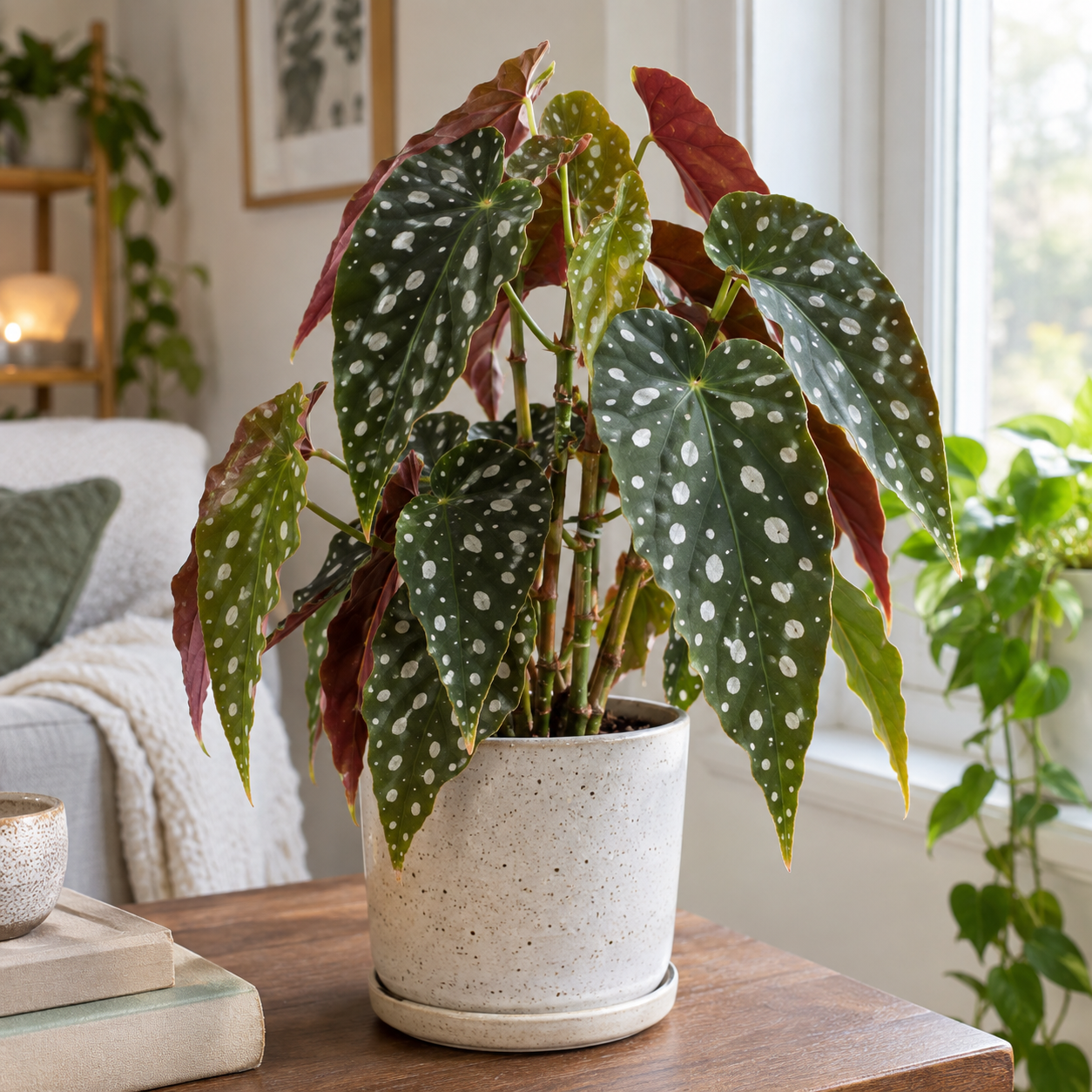
Polka Dot Begonia, also known as Begonia maculata, is one of the most eye-catching foliage plants you can grow indoors. Its long green leaves are covered in silvery-white spots, while the undersides often reveal rich reddish tones. With bright indirect light, careful watering, moderate humidity, and regular pruning, it can become a beautiful, upright statement plant.
Meet the Plant
Why Grow Polka Dot Begonia Indoors?
Begonia maculata is instantly recognizable because of its distinctive spotted foliage. The leaves are usually olive to deep green on top with bright silver markings and reddish or burgundy coloring underneath.
Unlike low-growing Begonias, Polka Dot Begonia develops upright cane-like stems. With time, it can become a tall and elegant indoor plant with leaves arranged along its stems.
It looks dramatic, but its care does not need to be complicated. The biggest priorities are giving it enough filtered light, avoiding soggy soil, protecting the leaves from extremely dry conditions, and pruning when the stems become too tall or sparse.
The pale markings are part of the plant’s normal leaf pattern and are one of the features that make Begonia maculata so distinctive.
Polka Dot Begonia Quick Care Guide
Start with these basic conditions to keep Begonia maculata healthy indoors.
Light
Bright indirect light gives the best growth.
Water
Water when the upper soil begins to dry.
Soil
Use a loose, well-draining potting mix.
Humidity
Moderate humidity helps keep foliage healthy.
Temperature
Warm and stable indoor conditions are ideal.
Pruning
Prune tall stems to encourage bushier growth.
Light
How Much Light Does Polka Dot Begonia Need?
Polka Dot Begonia performs best in bright, indirect light. A location close to a bright window is usually ideal as long as intense midday sun does not hit the leaves for long periods.
Gentle morning sunlight can usually be tolerated, but harsh direct sun may scorch the foliage or create pale damaged areas.
Signs Your Begonia Needs More Light
- Stems become long and stretched.
- There are large spaces between leaves.
- New growth becomes smaller.
- The plant leans strongly toward a window.
- Growth becomes noticeably slower.
Enough light helps the plant stay compact and supports strong leaf color without exposing the foliage to harsh sun.
Watering
How Often Should You Water Polka Dot Begonia?
Begonia maculata likes some moisture in the soil but does not appreciate permanently soggy roots.
Instead of watering on the same day every week, check the soil first. Water use changes depending on temperature, light, season, pot size, and the size of the plant.
Check Before Watering
Feel the upper 2–3 cm of soil. When this layer begins to feel dry, water thoroughly and allow excess water to drain.
How to Water Begonia maculata Properly
-
1
Check the soil before adding water.
-
2
Water slowly around the surface of the pot.
-
3
Allow excess water to drain completely.
-
4
Empty standing water from the saucer or decorative planter.
💧 Signs It May Be Too Dry
- Drooping leaves
- Dry soil
- Crispy leaf edges
- Leaves curling inward
⚠️ Signs of Too Much Water
- Yellow leaves
- Soft stems
- Wet soil for many days
- Leaf drop
- Unhealthy roots
Humidity
Does Polka Dot Begonia Need High Humidity?
Begonia maculata appreciates moderate humidity and may develop dry or crispy leaf edges when indoor air becomes extremely dry.
This can become particularly noticeable during winter when heating systems reduce indoor humidity.
Humidifier
A nearby humidifier can help during particularly dry periods.
Plant Grouping
Grouping plants can create a slightly more humid local environment.
Avoid Radiators
Hot, dry air can quickly damage delicate leaf edges.
Humidity should not mean stagnant, constantly wet foliage. Give the plant some air circulation while avoiding cold drafts.
Soil & Pot
Best Soil for Polka Dot Begonia
Begonia maculata does best in a loose potting mix that holds some moisture while still allowing excess water to drain freely.
A quality indoor potting soil mixed with additional perlite or another aerating material can work well.
Drainage Holes Are Essential
Never allow the root system to sit permanently in standing water.
If your plant stays inside a decorative outer pot, remove any collected water after watering.
Temperature
Best Temperature for Begonia maculata
Polka Dot Begonia prefers warm and relatively stable indoor conditions.
Comfortable indoor growing conditions
Protect from cold drafts and sudden temperature changes
Avoid placing the plant beside frequently opened winter doors, air-conditioning vents, or hot radiators.
Feeding
How to Fertilize Polka Dot Begonia
During spring and summer, your Begonia can benefit from occasional feeding while it is actively growing.
Use a balanced liquid houseplant fertilizer diluted according to the label directions. Feeding every few weeks during active growth is often enough.
Reduce feeding during winter when growth naturally slows.
Too much fertilizer can damage the roots and contribute to brown leaf edges.
How to Make Polka Dot Begonia Bushier
Begonia maculata naturally grows upward on cane-like stems, but regular pruning can encourage branching and create a fuller-looking plant.
Give It Enough Light
Bright indirect light helps prevent excessively stretched growth.
Pinch Growing Tips
Removing soft growing tips can encourage branching below the cut.
Trim Tall Canes
Shorten overly tall or bare stems above a healthy node.
Propagate Cuttings
Root healthy stems and add them back to the pot for a fuller display.
Pruning
How to Prune Polka Dot Begonia
Begonia maculata responds well to pruning, especially during active growth.
Use clean scissors or pruning shears and make cuts just above a healthy node.
What Should You Remove?
- Long leggy stems
- Damaged foliage
- Yellow leaves
- Weak or sparse growth
- Stems growing far beyond the desired shape
Healthy stems removed while pruning can usually be used for propagation instead of being thrown away.
Does Polka Dot Begonia Need a Stake?
As Begonia maculata becomes taller, some stems may lean under the weight of the foliage.
A thin bamboo stake, plant support, or small decorative trellis can help keep tall canes upright.
How to Propagate Polka Dot Begonia
Begonia maculata is relatively easy to propagate from healthy stem cuttings.
Choose a Healthy Stem
Select a strong section of stem containing at least one node.
Cut Below a Node
Use clean scissors to cut just beneath a healthy node.
Remove Lower Leaves
Clear foliage from the lower part of the cutting.
Root in Water or Soil
Place the cutting in clean water or lightly moist propagation soil.
Give It Bright Indirect Light
Keep the cutting warm and protected from harsh direct sunlight while roots develop.
Once a healthy root system develops, transfer the cutting into a small pot with well-draining soil.
Repotting
When Should You Repot Polka Dot Begonia?
You do not need to repot Begonia maculata simply because another year has passed. Repot when the root system actually needs more room.
Signs It May Need Repotting
- Roots grow heavily through drainage holes.
- The pot dries unusually quickly.
- The root ball has become tightly packed.
- The potting mix has become compacted.
- The plant becomes unstable in its container.
An oversized container may hold excessive moisture around the root system.
Crispy Leaves
Why Are My Polka Dot Begonia Leaves Crispy?
Brown and crispy leaf edges are among the most common problems people notice on Begonia maculata.
Dry Soil
Repeatedly allowing the pot to become extremely dry can damage leaf edges.
Dry Air
Very low humidity can contribute to crispy margins.
Too Much Sun
Harsh direct sunlight may scorch the foliage.
Fertilizer Buildup
Excess fertilizer may damage sensitive roots and leaf edges.
Yellow Leaves
Why Are Polka Dot Begonia Leaves Turning Yellow?
One or two older leaves may yellow naturally, but widespread yellowing deserves a closer look.
Too Much Water
Constantly wet soil can reduce oxygen around the roots.
Poor Drainage
Dense soil or blocked drainage holes can trap water.
Low Light
Low light slows water use and can keep soil damp for longer.
Natural Aging
Older lower leaves eventually age and fall naturally.
Curling Leaves
Why Are My Begonia maculata Leaves Curling?
Curling leaves may indicate that the plant is trying to conserve moisture or reacting to environmental stress.
- Check whether the soil has become too dry.
- Look for excessively dry indoor air.
- Check for heat from radiators or vents.
- Inspect for pests.
- Make sure the leaves are not receiving harsh direct sunlight.
Common Polka Dot Begonia Problems
Crispy Edges
Check watering consistency, humidity, heat, and direct sunlight.
Yellow Leaves
Review watering and drainage conditions.
Drooping
Check both soil moisture and root health.
Leggy Growth
Increase indirect light and prune tall sparse stems.
Leaf Drop
Check watering, temperature, drafts, and recent changes.
Curling Leaves
Look for dryness, heat, low humidity, or pests.
Pests
Common Pests on Polka Dot Begonia
Check the plant regularly, especially beneath the leaves and around new growth.
Spider Mites
Look for pale speckling and fine webbing.
Mealybugs
Look for cotton-like white clusters.
Aphids
Check tender new growth for clusters of small insects.
Problems are much easier to manage when you notice them early.
Polka Dot Begonia Care Through the Seasons
Spring
Growth increases. Spring is a good time for pruning, propagation, repotting, and restarting fertilizer.
Summer
Monitor moisture more frequently and protect the leaves from intense afternoon sunlight.
Autumn
As growth slows, gradually reduce feeding and check soil before each watering.
Winter
Give the plant plenty of light and protect it from cold drafts and dry radiator air.
Polka Dot Begonia Care Do’s & Don’ts
Do
- Give it bright indirect light.
- Check the soil before watering.
- Use a pot with drainage holes.
- Provide moderate humidity.
- Prune tall stems to encourage branching.
- Support tall canes if needed.
- Propagate healthy stem cuttings.
Don’t
- Don’t keep the soil permanently wet.
- Don’t allow roots to sit in standing water.
- Don’t expose leaves to harsh midday sunlight.
- Don’t place it beside a hot radiator.
- Don’t overfertilize.
- Don’t use an oversized pot unnecessarily.
- Don’t ignore long, weak, leggy stems.
Keep Polka Dot Begonia Away From Pets
Begonia plants should not be eaten by cats or dogs. Keep Begonia maculata somewhere pets cannot easily chew the leaves, stems, or roots.
If you believe a pet has eaten part of the plant and is showing symptoms, contact your veterinarian for advice.
Polka Dot Begonia Care FAQs
Is Polka Dot Begonia easy to care for?
Yes. Once you understand its preference for bright indirect light, careful watering, good drainage, and moderate humidity, Begonia maculata is relatively manageable indoors.
How often should I water Polka Dot Begonia?
Avoid using a fixed schedule. Check the upper 2–3 cm of soil and water when this layer begins to feel dry.
Why are my Polka Dot Begonia leaves crispy?
Crispy leaves can result from dry soil, very dry air, strong direct sunlight, excessive heat, or fertilizer buildup.
How do I make Begonia maculata bushier?
Give it bright indirect light and pinch or prune tall stems above a node to encourage additional branching.
Can Polka Dot Begonia be propagated in water?
Yes. Healthy stem cuttings containing nodes can be rooted in clean water before being transferred to soil.
Why is my Polka Dot Begonia becoming leggy?
Leggy growth commonly develops when the plant receives too little light or has not been pruned for a long time.
Does Begonia maculata need a stake?
Not always, but tall canes may benefit from a bamboo stake or another lightweight support as the plant matures.
Why are my Polka Dot Begonia leaves turning yellow?
Yellow leaves can be caused by overly wet soil, poor drainage, low light, root stress, or natural aging of older foliage.
Is Polka Dot Begonia safe for cats and dogs?
No. Begonias should be kept away from pets that may chew or eat the plant.
Bright Light + Careful Watering + Regular Pruning
Polka Dot Begonia may look exotic, but its care becomes straightforward once you understand its basic needs.
Give it plenty of bright indirect light, let the upper soil dry slightly between waterings, maintain moderate humidity, and prune tall stems when necessary.
With consistent care, Begonia maculata can reward you with tall elegant canes and some of the most distinctive foliage in your indoor plant collection.