
When to Repot Houseplants: Signs Your Plant Needs a New Pot
Knowing when to repot houseplants can help prevent problems caused by crowded roots, worn-out soil, poor drainage, and oversized containers. The right timing is different for every plant, so it is better to look at the roots, soil, watering habits, and growth than to follow one fixed repotting schedule.
Some fast-growing houseplants may need a new container every year or two, while slower-growing plants can remain comfortable in the same pot for several years. This guide explains when to repot houseplants, how to identify root-bound growth, how large the new pot should be, and how repotting differs between common indoor plants.
Repot the Plant, Not the Calendar
Check the roots about every 12–18 months.
Many need repotting roughly every 1–3 years.
Some can remain in the same pot for several years.
Check roots, soil condition, drainage, and plant health.
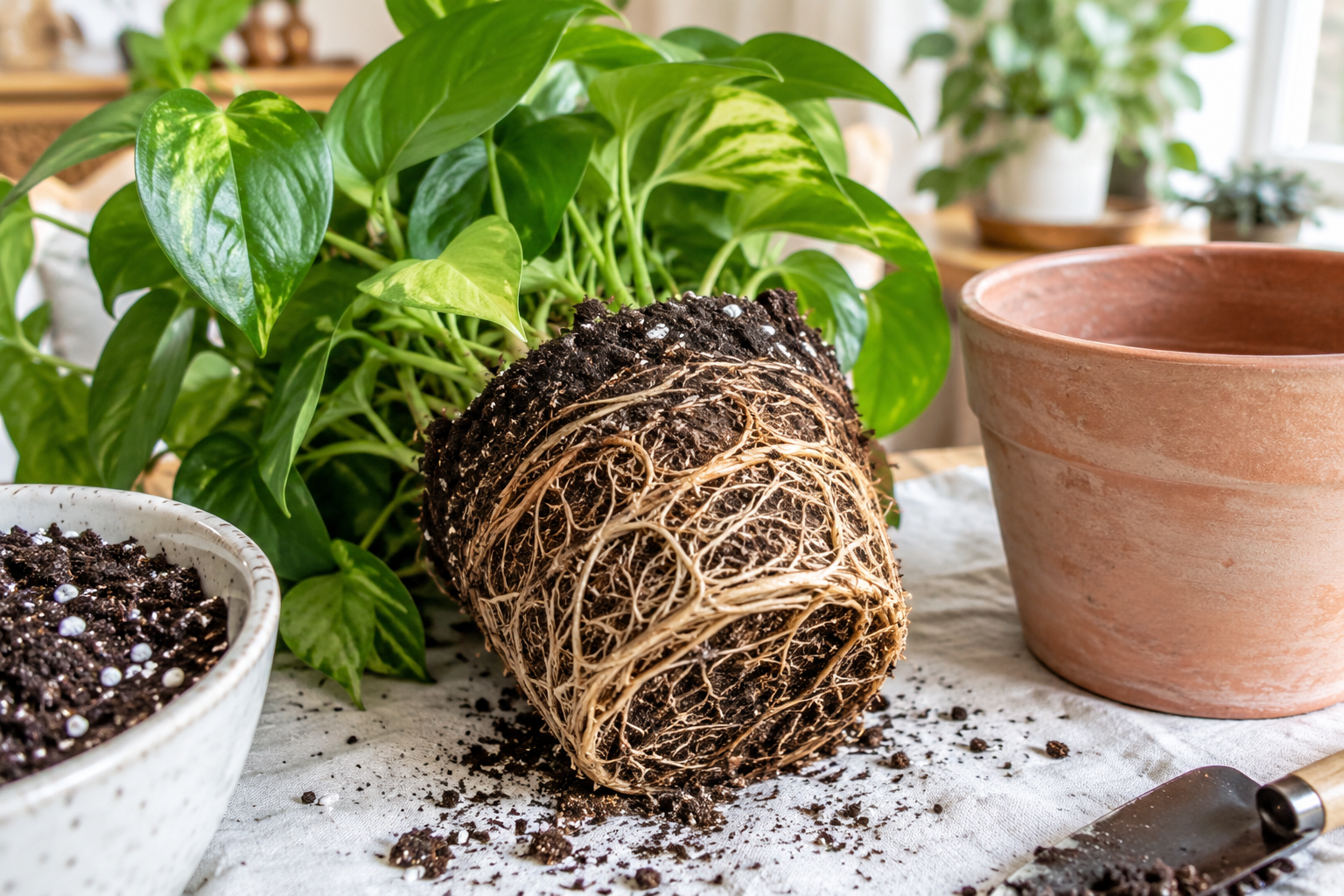
When to Repot Houseplants: 10 Signs to Watch For
A single root appearing through a drainage hole does not automatically mean your plant needs a bigger container. Look for several signs together before deciding to repot.
Roots Are Growing Through Drainage Holes
A few roots are normal, but a large mass of roots can indicate that the container is becoming crowded.
Roots Are Circling the Inside of the Pot
Repeated loops of dense roots around the outside of the root ball are a common sign of root-bound growth.
The Plant Dries Out Very Quickly
A root-filled container may contain too little potting mix to retain enough moisture.
Water Runs Straight Through
If very little usable soil remains, water may pass through the pot unusually quickly.
Growth Has Slowed
Severe root crowding can sometimes contribute to slower growth even when light and watering are suitable.
The Plant Has Become Top-Heavy
Large foliage and stems may make a small container unstable or cause the plant to tip over.
Soil Has Become Compacted
Old potting mix can lose structure and become dense, reducing airflow around the roots.
Water Sits on the Soil Surface
Compacted or badly degraded potting mix may absorb and drain water poorly.
The Root Ball Is Lifting Out of the Pot
Severe crowding can eventually push the plant and its root mass upward.
The Roots or Soil Have a Serious Problem
Root rot, unsuitable soil, or severely deteriorated potting mix may require repotting even when the plant is not root bound.
Root Check
How to Know When to Repot Houseplants by Checking the Roots
The most reliable way to judge whether a plant is root bound is to inspect the entire root ball rather than looking at one visible root.
How to Remove the Plant for Inspection
Support the base of the plant, tilt the container gently, and slide the root ball out. Avoid pulling the plant forcefully by its stems or leaves.
Healthy but Established Roots
- Roots are visible but still mixed with plenty of potting soil.
- The root ball holds together without being completely solid.
- Roots look firm rather than soft and mushy.
- There is still usable potting mix throughout the root system.
Signs of a Root-Bound Plant
- Roots form a thick mat around the outer edge.
- Very little loose soil remains.
- Roots repeatedly circle around the bottom.
- The root ball has taken the exact shape of the container.
- The plant is difficult to remove because roots fill the pot.
Some houseplants naturally produce vigorous root systems. Judge the entire root ball instead of assuming one root at the drainage hole means the plant needs a larger container immediately.
Watering
Watering Can Tell You When to Repot Houseplants
Changes in how quickly the pot dries can reveal what is happening below the soil surface.
The Plant Suddenly Needs Water Much More Often
If a plant that once stayed comfortably moist for several days is now drying almost immediately, the roots may have replaced much of the available potting mix.
Water Runs Through Without Wetting the Root Ball
This can happen when a container is packed with roots. However, extremely dry peat-based soil can also become difficult to rehydrate, so always inspect the roots before assuming that a larger pot is necessary.
Root-Filled Pot
There may not be enough potting mix left to store moisture between waterings.
Hydrophobic Soil
Very dry old soil may allow water to travel down the sides instead of soaking evenly into the root ball.
Potting Mix
When to Repot Houseplants With Old or Compacted Soil
Plants sometimes need repotting because the growing medium has deteriorated rather than because the roots need more space.
Why Potting Mix Changes Over Time
Organic materials gradually break down. As particles become smaller, the soil may lose the airy structure that once allowed water and oxygen to move easily around the roots.
Signs the Potting Mix Needs Attention
- The soil feels unusually dense.
- Water remains on the surface for a long time.
- Drainage is much slower than before.
- A heavy mineral or fertilizer crust has formed.
- The mix has shrunk dramatically away from the pot.
- The plant has experienced root rot.
When the roots still fit comfortably, replacing degraded potting mix does not require moving the plant into a larger container.
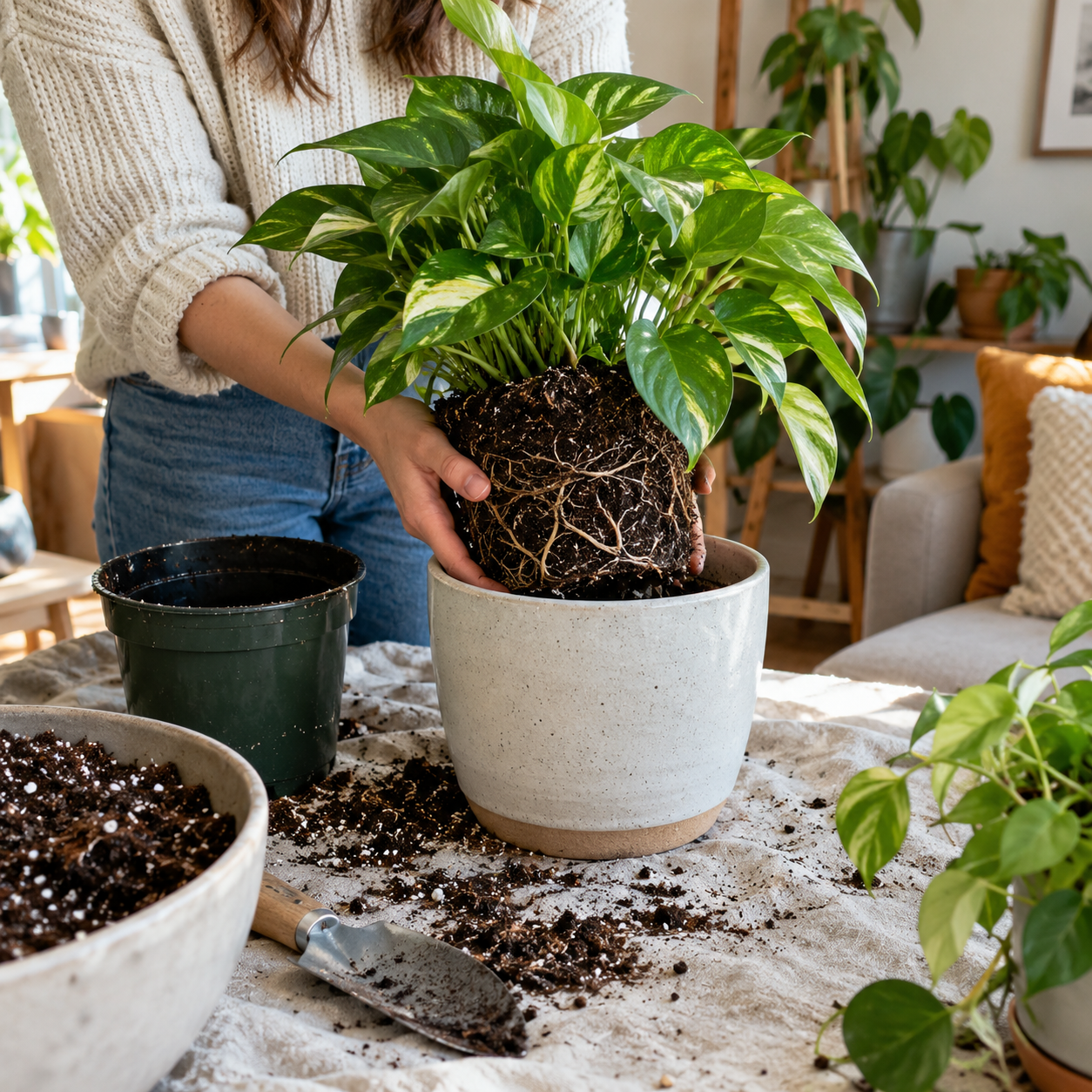
How Much Bigger Should the New Pot Be?
Choosing the correct pot size is just as important as knowing when to repot.
A modest increase usually provides enough additional room without surrounding the roots with too much wet soil.
Large plants with substantial root systems can sometimes handle a slightly bigger increase.
Avoid placing a small root system into a large volume of moisture- retaining soil.
Excess potting mix can remain wet for much longer than the roots need, making moisture management more difficult and increasing the risk of root problems.
Season
When to Repot Houseplants During the Year
Spring and early summer are convenient repotting periods for many indoor plants because growth is usually increasing as light levels rise.
Spring
Spring is an excellent time for routine repotting of many tropical foliage plants. Active growth can help plants establish themselves in the fresh potting mix.
Summer
Healthy, actively growing plants can also be repotted during summer. Monitor moisture carefully during hot conditions.
Fall
Repot only when there is a clear reason as many indoor plants begin slowing their growth when daylight decreases.
Winter
Routine repotting can often wait, but serious problems should not. Root rot, damaged containers, or badly deteriorated soil may require immediate action regardless of season.
Do not leave a plant in rotting or badly damaged roots for months simply because it is winter.
When to Repot Houseplants: Different Plants Have Different Needs
Growth rate, root structure, watering needs, and natural growing habits all influence how frequently a plant should be moved into a new container.
Vining Plants
Pothos and some Philodendrons can develop large root systems relatively quickly.
Tropical Foliage
Peace Lilies, Syngonium, Alocasia, and similar plants vary greatly depending on growing conditions.
Succulents & ZZ Plants
Slow-growing plants often stay in relatively snug containers for longer periods.
Orchids
Orchids follow different rules because their roots and growing medium differ from standard houseplants.
Vines
When to Repot Pothos & Philodendron
Healthy vining plants can grow rapidly in warm conditions with good light. Their roots may fill containers faster than those of many slower-growing plants.
Signs to Watch
- Dense roots fill most of the pot.
- The plant begins drying unusually quickly.
- Water runs through with very little absorption.
- Growth slows despite suitable care.
Monstera
When Should You Repot a Monstera?
Young Monsteras can grow quickly in bright conditions and may need more frequent root checks than mature specimens.
A Monstera May Need Repotting When:
- The roots densely fill the current container.
- Roots are pushing above the potting mix.
- The plant becomes unstable or top-heavy.
- The soil dries considerably faster than before.
Do not automatically solve a top-heavy Monstera by using an enormous container. A moss pole, coir pole, or sturdy support may improve stability without excessive pot sizing.
Alocasia
When Should You Repot an Alocasia?
Alocasia generally prefers an airy growing medium and a container that does not remain excessively wet.
Repot when the root system has clearly filled the container, drainage is deteriorating, or the potting medium needs replacing.
Alocasia can react strongly to sudden environmental changes, so there is little benefit in repotting a healthy plant simply for appearance.
Spider Plant
When Should You Repot a Spider Plant?
Spider Plants develop thick, fleshy roots and can fill their containers surprisingly quickly.
They usually tolerate being somewhat snug, so visible roots do not mean that the plant immediately needs a much larger pot.
Indoor Palms
When Should You Repot Indoor Palms?
Indoor palms such as Parlor Palms generally do not require frequent repotting and may prefer relatively minimal root disturbance.
Move a palm into a larger container when the roots have clearly filled the current pot, drainage has become poor, or the growing medium has deteriorated significantly.
Succulents
When to Repot Succulents & Jade Plants
Succulents generally grow more slowly than many tropical foliage plants and usually do not need large containers.
An oversized pot can leave a relatively small root system surrounded by more damp soil than it can use efficiently.
Repot When:
- The root ball genuinely fills the current container.
- The soil no longer drains appropriately.
- The plant has become unstable.
- The current mix remains wet for too long.
Use an appropriate fast-draining mix and a container that allows excess water to escape.
Slow Growers
When to Repot Snake Plants & ZZ Plants
Snake Plants and ZZ Plants often remain comfortable in relatively snug containers for a long time.
Their underground rhizomes can eventually become strong enough to distort or crack thin plastic nursery pots.
Good Reasons to Repot
- The pot is bulging or cracking.
- Rhizomes have filled most of the container.
- The growing medium needs replacing.
- The plant has become unstable.
Avoid placing a small Snake Plant or ZZ Plant into an unnecessarily large pot.
Orchids
Orchids Follow Different Repotting Rules
Phalaenopsis and many other commonly grown orchids are not typically grown in standard houseplant potting soil.
Bark-based orchid media gradually breaks down and can eventually reduce airflow around the roots.
An Orchid May Need Repotting When:
- The bark has broken down into small dense particles.
- The roots are severely crowded.
- Many roots inside the pot are dead or rotting.
- The plant has become unstable in its container.
Use an appropriate orchid container and growing medium rather than regular moisture-retentive houseplant soil.
Delicate Roots
Begonias, Fittonia & Other Delicate-Rooted Plants
Plants with finer root systems should generally not be placed into excessively large containers.
Increase the pot size gradually and choose a light, airy medium appropriate for the species.
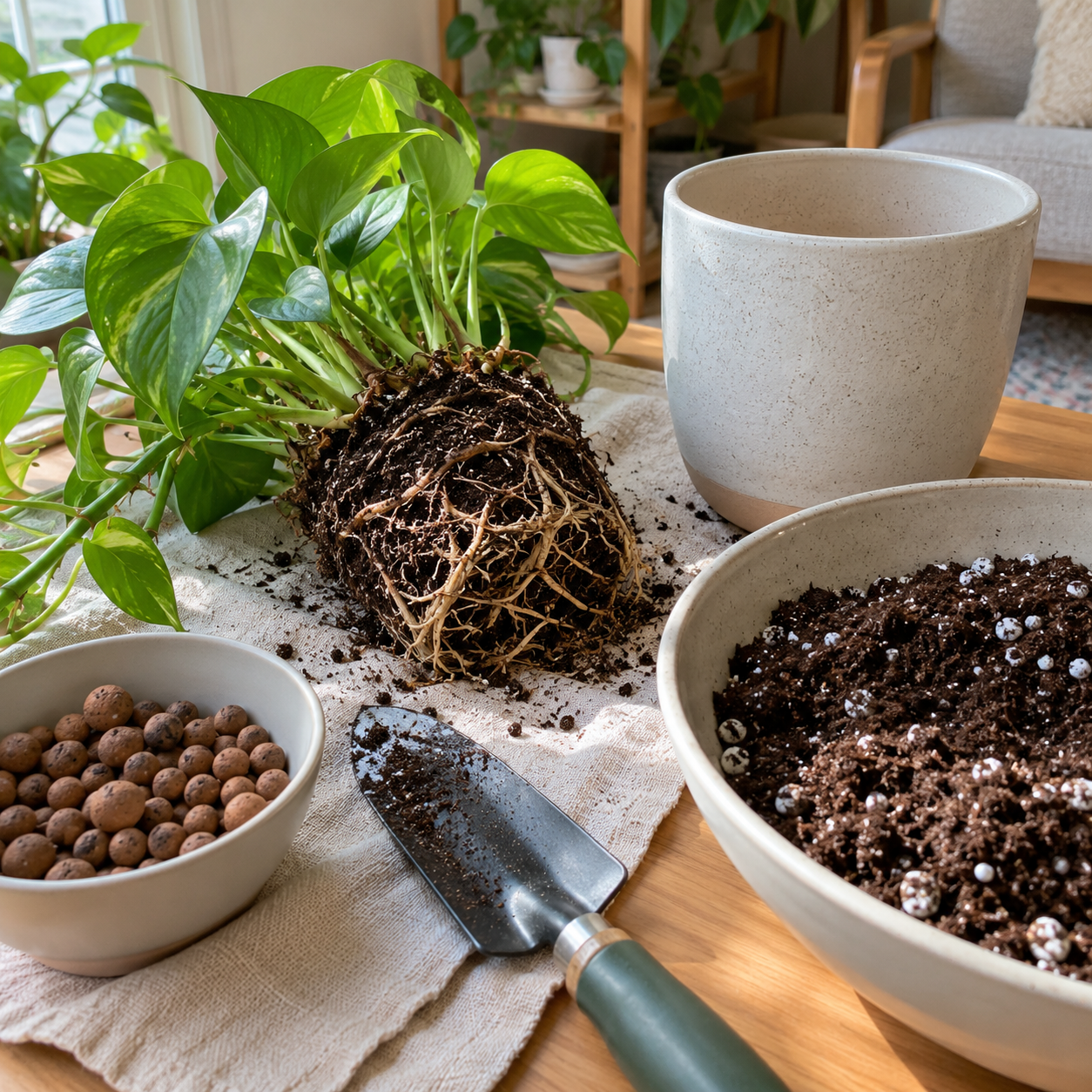
How to Repot a Houseplant Correctly
Once you know your plant genuinely needs repotting, use a gentle process that minimizes unnecessary root damage.
Choose the New Pot
Select a container only slightly larger than the existing root ball.
Choose Fresh Potting Mix
Use a growing medium suited to the specific plant.
Remove the Plant Carefully
Support the base and slide the root ball from the old container.
Inspect the Roots
Look for firm healthy roots as well as dead, soft, or rotten areas.
Loosen Severe Circling Roots
Gently tease apart tightly circling roots instead of aggressively tearing the entire root ball apart.
Add Fresh Potting Mix
Add enough mix beneath the plant to keep it at approximately the same depth.
Fill Around the Root Ball
Add fresh mix around the edges without compressing it excessively.
Water Appropriately
Water according to the needs of the plant and allow excess moisture to drain when using a pot with drainage holes.
Aftercare
How to Care for a Houseplant After Repotting
Repotting changes both the root environment and the way moisture behaves inside the container.
Keep Conditions Stable
Avoid moving the plant repeatedly after repotting. Keep it in suitable light and protect it from abrupt temperature changes.
Reconsider Your Watering Schedule
A larger pot usually contains more potting mix than the previous container. That extra soil may stay moist longer, so the old watering schedule may no longer be appropriate.
Watch the New Growth
Old damaged leaves will not suddenly repair themselves after repotting. Healthy new roots and foliage are better indicators of recovery.
Check the moisture level before adding more water. A new pot can dry at a very different rate from the old one.
Common Houseplant Repotting Mistakes
Choosing a Huge Pot
More soil does not automatically create faster or healthier growth.
Repotting Too Often
Constant root disturbance can create unnecessary stress.
Using One Soil for Everything
Orchids, succulents, tropical foliage plants, and aroids have different growing-medium needs.
Planting Too Deep
Keep the plant at approximately its previous soil depth unless the species requires something different.
Ignoring Drainage
A decorative container can still create problems if excess water cannot escape appropriately.
Using the Old Watering Schedule
Larger pots often remain moist for longer periods.
When to Repot Houseplants vs Simply Refreshing the Soil
Not every repotting job requires a larger container.
Choose This When:
- The root system is genuinely overcrowded.
- The plant dries extremely quickly.
- Roots have replaced most of the soil.
- The plant needs more physical stability.
Choose This When:
- The roots still fit comfortably.
- The soil has become old or compacted.
- You need to improve drainage.
- The existing pot size is already appropriate.
 Recommended Resource
Want More Help Knowing When to Repot Houseplants?
If you want a houseplant reference that goes beyond one repotting article, The Complete Houseplant Survival Manual by Barbara Pleasant is a useful resource for indoor plant owners.
The book covers more than 160 indoor plants and includes guidance on containers, growing media, watering, propagation, pests, diseases, troubleshooting, and repotting.
This is particularly useful because knowing when to repot houseplants depends on the individual species. A Monstera, orchid, palm, succulent, and pothos should not all be treated exactly the same way.
Plant-specific information for many common indoor species.
Guidance on containers, growing media, and repotting.
Helps identify common symptoms and plant-care problems.
A detailed reference to keep with your houseplant collection.
Repotting advice becomes much more useful when paired with plant-specific care information. This book can help you understand what an individual plant needs before automatically moving it into a larger container.
As an Amazon Associate, I may earn from qualifying purchases. Price and availability can change.
Quick Houseplant Repotting Checklist
If you answer yes to several of these questions, it is worth inspecting the root ball.
When to Repot Houseplants: Frequently Asked Questions
How often should houseplants be repotted?
It depends on the plant. Fast-growing species may need checking every year, while slow-growing plants can remain in the same container for several years. Root crowding and soil condition are more reliable than a fixed schedule.
Does seeing roots mean I need to repot immediately?
No. A few visible roots are normal. Consider repotting when the entire root system has become densely crowded or when other symptoms such as very rapid drying also appear.
Can I repot into the same size container?
Yes. If the root system still fits comfortably but the soil needs replacing, you can refresh the growing medium and reuse the same size container.
What happens if the new pot is too large?
Excess unused potting mix may remain wet longer than the roots need, making overwatering and root problems more likely.
Should I repot a plant immediately after buying it?
Not necessarily. A healthy plant with suitable soil, adequate root space, and good drainage may not need immediate repotting.
Can I repot houseplants in winter?
Yes when necessary. Serious root rot, damaged soil, or a broken container should be addressed regardless of season. Routine repotting is often easier during active spring or summer growth.
Should I remove all the old soil when repotting?
Usually not. If the roots and soil are healthy, removing loose old mix is often enough. Completely stripping healthy roots can cause unnecessary damage.
Why is my houseplant drooping after repotting?
Root disturbance and changes in moisture can temporarily stress the plant. Keep conditions stable and avoid adding more water unless the potting mix actually needs it.
Should I fertilize immediately after repotting?
Not automatically. Some fresh potting mixes already contain nutrients. Follow the directions for your specific soil mix and plant.
Do all houseplants like being root bound?
No. Some plants tolerate snug pots better than others, but severe root crowding can eventually reduce the amount of usable soil, moisture, and nutrients available to the plant.
Knowing When to Repot Houseplants Makes All the Difference
Learning when to repot houseplants is less about following a calendar and more about understanding what the roots, soil, drainage, and watering pattern are telling you.
Check the condition of the root ball, consider the natural growth habits of the individual species, and increase pot size gradually only when the plant genuinely needs more space.
When in doubt, inspect the roots first. A slightly snug container is often safer than moving a small root system into a pot that is far too large.