
How to Care for Kalanchoe Indoors
Kalanchoe is a colorful, beginner-friendly succulent that can stay beautiful indoors for years. Learn how much light it needs, when to water it, how to keep it healthy after flowering, and how to encourage those cheerful blooms to return.
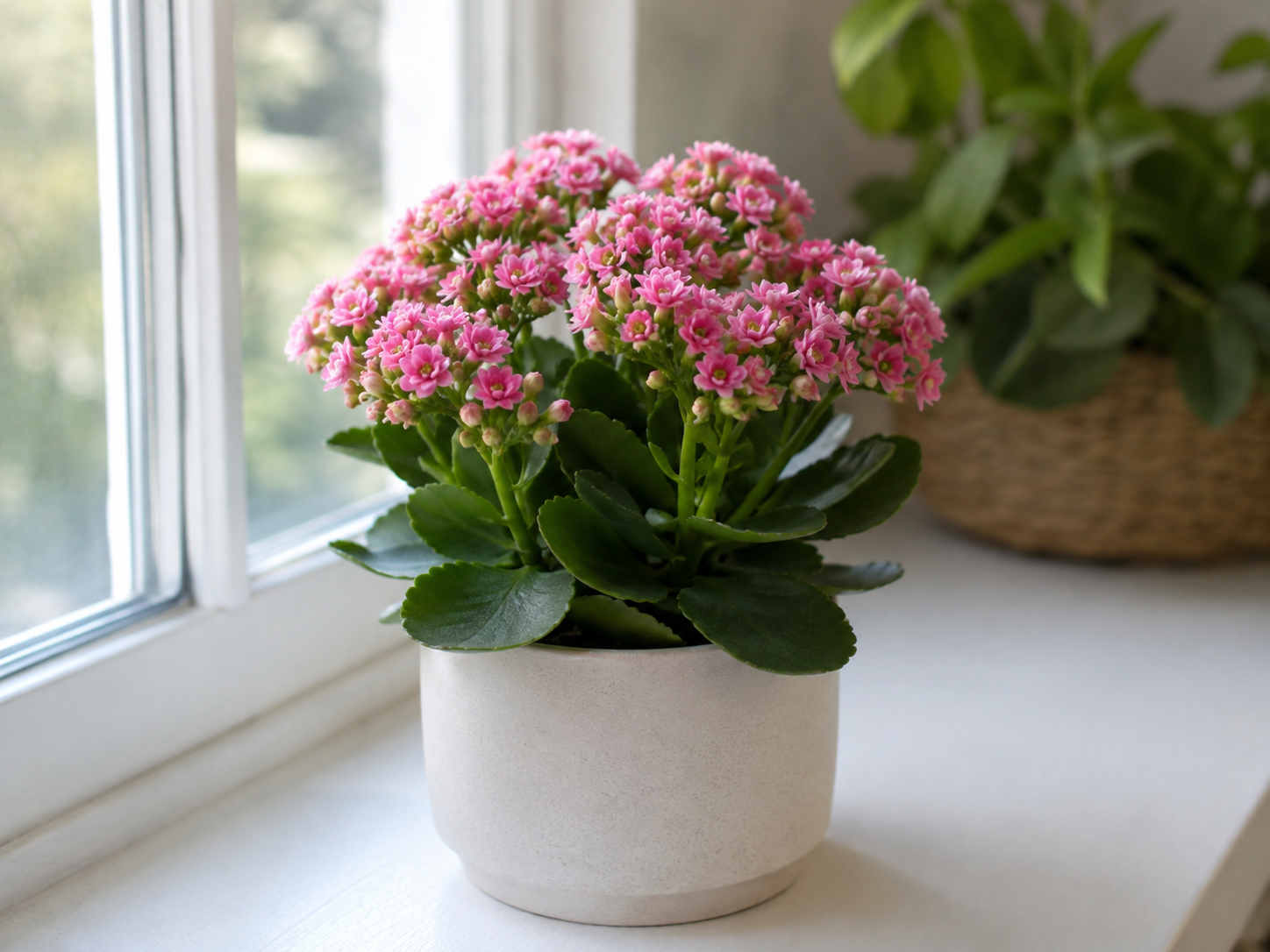
Meet Your Plant
Getting to Know Kalanchoe
Kalanchoe is one of my favorite indoor flowering plants because it is colorful, compact, and surprisingly easy to care for. Its thick, fleshy leaves store water much like other succulents, while clusters of tiny flowers can stay attractive for weeks.
Whether you have a pink, red, orange, yellow, or white Kalanchoe, the basic care is almost the same. The most important things are plenty of bright light, careful watering, and well-draining soil.
Kalanchoe is not just a temporary flowering plant. With proper care, it can continue growing for years and may bloom again.
Kalanchoe Quick Care Guide
Start here if you just brought your plant home and want the essentials.
Light
Bright light with some gentle direct sunlight.
Water
Let the soil dry well between waterings.
Soil
Use a fast-draining cactus or succulent mix.
Temperature
Around 18–24°C is ideal indoors.
Humidity
Normal household humidity is usually enough.
Difficulty
Easy and beginner-friendly.
Light
How Much Light Does Kalanchoe Need?
Kalanchoe grows best in a bright location indoors. Place it close to a sunny window where it receives plenty of natural light throughout the day.
An east-facing or west-facing window usually works very well. A little morning or evening sunlight is beneficial, but very intense midday summer sunlight through a hot window can occasionally scorch the leaves.
Signs Your Kalanchoe Needs More Light
- Long and stretched stems
- Large spaces between leaves
- Pale or weak new growth
- Very few flowers
- The plant leaning strongly toward the window
Keep Kalanchoe close to a bright window where it receives several hours of light without sitting in harsh afternoon heat.
Watering
How Often Should You Water Kalanchoe?
Overwatering is one of the easiest ways to damage a Kalanchoe. Because its thick leaves store water, this plant prefers the soil to dry between waterings.
Instead of following a strict weekly watering schedule, check the soil first.
Check the Soil First
Push your finger about 2–3 cm into the soil. If it still feels damp, wait. If it feels dry, your Kalanchoe is ready for water.
The Best Way to Water
-
1
Water the soil thoroughly.
-
2
Allow excess water to drain from the bottom of the pot.
-
3
Empty any water left inside the decorative pot or saucer.
-
4
Wait until the soil dries again before watering.
💧 Signs It Needs Water
- Slightly soft leaves
- Wrinkled leaves
- Very dry soil
- Leaves feel less firm
⚠️ Signs of Overwatering
- Yellow leaves
- Soft or mushy stems
- Constantly wet soil
- Soft leaves falling off
- Dark areas near the stem base
Soil & Pot
Best Soil and Pot for Kalanchoe
Kalanchoe does not enjoy sitting in heavy, wet soil. Choose a fast-draining succulent or cactus potting mix.
You can also improve regular potting soil by mixing in perlite or pumice. The goal is to create a loose mixture that allows water to move away from the roots quickly.
Always Choose Drainage
The easiest setup is to keep your plant inside a nursery pot with drainage holes and place that inside a decorative cover pot.
When watering, remove the inner pot, let it drain completely, and then return it to the decorative pot.
Temperature
Best Indoor Temperature for Kalanchoe
Kalanchoe is comfortable at normal household temperatures. Around 18–24°C is a good range for healthy indoor growth.
Comfortable indoor range
Bring outdoor plants inside
Protect Your Plant From
- Cold drafts
- Frost
- Open windows during cold nights
- Very hot radiators
- Sudden temperature changes
Kalanchoe can spend summer outdoors when temperatures are warm. Introduce it to stronger outdoor light gradually so the leaves do not burn.
Feeding
Humidity and Fertilizer
Humidity
Unlike many tropical houseplants, Kalanchoe does not need high humidity. Normal household humidity is usually perfectly suitable.
There is generally no need to mist the leaves. Frequently wet foliage can encourage fungal problems when airflow is poor.
Fertilizer
During spring and summer, you can use a balanced houseplant or succulent fertilizer at a diluted strength while the plant is actively growing.
Avoid overfeeding. Too much fertilizer can damage the roots and does not automatically produce more flowers.
What to Do After Kalanchoe Flowers Fade
Finished flowers do not mean the plant is finished. A little pruning and continued care can prepare your Kalanchoe for another growing cycle.
Remove Old Flowers
Cut faded flower stems just above a healthy pair of leaves.
Keep It Bright
Continue giving your plant plenty of natural light.
Water Normally
Continue allowing the soil to dry between waterings.
Encourage New Growth
Lightly fertilize during active growth and trim leggy stems.
Reblooming
How to Get Kalanchoe to Bloom Again
Kalanchoe is a short-day plant. This means longer periods of darkness help trigger the formation of flower buds.
Give It Long, Dark Nights
For several weeks, give your Kalanchoe approximately 14 hours of uninterrupted darkness every night while continuing to provide bright light during the day.
Even artificial room lighting during the dark period may interrupt flower development, so place the plant somewhere truly dark at night.
Once buds begin appearing, move it back to its normal bright location and enjoy the new flowers.
Propagation
How to Propagate Kalanchoe
Kalanchoe is easy to propagate from healthy stem cuttings, which makes it a wonderful plant to multiply or share with friends.
Take a Cutting
Cut a healthy stem around 7–10 cm long, preferably just below a leaf node.
Remove Lower Leaves
Remove a few leaves from the bottom part of the cutting.
Let It Callus
Leave the cutting somewhere dry for a day or two so the cut end can dry slightly.
Plant It
Place the cutting into a small pot filled with well-draining succulent soil.
Once your cuttings have established roots, you can plant them around the original Kalanchoe to create a fuller-looking pot.
Common Kalanchoe Problems
Your plant usually gives you clues when something in its environment needs adjusting.
Yellow Leaves
Often associated with too much water. Let the soil dry and check drainage.
Wrinkled Leaves
Your plant may be thirsty. Check whether the soil has become completely dry.
Leggy Growth
Long, weak stems usually mean the plant needs a brighter location.
Brown Leaves
Crispy areas may come from extreme dryness, heat, or sudden exposure to intense sunlight.
Flowers Dying
This is usually natural. Flowers eventually fade after several weeks.
Soft Stem Base
Soft, dark growth near the soil can be a sign of excess moisture or root problems.
Repotting
When Should You Repot Kalanchoe?
Kalanchoe does not need a huge pot and usually prefers being slightly snug rather than sitting in a container with a large amount of wet soil.
Repot When…
- Roots are circling tightly around the pot.
- Roots are growing heavily through drainage holes.
- The potting soil has become compacted.
- Water no longer drains properly.
- The plant has clearly outgrown its container.
Choose a new pot only slightly larger than the current one. Oversized containers can hold too much moisture around the roots.
Kalanchoe Care Through the Seasons
Spring
Growth begins increasing. Give plenty of light and water when the soil dries.
Spring is a good time for pruning, propagation, and repotting.
Summer
Check the soil more frequently because warmer temperatures can dry it faster.
Outdoor summer stays are possible, but acclimate the plant slowly.
Autumn
Growth may begin slowing as daylight decreases, so reduce watering slightly.
Autumn is also a good time to start a short-day routine for blooms.
Winter
Keep it close to a bright window and away from cold drafts.
Soil dries more slowly, so always check before watering.
Kalanchoe Care Do’s & Don’ts
Do
- Give it plenty of bright light.
- Let the soil dry between waterings.
- Use fast-draining succulent soil.
- Choose a pot with drainage holes.
- Remove faded flowers.
- Rotate the pot for even growth.
- Prune long or leggy stems.
- Take cuttings to create new plants.
Don’t
- Don’t leave roots sitting in water.
- Don’t water simply because a week has passed.
- Don’t keep it in a dark corner.
- Don’t mist the plant every day.
- Don’t suddenly expose it to strong summer sun.
- Don’t use an oversized pot.
- Don’t throw it away after flowering.
Kalanchoe Care FAQs
Is Kalanchoe easy to care for indoors?
Yes. Kalanchoe is a beginner-friendly houseplant because it tolerates some dryness and does not need high humidity. Bright light and careful watering are the most important parts of its care.
Where should I put my Kalanchoe?
Keep it close to a bright window. Morning or gentle afternoon sunlight is particularly useful, but protect it from sudden, extremely intense summer sun.
Should I water Kalanchoe from the top or bottom?
Either method can work. The important thing is that the soil is properly hydrated and all excess water is allowed to drain away afterward.
How long do Kalanchoe flowers last?
A flowering display can remain attractive for several weeks when the plant receives suitable light, watering, and temperatures.
Can Kalanchoe live for several years?
Yes. Although they are often sold as decorative flowering plants, Kalanchoes are perennial succulents and can live for years with proper care.
Can I put my Kalanchoe outside in summer?
Yes, when temperatures are warm. Introduce it to outdoor light gradually and bring it back inside before nighttime temperatures become too cold.
Bright Light + Dry Soil + Good Drainage
Kalanchoe may look like a delicate flowering plant, but underneath those colorful blooms is a tough little succulent.
Give it plenty of light, allow the soil to dry before watering, and never leave its roots sitting in water. Once you understand those three basics, Kalanchoe becomes a wonderfully low-maintenance addition to an indoor plant collection.
And when those first new flower buds appear after months of caring for it, keeping the plant after its original flowers faded suddenly feels completely worth it.