
How to Care for a Spider Plant Indoors
Spider plants are easy-going, fast-growing houseplants with beautiful arching leaves and adorable baby plants. Learn how to keep yours healthy, full, and thriving indoors with simple care tips for light, watering, soil, propagation, and more.
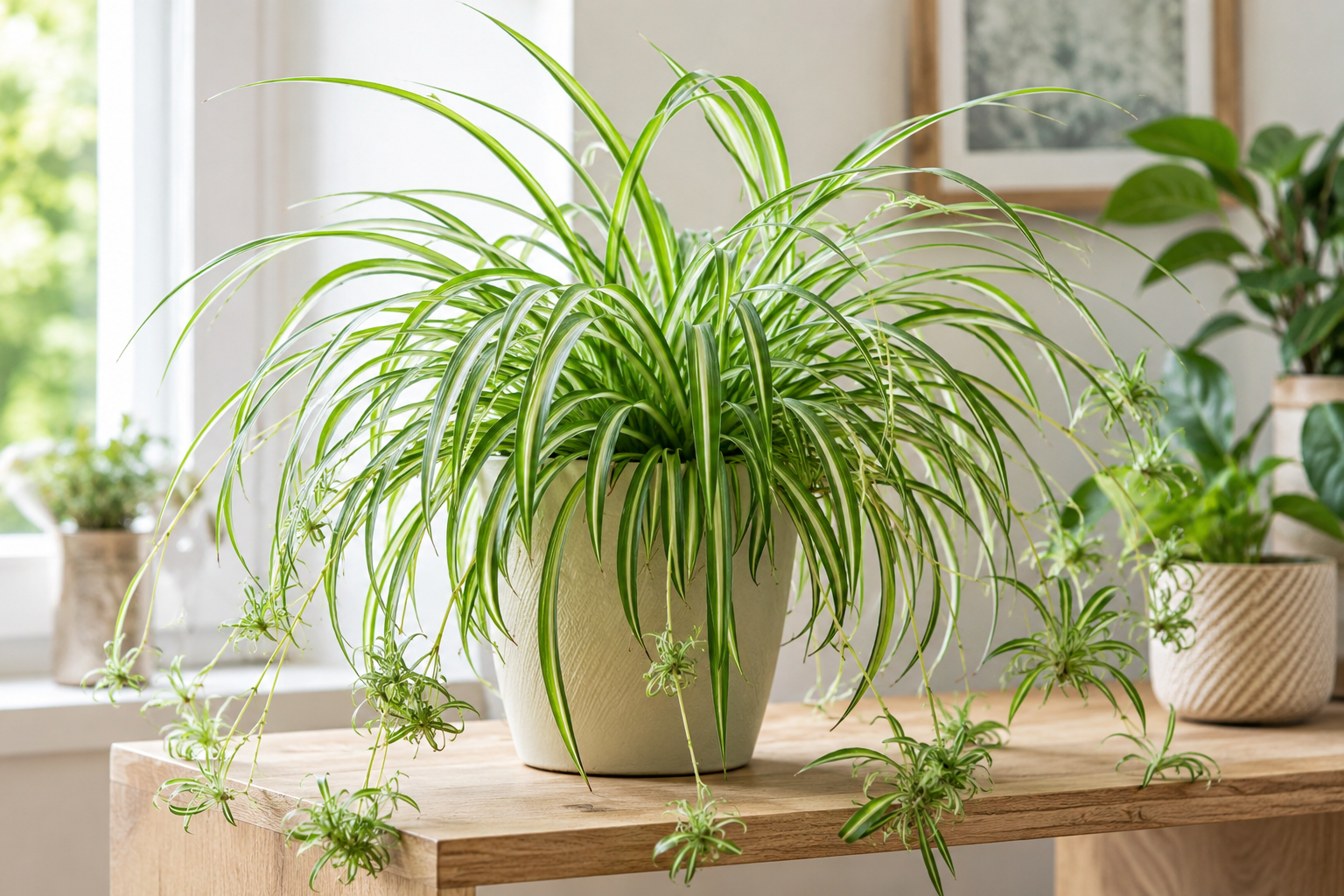
Meet the Plant
Why Spider Plants Are Such Easy Houseplants
Spider plants, or Chlorophytum comosum, are among the easiest houseplants to grow indoors. They have long, narrow leaves that curve beautifully over the sides of the pot and often produce baby plants on long stems.
They are especially popular with beginners because they tolerate a few mistakes. Missing one watering usually will not cause serious damage, and the plant adapts well to many indoor environments.
That does not mean spider plants are completely maintenance-free, though. Giving them the right light, avoiding constantly wet soil, and trimming damaged leaves will help them look much fuller and healthier.
If you are new to houseplants, a spider plant is a great place to start because it grows quickly and clearly shows when something in its environment needs changing.
Spider Plant Quick Care Guide
These are the main things your spider plant needs to stay healthy indoors.
Light
Bright indirect light is best.
Water
Water when the top layer of soil feels dry.
Soil
Use a loose, well-draining houseplant mix.
Temperature
Around 18–24°C works well indoors.
Humidity
Normal household humidity is usually fine.
Propagation
Very easy from spider plant babies.
Light
How Much Light Does a Spider Plant Need?
Spider plants grow best in bright, indirect light. A location close to a window is ideal as long as the leaves are not sitting in strong, harsh sunlight for many hours.
Gentle morning sunlight is usually fine. Strong midday or afternoon sun, especially through glass during summer, may cause pale patches or scorched leaf tips.
Can Spider Plants Grow in Low Light?
Yes, spider plants can survive in lower light, but growth will usually become slower. Variegated varieties may also lose some of their bright white striping when kept too far from a window.
Signs Your Plant Needs More Light
- Very slow new growth
- Long, weak-looking leaves
- Reduced variegation
- Few or no spider plant babies
- The plant leaning strongly toward the window
Place your spider plant near an east- or west-facing window, or a little farther back from a bright south-facing window.
Watering
How Often Should You Water a Spider Plant?
Spider plants like slightly moist soil during active growth, but they should never sit in constantly wet soil.
Instead of watering on a fixed schedule, check the soil first. Water when the top few centimeters feel dry.
Use the Finger Test
Push your finger into the top 2–3 cm of soil. If it feels dry, water thoroughly. If it still feels damp, give the plant a little more time.
How to Water Properly
-
1
Water slowly across the surface of the soil.
-
2
Continue until excess water drains from the bottom.
-
3
Allow the pot to drain completely.
-
4
Never leave the plant standing in a saucer filled with water.
💧 Signs It May Be Thirsty
- Leaves folding inward
- Dry soil
- Drooping foliage
- Brown crispy tips
⚠️ Signs of Too Much Water
- Yellow leaves
- Soft leaf bases
- Constantly wet soil
- Slow or weak growth
- Unpleasant smell from the soil
Brown Tips
Why Does My Spider Plant Have Brown Tips?
Brown leaf tips are one of the most common concerns with spider plants. A few brown tips are usually cosmetic and do not mean your entire plant is unhealthy.
Several things can cause them, so look at the plant’s overall care routine before changing everything at once.
Inconsistent Watering
Allowing the plant to become extremely dry repeatedly can cause leaf tips to turn brown.
Mineral Buildup
Minerals and salts can gradually build up in the soil and contribute to damaged tips.
Strong Sunlight
Harsh direct sun may dry or scorch the ends of the leaves.
Dry Conditions
Very dry indoor air can sometimes contribute to crispy foliage.
Can You Cut Brown Tips Off?
Yes. Use clean scissors to trim the brown section away. Follow the natural pointed shape of the leaf rather than cutting straight across if you want the trim to look less noticeable.
Trim only the dry brown portion when possible. Healthy green leaf tissue still helps the plant produce energy.
Soil & Pot
Best Soil and Pot for a Spider Plant
Spider plants prefer soil that holds some moisture but still allows excess water to drain easily.
A good-quality indoor potting mix is usually suitable. If the soil feels heavy or compacted, adding perlite can help improve airflow and drainage.
Drainage Holes Are Important
Always use a pot with drainage holes so excess water can escape.
If you prefer decorative pots without drainage, keep your spider plant inside a plastic nursery pot and place that pot inside the decorative container.
Temperature
Best Temperature for Spider Plants Indoors
Spider plants are comfortable at normal household temperatures. Around 18–24°C is an easy range to aim for.
Ideal everyday indoor range
Keep it away from prolonged cold
Protect your plant from cold drafts, freezing temperatures, and sudden temperature changes. Also avoid placing it directly next to a hot radiator.
Can Spider Plants Stay Outside in Summer?
Yes. Spider plants can enjoy warm summer weather outdoors, but place them somewhere with bright shade or gentle morning sun rather than intense afternoon sunlight.
Introduce the plant gradually to outdoor conditions and bring it back inside before nights become too cold.
Humidity
Does a Spider Plant Need High Humidity?
Spider plants usually adapt well to normal household humidity and do not need tropical greenhouse conditions.
If your home becomes particularly dry during winter, moving the plant away from radiators and grouping it with other houseplants may help.
You can occasionally mist your spider plant if you enjoy doing so, but consistent watering, suitable light, and good root health are much more important.
Feeding
How to Fertilize a Spider Plant
Spider plants grow relatively quickly when they have enough light and can benefit from light feeding during spring and summer.
Use a balanced liquid houseplant fertilizer at a reduced strength every few weeks during active growth.
Avoid Overfertilizing
More fertilizer does not mean faster or healthier growth. Too much can cause mineral salts to accumulate in the soil and may contribute to damaged roots or brown leaf tips.
Feeding can usually be reduced or paused during winter when growth becomes slower.
Why Is My Spider Plant Growing Babies?
Mature spider plants can produce long arching stems covered with small plantlets. These are often called spiderettes, pups, or spider plant babies.
Healthy Mature Growth
Babies usually appear when the mother plant is mature and actively growing.
Good Light Helps
Bright indirect light can support stronger growth and more plantlets.
Keep or Remove Them
You can leave the babies hanging for a full cascading look or remove them for propagation.
Propagation
How to Propagate Spider Plant Babies
Spider plants are among the easiest houseplants to propagate because mature plants naturally produce ready-made baby plants.
Choose a healthy plantlet with several leaves. Babies that already show tiny roots or root bumps are especially easy to establish.
Choose a Healthy Baby
Look for a well-developed plantlet growing from one of the long runners.
Cut It From the Runner
Use clean scissors to separate the baby from the mother plant.
Choose Water or Soil
Root the plantlet in water first or place it directly into lightly moist potting soil.
Give It Bright Light
Keep the new plant somewhere bright but protected from strong direct sun while roots establish.
Place a baby plant into a small pot beside the mother plant while leaving the connecting runner attached. Once roots develop, cut the runner.
Repotting
When Should You Repot a Spider Plant?
Spider plants grow thick, fleshy roots and may fill their pots fairly quickly when conditions are good.
Signs It Is Time to Repot
- Roots are growing through the drainage holes.
- The pot dries extremely quickly after watering.
- The plant has become unstable or top-heavy.
- There is very little soil left around the roots.
- The pot has become visibly crowded.
Choose a pot only slightly larger than the current container. Moving into an oversized pot can leave too much wet soil surrounding the roots.
Pruning
How to Prune a Spider Plant
Spider plants do not need heavy pruning, but occasional trimming keeps them tidy.
Remove completely yellow or damaged leaves by cutting them near the base of the plant with clean scissors.
Brown tips can be trimmed individually, while long runners can be left in place or removed depending on the appearance you prefer.
Remove older damaged leaves first. Avoid cutting large amounts of healthy green foliage simply to make the plant smaller.
Common Spider Plant Problems
Look at the leaves, soil, and growing conditions together before deciding what your plant needs.
Brown Tips
Check watering consistency, strong sunlight, dry conditions, and possible mineral buildup.
Yellow Leaves
Frequently associated with overly wet soil, although old leaves can also yellow naturally.
Drooping Leaves
Check whether the soil is extremely dry or whether the roots have remained wet for too long.
Pale Leaves
The plant may need brighter light or a small amount of fertilizer during active growth.
No Babies
Young plants may simply need more time. Low light can also slow runner and plantlet production.
Very Slow Growth
Check light levels, temperature, soil condition, and whether the plant has become extremely root-bound.
Spider Plant Care Through the Seasons
Spring
New growth increases as light levels improve. This is a good time for repotting and propagation.
Summer
Check the soil more frequently and protect the leaves from intense afternoon sun.
Autumn
Growth may begin slowing, so gradually reduce watering and feeding.
Winter
Give it as much bright light as possible and keep it away from cold windows and hot radiators.
Spider Plant Care Do’s & Don’ts
Do
- Give it bright indirect light.
- Check the soil before watering.
- Use a pot with drainage holes.
- Trim damaged leaves and brown tips.
- Rotate the plant for balanced growth.
- Propagate healthy spider plant babies.
- Repot when roots become very crowded.
Don’t
- Don’t leave the roots standing in water.
- Don’t keep the plant in strong midday sun.
- Don’t water automatically every few days.
- Don’t overfertilize.
- Don’t panic over one or two brown tips.
- Don’t move it into an oversized pot.
- Don’t expose it suddenly to cold weather.
Spider Plant Care FAQs
Are spider plants easy to care for?
Yes. Spider plants are forgiving houseplants and are generally a good choice for beginners. Bright indirect light and sensible watering are the main requirements.
How often should I water my spider plant?
There is no exact schedule. Check the top 2–3 cm of soil and water when it feels dry.
Why are the tips of my spider plant turning brown?
Brown tips may be caused by inconsistent watering, mineral buildup, strong sun, dry conditions, or normal leaf aging.
Can I cut the babies off my spider plant?
Yes. Once a plantlet is developed enough, you can separate it and root it in water or soil to create a new plant.
Should I cut brown tips off my spider plant?
You can trim brown tips for appearance. Use clean scissors and avoid removing unnecessary healthy green tissue.
Can spider plants grow in low light?
They can tolerate lower light, but growth may become slower and variegated varieties may lose some of their bright coloring.
Can I grow spider plant babies in water?
Yes. Place the base of the baby plant in water while keeping the leaves above the water line. Once roots develop, it can be moved into soil.
Bright Light + Good Drainage + Consistent Watering
Spider plants are forgiving, fast-growing houseplants that do not need a complicated routine.
Give yours plenty of bright indirect light, water when the top of the soil dries, and make sure excess water can drain from the pot.
And once those first little spider plant babies appear, you may quickly discover why one spider plant rarely stays just one for very long.