
How to Care for Coleus Indoors
Coleus is grown for its beautifully patterned foliage in shades of green, burgundy, red, pink, and purple. With bright light, consistent watering, and regular pinching, this colorful plant can stay full, bushy, and vibrant indoors.
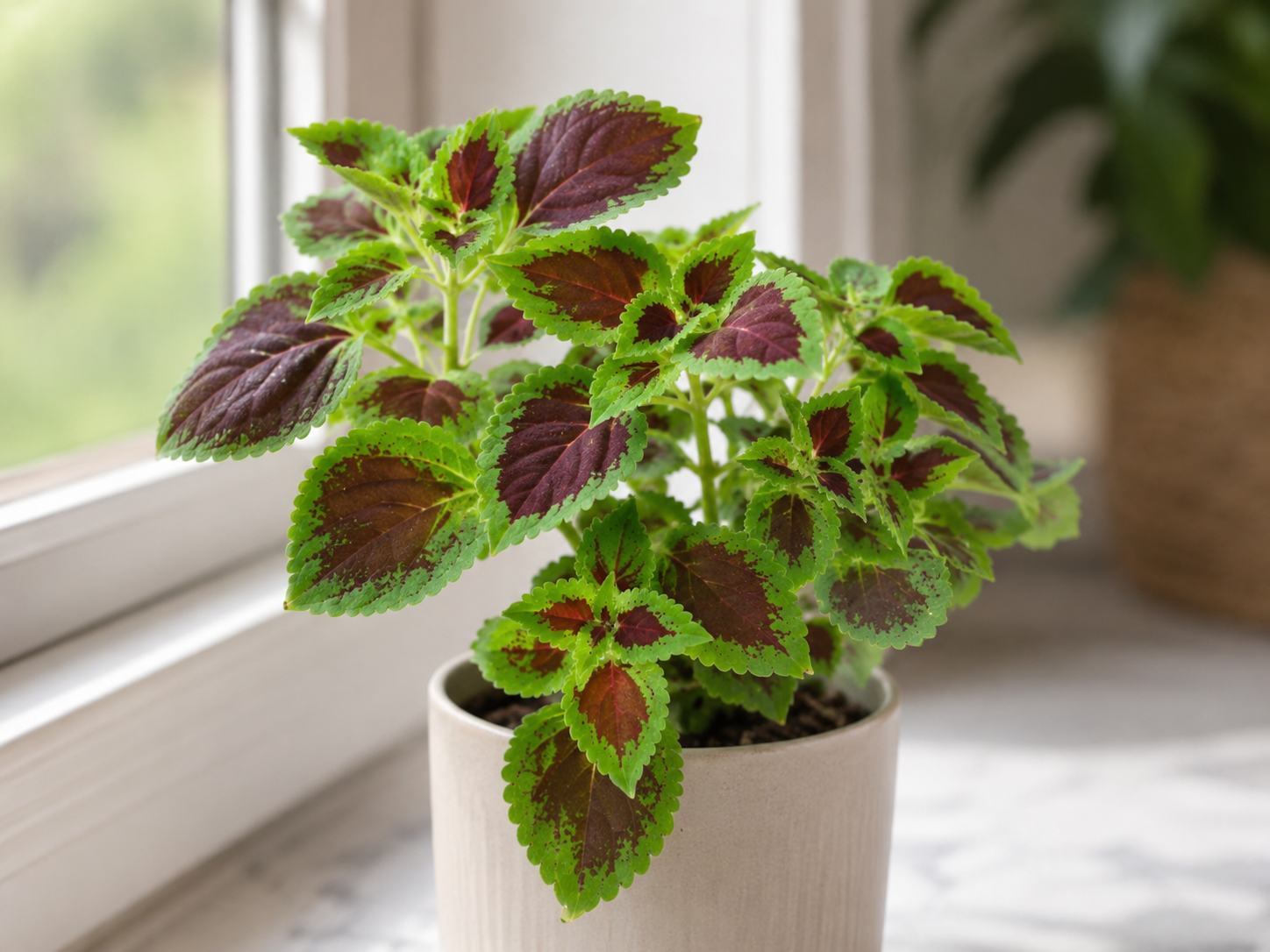
Meet Coleus
Why Grow Coleus Indoors?
Coleus, botanically known as Plectranthus scutellarioides, is one of those plants that can add color to a room even when it isn’t flowering.
Its leaves come in an incredible range of colors and patterns. Depending on the variety, you may see combinations of lime green, burgundy, red, pink, cream, purple, and almost black.
Coleus is often grown outdoors as a summer plant, but it can also make a beautiful indoor houseplant when given enough light.
Unlike many houseplants grown primarily for flowers, Coleus is loved for its colorful leaves. Good light is especially important for maintaining those rich colors.
Coleus Quick Care Guide
Start with these basic care requirements for a healthy indoor Coleus.
Light
Bright indirect light with gentle morning sun.
Water
Water when the top layer of soil begins to dry.
Soil
Rich but well-draining indoor potting soil.
Temperature
Warm indoor temperatures around 18–26°C.
Humidity
Average to moderately humid indoor conditions.
Pruning
Pinch regularly for bushier, fuller growth.
Light
How Much Light Does Coleus Need Indoors?
Coleus grows best indoors when it receives plenty of bright, indirect light.
A location close to an east- or west-facing window usually works well. Gentle morning sunlight can help maintain strong foliage colors, but intense summer afternoon sun may scorch delicate leaves.
What Happens If Coleus Doesn’t Get Enough Light?
Coleus will often survive in lower light, but the plant may lose some of the characteristics that make it so attractive.
- Stems become long and stretched.
- The plant begins leaning toward the window.
- Leaf colors become less intense.
- New leaves may grow smaller.
- The plant develops a thin or sparse appearance.
If the burgundy or red sections of your Coleus begin looking noticeably dull, moving it gradually into brighter light may help.
Watering
How Often Should You Water Coleus?
Coleus prefers more consistent moisture than succulent plants such as Kalanchoe or Jade.
However, that does not mean the soil should remain permanently wet. Constantly soggy soil can reduce airflow around the roots and lead to root problems.
Check Before Watering
Feel the top 2–3 cm of soil. If this upper layer feels dry, water the plant thoroughly. If it still feels damp, wait a little longer.
How to Water Coleus Properly
-
1
Check the top layer of soil first.
-
2
Water slowly and evenly around the pot.
-
3
Continue until excess water drains from the bottom.
-
4
Empty any standing water from the saucer or cover pot.
💧 Signs It May Be Thirsty
- Drooping leaves
- Dry soil
- Leaves feeling thin or limp
- Crispy leaf edges
⚠️ Signs of Too Much Water
- Yellowing leaves
- Wet soil for many days
- Soft stems near the soil
- Leaves dropping while still soft
- Unpleasant smell from the potting mix
Soil & Pot
Best Soil for Coleus
Coleus appreciates soil that can hold some moisture while still allowing excess water to drain freely.
A good-quality indoor houseplant potting mix usually works well. If your soil feels heavy or compacted, adding perlite can improve drainage and airflow.
Always Use Drainage Holes
Keep Coleus in a pot with at least one drainage hole so excess water can escape.
You can place a plastic nursery pot inside a decorative cover pot if you prefer that appearance.
Temperature
Best Temperature for Indoor Coleus
Coleus is a warm-growing plant and generally feels comfortable in normal heated homes.
Comfortable indoor growing range
Protect from prolonged cold
Keep the plant away from freezing conditions, strong cold drafts, and sudden temperature changes.
Coleus can spend summer outside, but because it is sensitive to cold, bring it indoors well before frost becomes a possibility.
Humidity
Does Coleus Need High Humidity?
Coleus generally grows well in average household humidity, although it can appreciate slightly more humidity when indoor air becomes particularly dry.
During winter, avoid placing your plant directly beside a radiator because the hot, dry air can cause leaves to dry more quickly.
Always check the soil rather than relying on misting to keep the plant hydrated. Healthy roots are much more important.
How to Make Coleus Grow Bushy
Regular pinching is one of the best things you can do for an indoor Coleus. Removing the growing tip encourages the plant to branch instead of producing one long stem.
Find a Growing Tip
Choose a healthy stem that is beginning to grow taller than the rest of the plant.
Cut Above a Leaf Node
Use clean scissors and make the cut just above a pair of leaves.
Wait for Branches
New shoots can develop from the nodes below the cut.
Repeat as Needed
Continue pinching new growth to maintain a compact, bushy shape.
Leggy Growth
Why Is My Coleus Growing Tall and Leggy?
Long stems with large spaces between the leaves usually mean the plant is stretching toward stronger light.
A lack of pruning can also allow individual stems to become tall rather than producing multiple side branches.
How to Fix a Leggy Coleus
- Move it gradually into brighter indirect light.
- Pinch the growing tips.
- Cut back very long stems.
- Rotate the pot regularly for even growth.
- Use healthy cuttings to make the pot fuller.
Flowers
Should You Remove Coleus Flowers?
Coleus can produce narrow flower spikes, often with small blue or purple flowers.
The flowers are attractive, but many growers remove them because Coleus is mainly grown for its foliage.
For Fuller Foliage
Pinching off flower spikes can help keep the plant focused on producing leaves and branching growth.
You can also leave the flowers if you enjoy them. Removing them is mainly a choice based on how you want your plant to look.
Feeding
How to Fertilize Coleus
Coleus can grow quickly during spring and summer and may benefit from light feeding during its active growing period.
Use a balanced liquid houseplant fertilizer at a diluted strength every few weeks during active growth.
Reduce or pause feeding during winter when growth slows.
Excess fertilizer can damage roots and create salt buildup in the soil. Follow the product instructions and avoid feeding a stressed plant.
How to Propagate Coleus
Coleus is one of the easiest plants to propagate from stem cuttings.
Take a Cutting
Choose a healthy stem approximately 8–12 cm long and cut just below a leaf node.
Remove Lower Leaves
Leave several healthy leaves at the top while exposing the lower nodes.
Place It in Water
Put the lower stem in clean water while keeping the remaining leaves above the waterline.
Wait for Roots
Keep the cutting in bright indirect light and refresh the water regularly.
Plant in Soil
Once a healthy root system develops, move the cutting into a small pot of well-draining soil.
Instead of making separate plants, you can eventually place rooted cuttings around the mother plant to create a bushier display.
Repotting
When Should You Repot Coleus?
Fast-growing Coleus plants may eventually fill their containers with roots.
Signs It May Be Time to Repot
- Roots are growing through drainage holes.
- The soil dries extremely quickly.
- Growth has slowed despite good care.
- The plant has become too large for its container.
- The potting mix has become old or compacted.
Move the plant into a container only slightly larger than its current pot.
A very large container can hold excess moisture around a relatively small root system.
Common Coleus Problems
Changes in the leaves can often help you figure out what your Coleus needs.
Drooping Leaves
Check the soil. Coleus can droop noticeably when it becomes too dry.
Yellow Leaves
Check for overly wet soil, poor drainage, or naturally aging lower leaves.
Leggy Growth
Usually improved with brighter light and regular pinching.
Faded Colors
The plant may not be receiving enough light to maintain strong foliage colors.
Brown Edges
Dry soil, hot air, excessive sun, or very dry conditions may contribute.
Bleached Patches
Pale or crispy patches may develop after excessive exposure to strong direct sunlight.
Coleus Care Through the Seasons
Spring
Growth begins increasing. Start regular feeding, prune leggy stems, and take cuttings.
Summer
Check the soil frequently and protect indoor plants from harsh afternoon sun.
Autumn
Bring outdoor Coleus plants inside before cold weather and inspect them carefully for pests.
Winter
Keep the plant close to a bright window and reduce feeding as growth slows.
Coleus Care Do’s & Don’ts
Do
- Give it plenty of bright indirect light.
- Check the soil regularly.
- Keep the soil lightly and consistently moist.
- Use a pot with drainage holes.
- Pinch growing tips for bushier growth.
- Rotate the plant for balanced growth.
- Propagate healthy stem cuttings.
Don’t
- Don’t leave the roots standing in water.
- Don’t allow the soil to stay soggy.
- Don’t keep it in a dark corner.
- Don’t expose it suddenly to intense sun.
- Don’t place it next to a hot radiator.
- Don’t let long stems grow unchecked.
- Don’t expose it to frost.
Keep Coleus Away From Curious Pets
Coleus can cause problems if cats or dogs chew or eat the plant. Keep it somewhere pets cannot easily reach, especially if you have an animal that likes nibbling houseplants.
Coleus Care FAQs
Can Coleus grow indoors?
Yes. Coleus can grow well indoors when given plenty of bright light, warm temperatures, and appropriate watering.
How often should I water Coleus?
Instead of using a fixed schedule, check the upper few centimeters of soil and water when the surface begins to feel dry.
How do I make my Coleus bushy?
Regularly pinch or prune the growing tips just above leaf nodes. This encourages the plant to produce additional side branches.
Why is my Coleus losing its color?
Insufficient light is a common reason colorful foliage becomes less vibrant. Move the plant gradually into a brighter location.
Should I cut the flowers off my Coleus?
You can. Many people remove flower spikes to encourage the plant to continue focusing on colorful foliage and compact growth.
Can Coleus be propagated in water?
Yes. Healthy stem cuttings root readily in water and can later be transferred into potting soil.
Can I keep Coleus outside during summer?
Yes, provided temperatures are warm. Introduce it gradually to outdoor conditions and protect it from intense midday sunlight and cold nights.
Bright Light + Consistent Water + Regular Pinching
Coleus doesn’t need a complicated indoor care routine. Give it plenty of bright light, water when the upper soil begins drying, and regularly pinch new growth.
Those simple habits can help maintain vibrant foliage while encouraging the plant to become fuller rather than tall and sparse.
And because Coleus is so easy to propagate, every little pruning session can quickly turn into another colorful plant.