
How to Care for Pothos Indoors
Pothos is one of the easiest and most rewarding houseplants to grow indoors. Its trailing vines, heart-shaped leaves, and forgiving nature make it perfect for beginners. With the right light, watering routine, pruning, and occasional feeding, Pothos can grow into a lush and beautiful indoor plant.
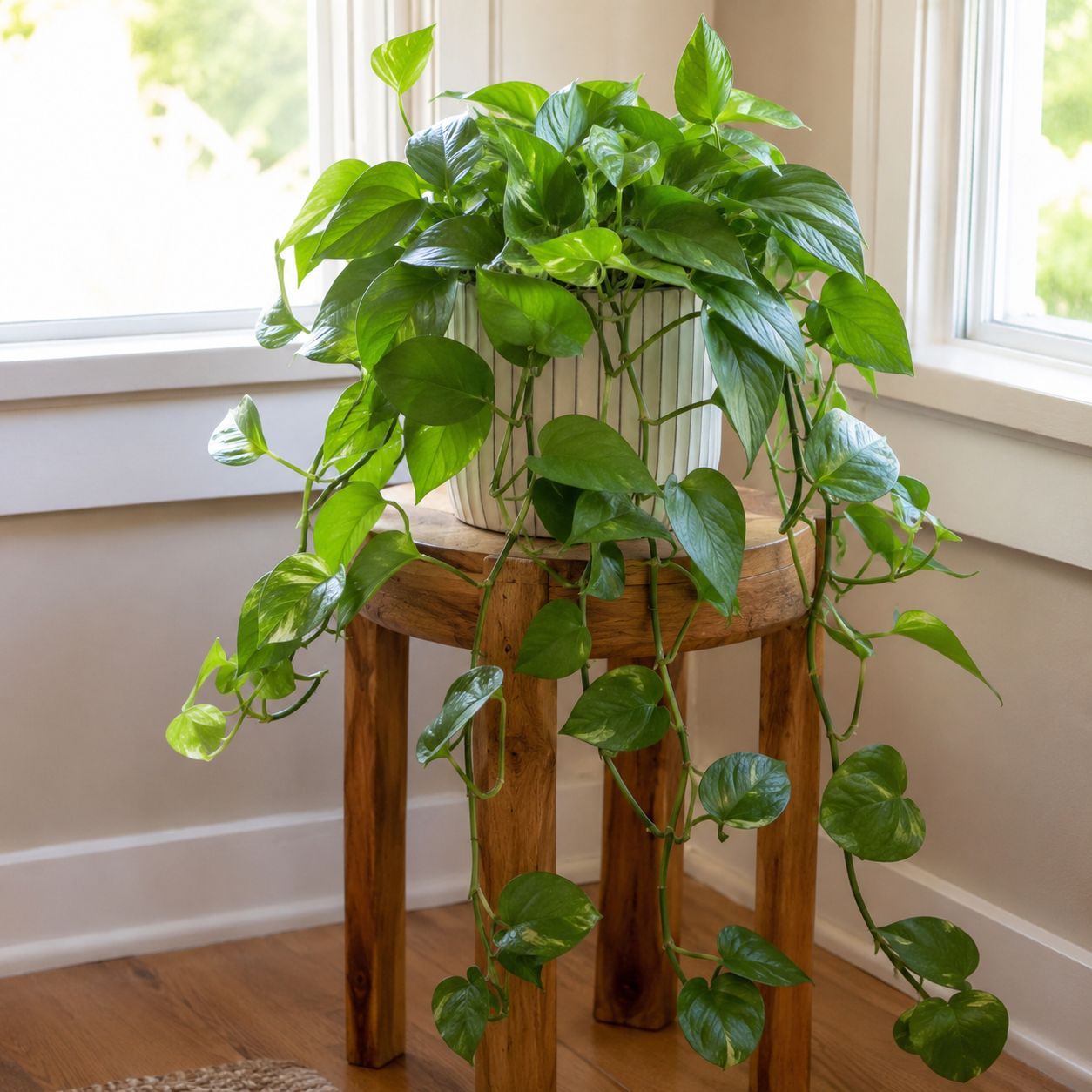
Meet Pothos
Why Pothos Is Such a Popular Houseplant
Pothos, botanically known as Epipremnum aureum, is loved for its attractive heart-shaped leaves and long trailing vines.
Depending on the variety, its foliage may be solid green or patterned with cream, yellow, white, or light green variegation.
One of the biggest reasons Pothos is so popular is its adaptability. It can tolerate a range of indoor conditions and usually recovers well from small care mistakes.
Although it can survive in lower light, Pothos becomes much more attractive when given suitable light, proper watering, and regular pruning.
Pothos is especially suitable for beginners because it grows quickly, propagates easily, and gives clear signs when it needs water or a change in conditions.
Pothos Quick Care Guide
Start with these simple care basics to keep your Pothos healthy indoors.
Light
Bright indirect light gives the best growth.
Water
Water when the upper soil begins to feel dry.
Soil
Use a loose, well-draining indoor potting mix.
Temperature
Warm household temperatures are ideal.
Humidity
Average household humidity usually works well.
Propagation
Very easy to propagate from stem cuttings.
Light
How Much Light Does Pothos Need?
Pothos grows best in bright, indirect light. A location close to a bright window usually produces fuller vines, larger leaves, and stronger variegation.
Gentle morning sunlight is usually fine, but intense afternoon sun through a hot window can scorch the foliage.
Can Pothos Grow in Low Light?
Pothos can tolerate lower-light rooms better than many houseplants, but low light should not be confused with no light.
In a darker location, growth may become slower and variegated varieties can produce greener leaves because the plant needs more chlorophyll.
Signs Your Pothos Needs More Light
- Long spaces develop between leaves.
- New leaves stay relatively small.
- Variegation begins fading.
- The plant grows very slowly.
- Vines stretch strongly toward the window.
Give variegated Pothos varieties plenty of bright indirect light. Better lighting can help maintain their contrasting leaf patterns.
Watering
How Often Should You Water Pothos?
Pothos prefers the soil to dry slightly between waterings rather than remaining constantly wet.
Instead of watering on a fixed weekly schedule, check the soil first. The plant may need water more frequently during warm, bright periods and less frequently during winter.
Check the Soil First
Push your finger into the upper 2–4 cm of soil. If this layer feels dry, it is usually time to water. If it still feels damp, wait a little longer.
The Best Way to Water Pothos
-
1
Check the soil before adding water.
-
2
Water slowly and evenly around the pot.
-
3
Continue until excess water drains from the bottom.
-
4
Empty any water collected in the saucer or decorative pot.
💧 Signs It May Be Thirsty
- Leaves begin drooping
- Leaves feel less firm
- Soil feels completely dry
- Leaf edges become slightly curled
⚠️ Signs of Too Much Water
- Yellow leaves
- Wet soil for many days
- Soft stems near the soil
- Leaves dropping while still soft
- Unpleasant smell from the potting mix
Soil & Pot
Best Soil for Pothos
Pothos prefers a loose potting mixture that retains some moisture while still allowing excess water to drain freely.
A good-quality indoor houseplant mix is usually suitable. If the soil feels dense or stays wet for too long, adding perlite or another aerating material can improve drainage.
Choose a Pot With Drainage Holes
A drainage hole helps prevent excess water from collecting around the roots.
You can keep your Pothos inside a plastic nursery pot and place it inside a decorative cover pot. Remove the inner pot when watering and allow it to drain before returning it.
Temperature
Best Temperature for Pothos Indoors
Pothos enjoys warm indoor temperatures and usually grows comfortably in normal household conditions.
Comfortable indoor growing range
Protect from prolonged cold conditions
Keep the plant away from cold drafts, freezing windows, and sudden temperature changes.
During winter, avoid placing your Pothos directly beside a hot radiator, where dry heated air can stress the foliage.
Humidity
Does Pothos Need High Humidity?
Pothos adapts well to average household humidity, which is another reason it is such an easy indoor plant.
It can appreciate moderately humid conditions, but you usually do not need a humidifier unless your indoor air is extremely dry.
Occasional misting is not a substitute for proper watering. Healthy roots, good light, and suitable airflow are much more important.
How to Make Pothos Fuller and Bushier
Pothos naturally produces long vines, but without pruning it may become sparse near the top of the pot. A few simple techniques can create a much fuller-looking plant.
Give It More Light
Bright indirect light supports stronger and more compact growth.
Prune Long Vines
Trim long vines just above a node to encourage additional growth.
Propagate Cuttings
Root the sections you remove instead of throwing them away.
Plant Them Back
Add rooted cuttings around the mother plant to make the pot denser.
Leggy Growth
Why Is My Pothos Getting Leggy?
A leggy Pothos usually has long sections of vine with large spaces between the leaves.
Insufficient light is one of the most common causes. The plant stretches toward available light, producing longer stems instead of compact foliage.
How to Fix a Leggy Pothos
- Move it gradually into brighter indirect light.
- Prune long or bare sections of vine.
- Rotate the pot regularly.
- Propagate healthy cuttings.
- Plant rooted cuttings back into the original pot.
Pothos grows quickly during favorable conditions. Trimming a long, sparse plant can help create a much healthier and fuller appearance.
Growth Style
Should Pothos Trail or Climb?
Pothos can be grown either as a trailing plant or encouraged to climb a support.
Trailing Pothos
Let the vines cascade naturally from a hanging basket, shelf, or tall planter.
This creates the classic flowing Pothos appearance and works beautifully on shelves.
Climbing Pothos
Provide a moss pole, coir pole, trellis, or another suitable support and gently guide the vines upward.
Climbing plants can develop a more upright appearance and, under favorable conditions, increasingly mature foliage.
Feeding
How to Fertilize Pothos
Pothos can grow quickly during spring and summer and may benefit from occasional feeding during active growth.
A balanced liquid houseplant fertilizer used at a reduced strength every few weeks is usually sufficient.
Feeding can be reduced or paused during winter when the plant is growing much more slowly.
Too much fertilizer can cause salts to accumulate in the potting mix and may damage the roots or leaf edges.
How to Propagate Pothos
Pothos is incredibly easy to propagate from stem cuttings as long as each cutting contains at least one healthy node.
Method 1: Propagate Pothos in Water
Choose a Healthy Vine
Choose a healthy section with several leaves and visible nodes.
Cut Below a Node
Make your cut just below a node using clean scissors.
Remove the Lower Leaf
Remove any leaf that would otherwise sit below the waterline.
Place the Node in Water
Keep the node submerged while keeping the remaining leaves above the water.
Wait for Roots
Keep the cutting in bright indirect light and refresh the water regularly while roots develop.
Method 2: Propagate Pothos in Soil
Pothos cuttings can also be planted directly into lightly moist potting soil.
Bury at least one node beneath the soil while keeping the leaves above the surface.
Keep the soil lightly moist while the cutting establishes roots, then gradually transition to a normal Pothos watering routine.
A Pothos leaf without a node may remain attractive for some time, but a node is needed for the cutting to develop into a complete growing plant.
Yellow Leaves
Why Are My Pothos Leaves Turning Yellow?
One yellow leaf is not always a reason to worry. Older leaves naturally age and eventually fall from the plant.
If several leaves begin yellowing at the same time, look more closely at your watering routine, light, and soil condition.
Too Much Water
Constantly wet soil is one of the first things to check when several leaves turn yellow.
Low Light
Very low light slows water use and can contribute to poor overall growth.
Poor Drainage
Dense soil or a container without drainage may keep the roots wet for too long.
Natural Aging
An occasional older leaf near the base may simply be reaching the end of its natural life.
Leaf Problems
Why Are Pothos Leaves Brown or Curling?
Brown or curling leaves can develop for several reasons, so consider the condition of the soil and the plant’s environment together.
Brown Crispy Edges
These may develop after prolonged dryness, hot air, strong sunlight, or stress from mineral buildup.
Curling Leaves
Curling can occur when the plant becomes very dry, experiences temperature stress, or is adjusting to a change in conditions.
Brown or curling leaves can have different causes. Feeling the soil first can help you avoid watering an already wet plant.
Repotting
When Should You Repot Pothos?
Fast-growing Pothos plants can eventually fill their pots with roots, especially when they receive good light and regular care.
Signs Your Pothos May Need Repotting
- Roots are growing heavily through drainage holes.
- The plant dries extremely quickly after watering.
- There is very little soil remaining around the roots.
- Growth has slowed despite otherwise good conditions.
- The plant has clearly outgrown its container.
Move your Pothos into a container only slightly larger than its current pot. Too much unused soil can stay wet for longer than the roots need.
Common Pothos Problems
Your Pothos leaves often give useful clues when something about its care needs adjusting.
Yellow Leaves
Check for wet soil, poor drainage, low light, or natural aging.
Brown Tips
Review watering consistency, dry air, strong sun, and mineral buildup.
Drooping Leaves
Check whether the soil is too dry or whether the roots have stayed wet for too long.
Leggy Vines
Give the plant brighter light and prune long, sparse vines.
Fading Variegation
Variegated varieties may become greener when they receive too little light.
Small Leaves
Low light, limited nutrition, or immature trailing growth can contribute to smaller foliage.
Pothos Care Through the Seasons
Spring
New growth increases. This is a good time for pruning, propagation, repotting, and restarting fertilizer.
Summer
Check the soil regularly because warm weather can increase water use. Protect the leaves from intense direct sun.
Autumn
Growth may begin slowing as daylight decreases. Start reducing watering and feeding gradually.
Winter
Move the plant closer to available natural light and always check the soil before watering.
Pothos Care Do’s & Don’ts
Do
- Give it bright indirect light.
- Check the soil before watering.
- Use a pot with drainage holes.
- Prune long vines to encourage fuller growth.
- Rotate the plant for even growth.
- Propagate healthy stem cuttings.
- Plant cuttings back into the pot for fullness.
Don’t
- Don’t leave the roots sitting in water.
- Don’t keep the soil permanently wet.
- Don’t place it in a completely dark room.
- Don’t suddenly expose it to intense summer sun.
- Don’t overfertilize.
- Don’t use an unnecessarily oversized pot.
- Don’t ignore long, bare, leggy vines.
Keep Pothos Away From Pets
Pothos contains irritating calcium oxalate crystals and should not be chewed or eaten by cats or dogs.
If you have curious pets, keep trailing vines somewhere they cannot easily reach.
Pothos Care FAQs
Is Pothos easy to care for indoors?
Yes. Pothos is one of the most beginner-friendly houseplants. Provide suitable light, allow the upper soil to dry between waterings, and use a pot with drainage.
How often should I water Pothos?
There is no universal schedule. Check the upper few centimeters of soil and water when this layer begins to feel dry.
Can Pothos grow in low light?
Pothos can tolerate lower light, but growth may become slower and variegated varieties may lose some of their contrasting patterns.
How do I make my Pothos fuller?
Provide brighter indirect light, prune long vines, propagate the cuttings, and plant rooted cuttings back into the original pot.
Can I propagate Pothos in water?
Yes. Cut below a node, remove the lowest leaf, and place the node in water while keeping the remaining foliage above the waterline.
Why are my Pothos leaves turning yellow?
Yellow leaves can have several causes, including overly wet soil, poor drainage, low light, or natural aging of older leaves.
Should I let my Pothos trail or climb?
Either is fine. Allow the vines to trail for a cascading look or provide a support if you prefer an upright climbing plant.
Can I put Pothos in the bathroom?
A bathroom can work well if it receives enough natural light. Humidity alone cannot replace the light the plant needs for healthy growth.
Bright Light + Careful Watering + Regular Pruning
Pothos doesn’t need a complicated care routine to become a beautiful, trailing houseplant.
Give it plenty of bright indirect light, allow the upper soil to dry before watering, and trim long vines whenever the plant begins looking sparse.
And because every healthy cutting can become another vine, one small Pothos can eventually turn into an entire collection.