
How to Care for a Jade Plant Indoors
Jade plants are beautiful, long-living succulents known for their thick glossy leaves and tree-like stems. With plenty of light, careful watering, and occasional pruning, a Jade Plant can become fuller, stronger, and more impressive with age.
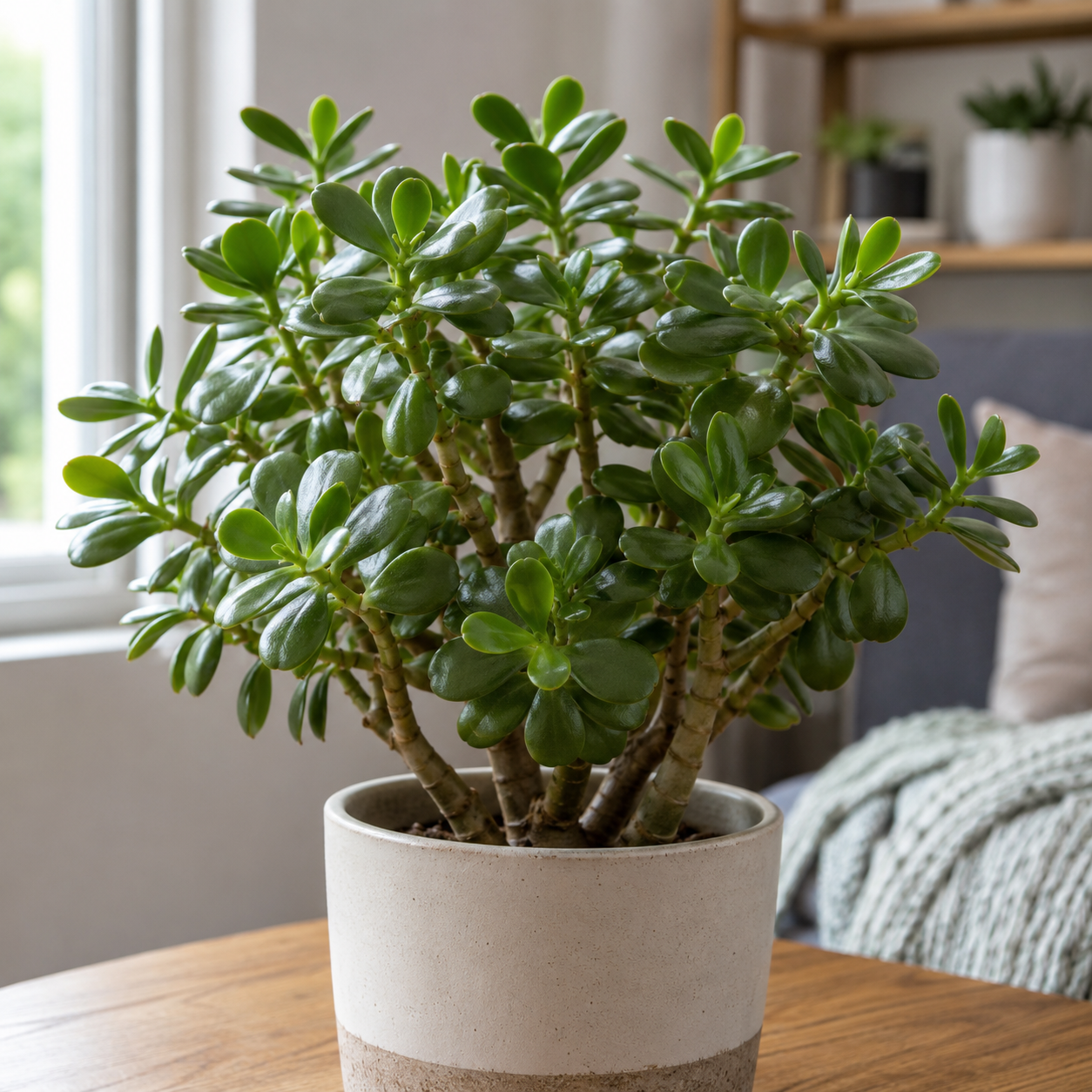
Meet the Plant
Why Jade Plants Make Wonderful Houseplants
Jade Plant, botanically known as Crassula ovata, is a succulent with thick leaves and fleshy stems that gradually become woody as the plant matures.
Unlike many soft-stemmed houseplants, a mature Jade Plant can develop the appearance of a miniature tree. With the right care, these plants can live for many years and become increasingly beautiful over time.
Jade Plants are also relatively forgiving. Their leaves and stems store water, which means they cope much better with occasional dryness than with constantly wet soil.
Treat your Jade Plant like a succulent. Give it lots of light, allow the soil to dry between waterings, and never leave the roots sitting in water.
Jade Plant Quick Care Guide
Start with these simple basics to help your Jade Plant thrive indoors.
Light
Give it several hours of bright light each day.
Water
Allow the soil to dry well between waterings.
Soil
Use a fast-draining succulent or cactus mix.
Temperature
Normal warm household temperatures work well.
Pruning
Prune to encourage branching and a fuller shape.
Propagation
Easy to propagate from stems or leaves.
Light
How Much Light Does a Jade Plant Need?
Jade Plants need plenty of light to develop strong stems, compact growth, and healthy leaves.
Place your Jade Plant close to a bright window. A few hours of gentle direct sunlight can be beneficial, particularly morning or late afternoon sun.
If your plant has been growing in lower light, introduce stronger sunlight gradually. Sudden exposure to intense summer sun can scorch leaves that are not accustomed to it.
Signs Your Jade Plant Needs More Light
- Long stems with large gaps between leaves
- The plant leaning strongly toward the window
- Thin or weak new growth
- Smaller new leaves
- Branches that struggle to support themselves
Turn the pot a little every week or two so all sides receive light. This can help prevent the plant from leaning heavily in one direction.
Watering
How Often Should You Water a Jade Plant?
Jade Plants store water inside their thick leaves and stems, so they do not need constantly moist soil.
Overwatering is one of the most common problems with Jade Plants. Instead of following a fixed schedule, check the soil before adding more water.
Let the Soil Dry First
Wait until the potting mix has dried well before watering again. If the soil still feels moist below the surface, give the plant more time.
The Best Way to Water a Jade Plant
-
1
Check that the soil has dried sufficiently.
-
2
Water thoroughly across the surface of the soil.
-
3
Allow excess water to drain freely from the pot.
-
4
Empty any water remaining in the saucer or decorative pot.
💧 Signs It May Need Water
- Leaves begin to wrinkle
- Leaves feel slightly softer
- The soil is completely dry
- Leaves lose some of their firmness
⚠️ Signs of Too Much Water
- Yellow leaves
- Soft or mushy leaves
- Leaves dropping easily
- Soft stem tissue
- Wet soil that stays damp for many days
Soil & Pot
Best Soil for a Jade Plant
Jade Plants need loose, fast-draining soil that allows air to reach the roots.
A cactus or succulent potting mix is usually the easiest choice. Regular houseplant soil can hold too much moisture unless it is amended with materials such as perlite or pumice.
Choose a Pot With Drainage
Drainage holes are particularly important for Jade Plants because excess moisture around the roots can quickly cause problems.
Terracotta pots can also be useful because the porous material allows moisture to evaporate more quickly than glazed containers.
Temperature
Best Temperature for Jade Plants Indoors
Jade Plants are comfortable in normal household temperatures and generally prefer warm days with slightly cooler nights.
Comfortable everyday indoor range
Protect from prolonged cold
Keep the plant away from freezing conditions, cold drafts, and sudden temperature changes.
Can Jade Plants Go Outside in Summer?
Yes. Jade Plants can benefit from spending warm months outdoors, but they should be acclimated gradually to stronger sunlight.
Start with a bright shaded location before increasing direct sun exposure. Bring the plant back indoors before cold autumn nights arrive.
Humidity
Does a Jade Plant Need High Humidity?
No. Jade Plants do not require high humidity and generally prefer the normal, relatively dry conditions found inside most homes.
There is usually no reason to mist a Jade Plant regularly.
Keeping succulent foliage constantly wet is unnecessary. Good airflow, suitable light, and healthy roots are much more important.
How to Make a Jade Plant Bushier
If you want your Jade Plant to develop several branches rather than one long stem, pruning can help encourage a fuller tree-like shape.
Choose a Healthy Stem
Find a healthy growing branch that has several sets of leaves.
Cut Above a Node
Use clean pruning scissors and make the cut above a leaf node.
Wait for Branches
New shoots can develop below the cut, creating additional branches.
Repeat Gradually
Shape the plant over time rather than removing too much at once.
Thick Trunk
How to Make a Jade Plant Trunk Thicker
One of the most attractive features of an older Jade Plant is its thick, woody trunk. However, trunk thickness develops gradually as the plant matures.
There is no instant trick for creating a thick trunk, but good growing conditions encourage stronger development.
Provide Strong Light
Bright conditions help the plant develop compact, sturdy growth instead of weak stretched stems.
Encourage Branching
Pruning can create additional branches and gradually build a stronger tree-like structure.
Don’t Oversize the Pot
Keep the root system healthy rather than placing a small plant in a huge moisture-retaining container.
Give It Time
The woody appearance develops with age. A young Jade Plant cannot instantly look like a mature specimen.
Thick trunks are usually a sign of maturity. Focus on healthy, compact growth and allow the plant to develop naturally over time.
Feeding
How to Fertilize a Jade Plant
Jade Plants do not need heavy feeding. During spring and summer, you can use a diluted succulent fertilizer or balanced houseplant fertilizer while the plant is actively growing.
Feeding every few weeks during active growth is generally enough. Reduce or stop fertilizing during winter when growth slows.
Too much fertilizer can damage the roots and cause mineral salts to build up in the soil.
How to Propagate a Jade Plant
Jade Plants can be propagated from both stem cuttings and individual healthy leaves.
Method 1: Stem Cuttings
Take a Healthy Cutting
Cut a healthy stem approximately 8–12 cm long using clean scissors.
Remove Lower Leaves
Remove leaves from the bottom portion of the stem.
Let the Cutting Callus
Leave the cutting somewhere dry for a few days so the cut surface can form a callus.
Plant in Succulent Soil
Insert the cutting into a small pot filled with well-draining succulent soil.
Method 2: Leaf Propagation
Gently remove a healthy whole leaf from the plant. Try to remove the entire leaf cleanly where it joins the stem.
Leave the leaf somewhere dry until the end forms a callus. Then place it on top of lightly moist succulent soil.
Over time, small roots and eventually a new plant may develop from the base of the leaf.
Leaf propagation is especially slow compared with starting from a stem cutting. Give the new plant plenty of time to develop.
Repotting
When Should You Repot a Jade Plant?
Jade Plants do not need frequent repotting and generally tolerate being somewhat snug in their containers.
Signs It May Be Time to Repot
- Roots are growing heavily through drainage holes.
- The plant has become unstable or top-heavy.
- The potting soil has become compacted.
- Water no longer drains properly.
- The plant clearly needs more room for its roots.
A very large pot can retain too much wet soil around the roots. Move up gradually when repotting.
Leaf Drop
Why Is My Jade Plant Dropping Leaves?
Jade Plants occasionally lose older leaves naturally, but sudden or excessive leaf drop can indicate stress.
Too Much Water
Soft leaves that fall easily can be associated with overly wet soil.
Extreme Dryness
Long periods without water can also cause leaves to wrinkle and eventually drop.
Sudden Light Change
A dramatic move between different light conditions can temporarily stress the plant.
Temperature Stress
Cold drafts or major temperature changes may also contribute to leaf loss.
Common Jade Plant Problems
The leaves are often the easiest place to look when something about your Jade Plant’s care needs adjusting.
Yellow Leaves
Check whether the soil is remaining wet for too long between waterings.
Wrinkled Leaves
The plant may be using up stored moisture. Check whether the soil is completely dry.
Soft Leaves
Soft, mushy leaves can indicate excess moisture or root problems.
Leggy Growth
Long weak stems usually indicate that the plant needs more light.
Leaves Falling
Review watering, light, temperature, and any recent environmental changes.
Brown Patches
Sudden intense sunlight or physical damage can sometimes create brown marks.
Jade Plant Care Through the Seasons
Spring
Growth begins increasing. Spring is a good time for pruning, repotting, propagation, and restarting fertilizer.
Summer
Give the plant plenty of light and check the soil more often because warm temperatures may dry it faster.
Autumn
Bring outdoor Jade Plants inside before cold nights and gradually reduce watering as growth slows.
Winter
Keep the plant near your brightest window and water less frequently because the soil dries more slowly.
Jade Plant Care Do’s & Don’ts
Do
- Give it plenty of bright light.
- Allow the soil to dry between waterings.
- Use fast-draining succulent soil.
- Choose a pot with drainage holes.
- Rotate the plant for balanced growth.
- Prune to encourage branching.
- Propagate healthy stems and leaves.
Don’t
- Don’t keep the soil constantly wet.
- Don’t leave roots sitting in water.
- Don’t keep the plant in a dark corner.
- Don’t suddenly expose it to harsh sunlight.
- Don’t mist it every day.
- Don’t use an unnecessarily large pot.
- Don’t expect a thick trunk immediately.
Jade Plant Care FAQs
Are Jade Plants easy to care for indoors?
Yes. Jade Plants are beginner-friendly succulents as long as they receive enough light and are not watered too frequently.
How often should I water a Jade Plant?
There is no fixed schedule. Allow the potting mix to dry well before watering the plant thoroughly again.
Why are my Jade Plant leaves wrinkled?
Wrinkled leaves often indicate that the plant is using its stored water. Check whether the soil has dried completely before watering.
How can I make my Jade Plant bushier?
Provide strong light and prune healthy stems above leaf nodes to encourage additional branching.
How do I make a Jade Plant trunk thicker?
Give the plant plenty of light, maintain healthy growth, encourage branching through pruning, and allow it time to mature. Thick woody trunks develop gradually.
Can Jade Plants be propagated from leaves?
Yes. Healthy whole leaves can eventually produce roots and new plants after the cut end has dried and callused.
Can Jade Plants live for many years?
Yes. With suitable care, Jade Plants are long-lived succulents and can become increasingly tree-like as they mature.
Bright Light + Dry Soil + Patience
Jade Plants become more impressive with age, but they don’t need a complicated care routine.
Give yours plenty of light, allow the soil to dry between waterings, and prune occasionally to encourage a strong, balanced shape.
With time, that small succulent can develop into a beautiful miniature tree with a thick trunk, sturdy branches, and years of new growth.