
How to Care for Fittonia Indoors
Fittonia, also known as the Nerve Plant, is a small tropical houseplant loved for its beautifully patterned leaves and colorful veins. It enjoys bright indirect light, consistently moist soil, warm temperatures, and higher humidity than many common houseplants.
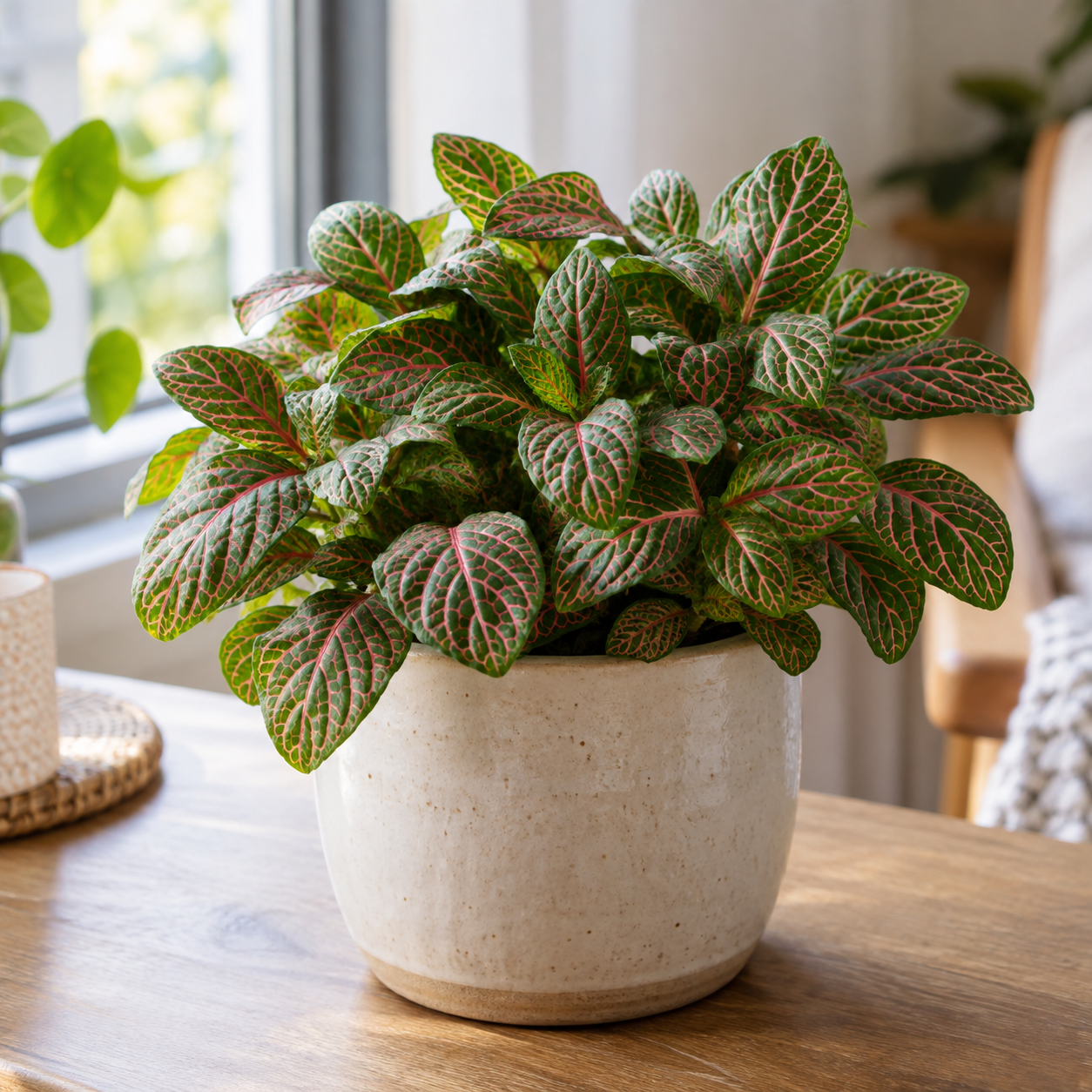
Meet Fittonia
Why Grow Fittonia Indoors?
Fittonia is a compact tropical houseplant famous for its decorative foliage. Its leaves are covered with contrasting veins that may appear white, pink, red, or silvery depending on the variety.
Because Fittonia stays relatively small, it works beautifully on shelves, desks, side tables, plant stands, and inside suitable terrariums.
Fittonia has a reputation for being dramatic because it can wilt very quickly when the soil becomes too dry. Fortunately, a thirsty plant often recovers after watering if it has not remained dry for too long.
Unlike succulents, Fittonia does not like completely dry soil. Aim for consistent moisture without leaving the roots waterlogged.
Fittonia Quick Care Guide
These are the basic conditions that help a Nerve Plant stay colorful and full indoors.
Light
Bright indirect light keeps foliage colorful.
Water
Keep the soil lightly and consistently moist.
Soil
Use a moisture-retentive but well-draining mix.
Humidity
Moderate to high humidity is preferred.
Temperature
Warm, stable indoor conditions work best.
Pruning
Pinching encourages fuller, bushier growth.
Light
How Much Light Does Fittonia Need?
Fittonia grows best in bright, indirect light. A location near a bright window works well as long as strong midday sunlight does not hit the foliage for long periods.
Intense direct sunlight can scorch the delicate leaves, while very low light can cause the plant to become stretched and less colorful.
Signs Your Fittonia Needs More Light
- Stems become long and stretched.
- There are larger gaps between leaves.
- Leaf colors appear duller.
- New growth becomes smaller.
- The plant leans strongly toward the window.
Bright filtered light usually gives you the best balance between strong growth and vibrant leaf patterns.
Watering
How Often Should You Water Fittonia?
Fittonia prefers more consistent moisture than plants such as Pothos, Jade Plant, or Dracaena.
The soil should stay lightly moist but never permanently saturated. Check the pot regularly because small Fittonia pots can dry surprisingly quickly.
Check the Surface
Water when the upper 1–2 cm of soil begins to feel dry. Avoid waiting until the entire pot becomes completely dry.
How to Water Fittonia Properly
-
1
Feel the upper layer of soil.
-
2
Water slowly and evenly when it begins to dry.
-
3
Allow excess water to drain from the bottom.
-
4
Empty any water remaining in the saucer or cover pot.
💧 Signs It Is Too Dry
- Sudden dramatic drooping
- Dry soil
- Crispy leaf edges
- Curling leaves
⚠️ Signs of Too Much Water
- Yellow leaves
- Soft stems
- Constantly soggy soil
- Leaf loss
- Unhealthy or rotting roots
Why Is My Fittonia Drooping?
Fittonia is famous for suddenly collapsing when it becomes thirsty, which can look much more serious than it actually is.
Dry Soil
This is one of the most common causes of sudden Fittonia wilting.
Overwatering
Persistent drooping with wet soil may indicate stressed roots.
Heat Stress
Very hot conditions can cause the foliage to wilt quickly.
Strong Sun
Intense sunlight can cause moisture loss and stress delicate leaves.
A thirsty Fittonia may begin lifting its leaves again after watering. However, repeatedly allowing it to collapse can eventually damage the plant, so try to water before severe wilting occurs.
Humidity
How Much Humidity Does Fittonia Need?
Fittonia naturally appreciates humid conditions and often performs better with more humidity than the average succulent or drought-tolerant houseplant.
Normal indoor humidity may be enough in many homes, but very dry winter air can lead to crispy leaf edges or frequent wilting.
Humidifier
A nearby humidifier can help if your home becomes very dry.
Plant Grouping
Grouping houseplants together can create a slightly more humid local environment.
Terrarium
Fittonia is especially well suited to humid terrarium conditions.
Even in humid conditions, the roots still need appropriately moist soil.
Soil & Pot
Best Soil for Fittonia
Fittonia needs a potting mix that holds some moisture while still allowing air to reach the roots.
A good indoor houseplant mix with added perlite works well for many plants. Avoid extremely dense soil that stays waterlogged.
Drainage Still Matters
Fittonia likes moist soil, but this does not mean its roots should sit in standing water.
Choose a container with drainage holes and empty excess water after watering.
Temperature
Best Temperature for Fittonia Indoors
Fittonia prefers warm and relatively stable temperatures because it is a tropical plant.
Comfortable indoor growing range
Protect from cold drafts and chilly windows
Avoid placing your Nerve Plant beside frequently opened cold doors, air-conditioning vents, or hot radiators.
Feeding
How to Fertilize Fittonia
During spring and summer, Fittonia can benefit from occasional feeding while actively producing new leaves.
Use a balanced liquid houseplant fertilizer at a reduced strength according to the product instructions.
Feeding can be reduced during winter when growth slows.
Overfeeding can damage the roots. Light, humidity, watering, and healthy growth conditions are more important.
How to Make Fittonia Bushier
Fittonia can become leggy over time, especially when it receives too little light. Pinching and pruning can keep the plant compact and full.
Give It More Light
Bright indirect light encourages more compact growth.
Pinch Growing Tips
Pinching encourages stems to branch rather than stretch.
Prune Leggy Stems
Trim long sparse sections above a healthy node.
Propagate Cuttings
Root healthy trimmings and add them back to the pot.
Pruning
How to Prune a Nerve Plant
Fittonia responds well to light pruning. Use clean scissors or pinch soft stem tips with clean fingers.
What Should You Trim?
- Long leggy stems
- Damaged leaves
- Yellow foliage
- Weak sparse growth
- Stems growing far beyond the desired shape
Light trimming usually produces a nicer compact shape than waiting until the plant becomes extremely leggy.
How to Propagate Fittonia
Fittonia is easy to propagate from healthy stem cuttings containing several leaves and at least one node.
Choose a Healthy Stem
Select a healthy piece of growth with several leaves.
Cut Below a Node
Use clean scissors and cut just beneath a leaf node.
Remove Lower Leaves
Remove foliage that would sit below the water or soil surface.
Root in Water or Soil
Place the node in clean water or lightly moist propagation soil.
Keep It Warm and Humid
Bright indirect light and warm humid conditions encourage rooting.
Once rooted, several cuttings can be planted around the original Fittonia to fill empty areas of the pot.
Repotting
When Should You Repot Fittonia?
Fittonia generally does not require a very large container. Repot when its roots clearly begin filling the existing pot.
Signs Your Fittonia May Need Repotting
- Roots grow heavily through drainage holes.
- The plant dries extremely quickly after watering.
- The root ball is tightly packed.
- The potting mix has become compacted.
- Growth slows despite otherwise good care.
Move up only slightly. An oversized pot can hold more wet soil than the root system can comfortably use.
Crispy Leaves
Why Are My Fittonia Leaves Crispy?
Crispy leaf edges often indicate that the plant has experienced dryness somewhere in its environment.
Dry Soil
Fittonia does not tolerate prolonged dryness very well.
Dry Air
Very low humidity can contribute to crispy margins.
Too Much Sun
Strong direct sunlight can burn delicate foliage.
Heat
Hot radiator air can dry leaves quickly.
Yellow Leaves
Why Are Fittonia Leaves Turning Yellow?
Yellow leaves can appear for several reasons, but overly wet soil is one of the first things to investigate.
Overwatering
Constantly saturated soil can stress the root system.
Poor Drainage
Dense soil or blocked drainage can hold excessive water.
Low Light
Low light slows water use and may contribute to wet soil.
Natural Aging
An occasional older leaf may yellow naturally.
Leaf Color
Why Is My Fittonia Losing Its Color?
Fittonia is grown primarily for its patterned leaves, so fading color can be disappointing.
Low light is one of the most common reasons colorful varieties appear duller. Move the plant gradually into brighter indirect light.
Strong direct sun can also damage foliage, so the goal is bright filtered light rather than intense sunlight.
For Better Leaf Color
Give the plant bright indirect light, consistent moisture, warm temperatures, and enough humidity to support healthy new foliage.
Can Fittonia Grow in a Terrarium?
Yes. Fittonia is one of the most popular terrarium plants because it enjoys warm temperatures, high humidity, and consistently moist soil.
Its compact size and colorful leaves also make it perfect for creating decorative indoor plant displays.
Common Fittonia Problems
Sudden Drooping
Check whether the soil has become too dry.
Crispy Edges
Check soil moisture, humidity, heat, and direct sunlight.
Yellow Leaves
Review watering frequency and drainage.
Leggy Growth
Give the plant brighter indirect light and pinch long stems.
Faded Color
Low light can make patterned foliage appear dull.
Pests
Inspect regularly for common indoor plant pests.
Pests
Common Pests on Fittonia
Healthy Fittonia plants are not necessarily pest-prone, but indoor pests can still occasionally appear.
Spider Mites
Look for pale speckling and fine webbing.
Mealybugs
Look for white cotton-like clusters around stems and leaves.
Aphids
Check tender new growth for clusters of small insects.
Many pests hide on the lower leaf surfaces where they are easier to miss.
Fittonia Care Through the Seasons
Spring
New growth increases. Spring is ideal for pruning, propagation, repotting, and restarting fertilizer.
Summer
Check moisture frequently and protect leaves from intense direct sun.
Autumn
Growth may slow as daylight decreases. Reduce feeding gradually.
Winter
Protect from cold windows and dry radiator air while monitoring soil moisture carefully.
Fittonia Care Do’s & Don’ts
Do
- Give it bright indirect light.
- Keep the soil lightly moist.
- Provide moderate to high humidity.
- Use a pot with drainage holes.
- Pinch stems to encourage bushiness.
- Propagate healthy cuttings.
- Check leaves regularly for pests.
Don’t
- Don’t let the soil dry completely for long.
- Don’t keep the roots sitting in water.
- Don’t expose it to harsh midday sun.
- Don’t place it beside a hot radiator.
- Don’t use an oversized pot.
- Don’t overfertilize.
- Don’t ignore repeated wilting.
Is Fittonia Pet Friendly?
Fittonia is generally considered non-toxic to cats and dogs, making it a popular choice for pet-friendly indoor plant collections.
Even so, it is better to discourage pets from chewing houseplants because eating large amounts of plant material can still cause stomach upset.
Fittonia Care FAQs
Is Fittonia difficult to care for?
Fittonia becomes much easier once you learn to maintain consistent moisture, bright indirect light, and suitable humidity.
Why does my Fittonia suddenly droop?
Sudden drooping commonly happens when the soil becomes too dry. Check the soil before watering because wet roots can also cause wilting.
How often should I water Fittonia?
There is no fixed schedule. Check the upper 1–2 cm of soil and water when this layer begins to dry.
Does Fittonia need high humidity?
Fittonia prefers moderate to high humidity and often performs particularly well in humid environments such as suitable terrariums.
How do I make my Fittonia bushier?
Give it bright indirect light and regularly pinch or trim the growing tips to encourage branching.
Can Fittonia be propagated in water?
Yes. Stem cuttings containing nodes can be rooted in clean water before being transferred to soil.
Why are my Fittonia leaves crispy?
Crispy foliage can be caused by dry soil, very low humidity, excessive heat, or too much direct sunlight.
Is Fittonia good for terrariums?
Yes. Its small size and preference for warm, humid conditions make Fittonia an excellent terrarium plant.
Is Fittonia safe for cats and dogs?
Fittonia is generally regarded as non-toxic to cats and dogs, although pets should still be discouraged from chewing houseplants.
Bright Light + Consistent Moisture + Humidity
Fittonia may be a little dramatic, but its care becomes simple once you understand what it likes.
Give it bright indirect light, keep the soil lightly moist, provide enough humidity, and pinch the stems occasionally to encourage fuller growth.
In return, you’ll get a compact indoor plant filled with beautifully patterned leaves and some of the most colorful foliage in your houseplant collection.