
How to Care for a Weeping Fig Indoors
Weeping Fig, also known as Ficus benjamina, is a graceful indoor tree with slender branches and glossy green leaves. It can grow into an impressive statement plant, but it appreciates consistency. Good light, careful watering, stable temperatures, and minimal unnecessary moving are the keys to keeping it healthy indoors.
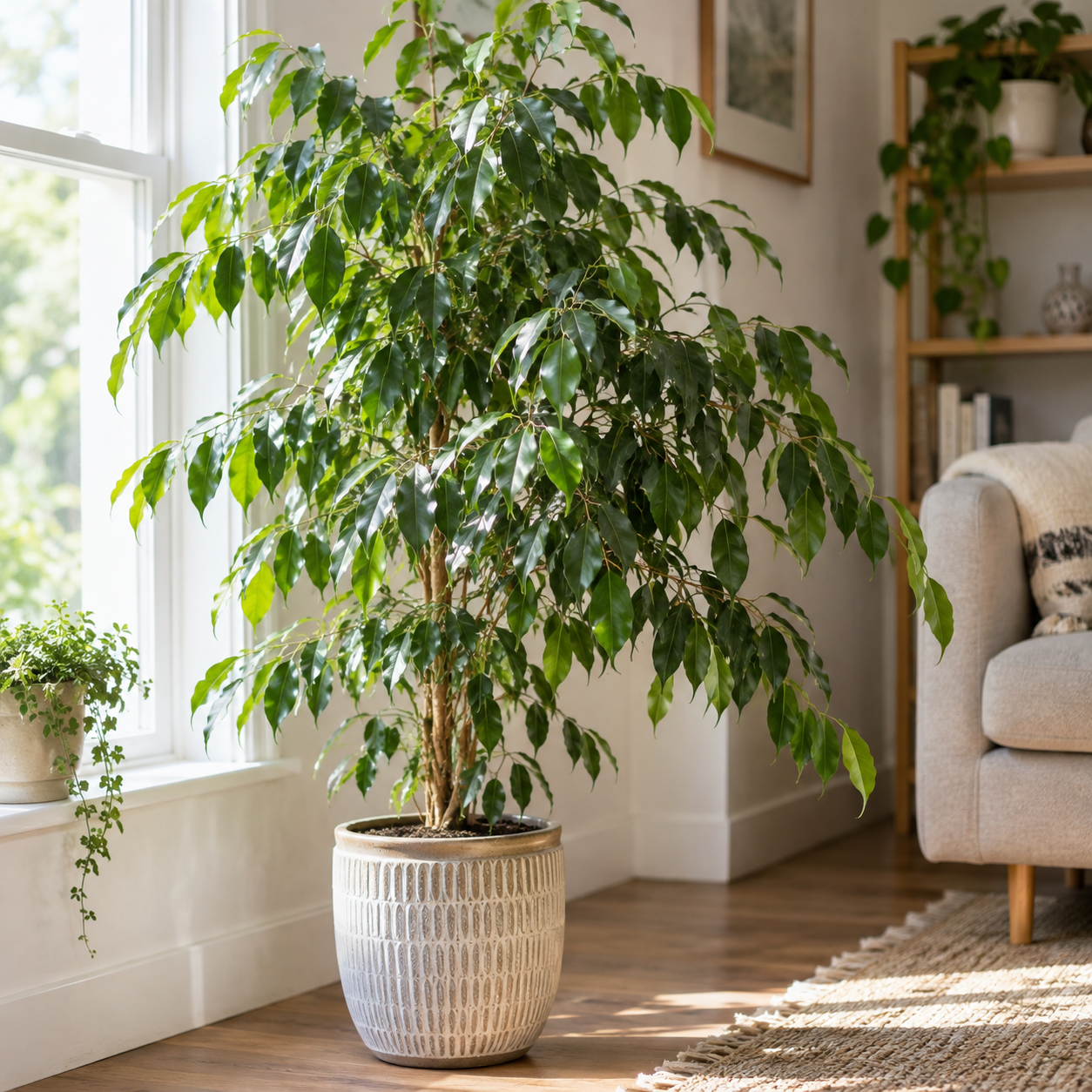
Meet the Plant
Why Grow a Weeping Fig Indoors?
Weeping Fig, botanically known as Ficus benjamina, is a popular indoor tree with arching branches and attractive pointed leaves.
Unlike smaller trailing houseplants, a healthy Ficus benjamina can gradually become a substantial floor plant and create a beautiful tree-like feature inside the home.
The main challenge is that Weeping Fig can be sensitive to changes. Moving the plant, changing its light dramatically, overwatering, cold drafts, or sudden temperature fluctuations may all trigger leaf drop.
Once your Weeping Fig is happy in a bright location, avoid moving it unnecessarily. Stable conditions usually produce the best results.
Weeping Fig Quick Care Guide
These simple basics will help your Ficus benjamina settle in and grow successfully indoors.
Light
Bright indirect light is ideal.
Water
Water when the upper soil begins to dry.
Soil
Use loose, well-draining indoor potting soil.
Temperature
Keep conditions warm and stable.
Humidity
Moderate humidity is helpful.
Pruning
Prune to shape the tree and encourage branching.
Light
How Much Light Does a Weeping Fig Need?
Ficus benjamina grows best in bright, indirect light. Position the plant near a bright window where it receives plenty of natural daylight without being exposed to intense midday sun for long periods.
Gentle morning sun is usually well tolerated. Variegated varieties generally benefit from particularly bright conditions to maintain their leaf patterns.
Signs Your Ficus Needs More Light
- New growth becomes weak or sparse.
- The tree leans strongly toward a window.
- Leaves become smaller.
- Growth slows significantly.
- Lower foliage gradually thins out.
Because Weeping Fig dislikes frequent changes, it is better to find a bright suitable spot from the beginning instead of moving it repeatedly.
Watering
How Often Should You Water a Weeping Fig?
Weeping Fig prefers slightly moist soil during active growth, but it should never remain constantly wet.
Instead of following a fixed schedule, check the potting mix first. Water use changes with the season, light level, temperature, pot size, and plant size.
Check the Topsoil
Water when the upper 2–4 cm of soil feels dry. If the soil below the surface still feels moist, wait a little longer.
How to Water Ficus benjamina Properly
-
1
Check the soil before watering.
-
2
Water slowly and evenly around the root zone.
-
3
Allow excess water to drain from the pot.
-
4
Empty any water collected in the saucer or cover pot.
💧 Signs It May Need Water
- Upper soil feels dry
- Leaves begin looking slightly limp
- The pot feels noticeably lighter
- Leaf edges begin drying
⚠️ Signs of Too Much Water
- Yellowing leaves
- Wet soil for many days
- Leaf drop
- Soft or unhealthy roots
- Unpleasant smell from the soil
Soil & Pot
Best Soil for Weeping Fig
Ficus benjamina prefers a fertile but well-draining indoor potting mix. The soil should hold enough moisture for the roots without becoming dense or waterlogged.
Adding perlite or another aerating material can improve drainage if your potting mix is particularly heavy.
Always Use a Pot With Drainage
Good drainage is essential for preventing water from accumulating around the roots.
If you use a decorative outer planter, empty any collected water after watering.
Temperature
Best Temperature for Weeping Fig Indoors
Ficus benjamina prefers warm, stable indoor temperatures and dislikes sudden temperature changes.
Comfortable everyday indoor range
Avoid sudden cold and hot drafts
Keep the tree away from frequently opened winter doors, cold drafts, air-conditioning vents, and hot radiators.
A plant that looks healthy may suddenly shed leaves after being moved from a warm room to a colder or draftier location.
Humidity
Does a Weeping Fig Need High Humidity?
Weeping Fig generally appreciates moderate indoor humidity, although it can adapt to average household conditions.
Very dry heated air can contribute to crispy leaf edges and may make the plant more vulnerable to certain pests.
During Winter
Keep the plant away from radiators and other direct sources of dry, hot air.
Why Is My Weeping Fig Dropping Leaves?
Ficus benjamina is famous for dropping leaves when its environment changes. The key is to identify whether the cause is temporary stress or an ongoing care problem.
Recently Moved
Moving to a new room or home can trigger temporary leaf loss.
Light Changed
A dramatic reduction or increase in light can stress the tree.
Watering Problems
Both overly wet and excessively dry soil can cause leaves to fall.
Temperature Stress
Cold drafts or sudden temperature changes can cause leaf drop.
Pests
Check the foliage closely if leaf drop is accompanied by spotting or webbing.
Natural Aging
An occasional older leaf falling is completely normal.
If the location provides suitable light and temperature, repeatedly moving the tree can create even more stress. Give it time to adjust.
Moving Stress
What to Do After Moving a Weeping Fig
A recently purchased or relocated Ficus benjamina may drop some leaves while adjusting to its new environment.
Instead of making several immediate changes, concentrate on creating stable conditions.
- Keep it in bright indirect light.
- Avoid moving it repeatedly.
- Check the soil before watering.
- Protect it from drafts.
- Avoid heavy fertilizing while it is stressed.
- Give the tree time to acclimate.
If the branches are healthy and the care conditions are suitable, new leaves can appear once the tree settles into its environment.
How Tall Can a Weeping Fig Grow Indoors?
One reason Ficus benjamina is such an impressive houseplant is its ability to develop into a genuine indoor tree.
Young Plants
Small nursery plants may initially look compact and bushy.
Mature Plants
Indoors, mature specimens can eventually reach several meters when given enough light, space, and time.
Size Control
Regular pruning can keep the plant at a manageable indoor height.
Pruning
How to Prune a Weeping Fig
Pruning helps control the size of an indoor Weeping Fig and can encourage a more balanced, branching shape.
Remove Damaged Growth
Start with dead, damaged, or weak branches.
Shorten Long Branches
Trim branches that extend too far beyond the desired shape.
Encourage Branching
Strategic pruning can stimulate new side growth.
Prune Gradually
Avoid removing a large amount of healthy foliage at once.
Ficus produces a milky sap that can irritate sensitive skin. Wash your hands and pruning tools afterward.
Fuller Growth
How to Make a Weeping Fig Fuller
A fuller Ficus benjamina starts with enough light. Plants kept in dark rooms often become sparse regardless of how much they are pruned.
Improve Light
Bright indirect light supports denser foliage and stronger branching.
Prune Strategically
Shortening long branches can encourage side shoots.
Rotate Occasionally
Gentle rotation can help different sides of the tree receive light.
Give It Time
A balanced canopy develops gradually rather than immediately.
Feeding
How to Fertilize Ficus benjamina
During spring and summer, an actively growing Weeping Fig can benefit from occasional feeding.
Use a balanced liquid houseplant fertilizer at a reduced strength according to the product instructions.
Reduce or stop feeding during winter when growth naturally slows.
If the plant is losing leaves because of poor light, root problems, or a recent move, correct the underlying issue first.
How to Propagate a Weeping Fig
Healthy stem cuttings can be rooted to create new Ficus benjamina plants.
Take a Healthy Cutting
Choose a healthy stem with several leaves and cut it using clean pruning scissors.
Remove Lower Leaves
Remove leaves from the lower portion of the cutting.
Place in Water or Soil
Root the cutting in clean water or a lightly moist propagation mix.
Provide Warmth
Keep the cutting somewhere warm with bright indirect light.
Wait for Roots
Root development can take time, so avoid disturbing the cutting unnecessarily.
Repotting
When Should You Repot a Weeping Fig?
Ficus benjamina does not need to be placed in a larger pot every year. Repot when the root system clearly begins outgrowing the container.
Signs It May Need Repotting
- Roots grow heavily through drainage holes.
- The plant dries unusually quickly.
- The root ball has become very crowded.
- The soil has become compacted.
- The tree has become unstable in its pot.
Choose a container only slightly larger than the current pot. Excess soil around a small root system can remain wet too long.
Common Weeping Fig Problems
Leaf changes often provide the first clues that your Ficus is unhappy.
Dropping Leaves
Check recent moves, watering, light, drafts, and temperature changes.
Yellow Leaves
Check whether the soil is staying wet for too long.
Brown Edges
Dry soil, dry air, or inconsistent watering may contribute.
Drooping
Check both soil moisture and root health before adding more water.
Sparse Growth
Low light is often a major cause of thin growth.
Scorched Leaves
Sudden exposure to intense direct sunlight may damage foliage.
Pests
Common Pests on Ficus benjamina
Inspect your Ficus regularly, especially the undersides of leaves and areas where branches meet.
Spider Mites
Look for fine webbing and pale speckling.
Mealybugs
Look for white cotton-like clusters.
Scale
Look for small attached brown or tan bumps.
Isolate affected plants from the rest of your collection while you identify and treat the problem.
Weeping Fig Care Through the Seasons
Spring
New growth increases. This is a good time for pruning, propagation, repotting, and restarting fertilizer.
Summer
Check soil regularly and protect leaves from sudden harsh midday sun.
Autumn
Falling daylight can slow growth. Reduce feeding and monitor watering.
Winter
Keep the tree in bright light and protect it from drafts and radiators.
Weeping Fig Care Do’s & Don’ts
Do
- Give it bright indirect light.
- Check the soil before watering.
- Use a pot with good drainage.
- Keep temperatures stable.
- Prune to maintain its shape.
- Inspect leaves regularly for pests.
- Give it time to adjust after moving.
Don’t
- Don’t keep the soil constantly wet.
- Don’t move the plant repeatedly.
- Don’t expose it to cold drafts.
- Don’t place it beside a hot radiator.
- Don’t suddenly move it into harsh sunlight.
- Don’t overfertilize a stressed plant.
- Don’t panic over a few older falling leaves.
Keep Ficus benjamina Away From Pets
Weeping Fig should not be eaten by cats or dogs. Its sap can also be irritating, so position the plant away from pets that chew foliage.
Wearing gloves while pruning is also useful if you have sensitive skin.
Weeping Fig Care FAQs
Is Ficus benjamina difficult to care for?
It can be easy to maintain once it has a suitable permanent location. The main challenge is its sensitivity to sudden changes in light, watering, and temperature.
Why is my Weeping Fig dropping leaves?
Leaf drop can be triggered by moving the plant, changes in light, watering problems, drafts, temperature changes, or pests.
How often should I water Ficus benjamina?
Check the upper few centimeters of soil rather than following a fixed schedule. Water when this layer begins to feel dry.
How tall can a Weeping Fig grow indoors?
Mature indoor plants can eventually reach several meters when they have enough light, root space, and time. Pruning can be used to maintain a smaller size.
How can I make my Weeping Fig fuller?
Give it plenty of bright indirect light and prune selected long branches to encourage additional branching.
Can I propagate Ficus benjamina from cuttings?
Yes. Healthy stem cuttings can be rooted in water or a suitable propagation medium.
Does Weeping Fig like being moved?
No. Ficus benjamina often reacts to changes in location by dropping leaves, so once you find a suitable spot it is best to keep the environment relatively stable.
Can I prune a Weeping Fig to keep it small?
Yes. Regular light pruning can help maintain a manageable height and shape indoors.
Bright Light + Consistent Care + Fewer Changes
Weeping Fig doesn’t need complicated care, but it does appreciate a predictable environment.
Give it bright indirect light, water when the upper soil begins to dry, protect it from drafts, and avoid moving it unnecessarily.
Give your Ficus time, and that small indoor plant can gradually become a beautiful leafy tree that adds height and greenery to your home.