
How to Care for Dracaena Compacta Indoors
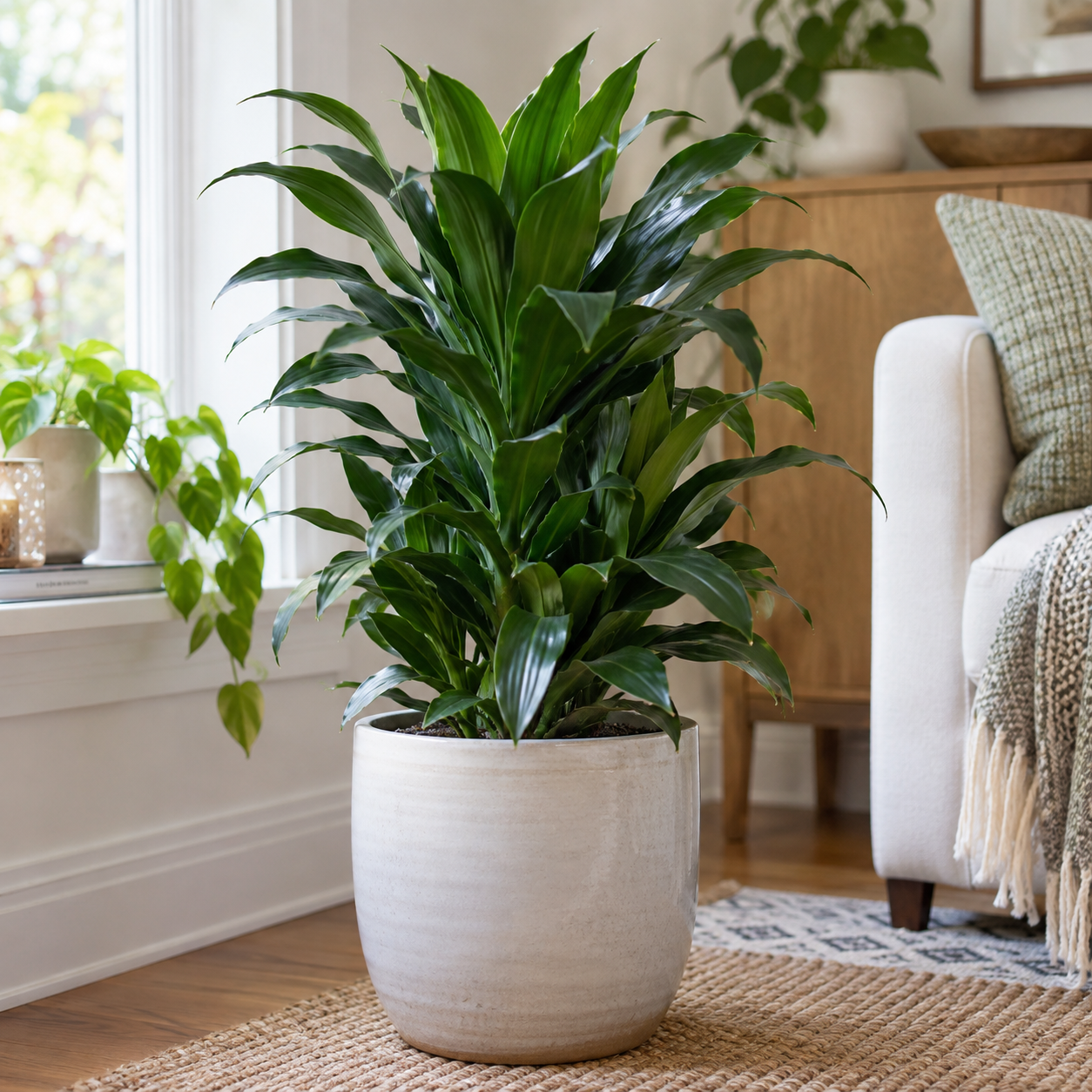
Dracaena Compacta is a slow-growing houseplant with dense clusters of glossy dark-green leaves and an elegant upright shape. With the right balance of indirect light, careful watering, good drainage, and a little patience, it can become a beautiful architectural plant for almost any indoor space.
Meet the Plant
Why Grow Dracaena Compacta Indoors?
Dracaena Compacta, usually sold as Dracaena fragrans ‘Compacta’, is known for its tightly packed, glossy leaves and neat upright growth habit.
Unlike many fast-growing houseplants, Dracaena Compacta develops slowly. This makes it a good choice for smaller rooms, shelves, corners, and spaces where you want a plant that stays relatively tidy.
Mature plants may develop woody canes topped with dense rosettes of foliage, giving them a miniature tree-like appearance.
Dracaena Compacta naturally grows more slowly than plants such as Pothos or Tradescantia. Slow growth does not automatically mean something is wrong.
Dracaena Compacta Quick Care Guide
Start with these essentials for a healthy indoor Dracaena Compacta.
Light
Medium to bright indirect light is ideal.
Water
Let the upper portion of soil dry before watering.
Soil
Use loose, well-draining indoor potting soil.
Temperature
Warm, stable household temperatures work well.
Humidity
Average household humidity is usually suitable.
Growth
Slow-growing and naturally compact.
Light
How Much Light Does Dracaena Compacta Need?
Dracaena Compacta grows best in medium to bright indirect light. A location near a bright window, but protected from harsh midday sun, usually works well.
The plant can tolerate lower light, which is one reason it is popular as an indoor plant. However, growth becomes even slower when light levels are low.
Signs It Needs More Light
- Growth becomes extremely slow.
- New leaves appear smaller.
- The plant begins leaning toward a window.
- Leaf spacing becomes less compact.
- The foliage looks less vigorous.
Move the plant gradually if you want to give it more light. Strong direct sunlight can scorch leaves that are accustomed to shaded indoor conditions.
Watering
How Often Should You Water Dracaena Compacta?
Dracaena Compacta prefers to dry slightly between waterings. Keeping the soil permanently wet can damage the roots and cause yellowing or leaf loss.
Because this plant grows slowly, it may use water more slowly than faster-growing houseplants.
Check Before Watering
Feel the upper 4–5 cm of soil. If it feels dry, water thoroughly. If it still feels damp, wait a little longer.
How to Water Properly
-
1
Check the soil before watering.
-
2
Water slowly and evenly around the pot.
-
3
Allow excess water to drain from the bottom.
-
4
Empty standing water from the saucer or cover pot.
💧 Signs It May Need Water
- Soil is dry several centimeters down
- Leaves begin curling slightly
- Leaf tips become dry
- The pot feels noticeably lighter
⚠️ Signs of Too Much Water
- Yellowing leaves
- Soft lower leaves
- Wet soil for many days
- Leaf drop
- Soft or unhealthy roots
Water Quality
Why Does Dracaena Compacta Get Brown Tips?
Brown leaf tips are one of the most common complaints with Dracaena. They can develop because of dry soil, very dry indoor air, fertilizer buildup, or minerals in the water.
Dracaenas can be sensitive to certain dissolved minerals and salts. If brown tips continue even though your watering routine is good, consider trying filtered, distilled, or collected rainwater.
Inconsistent Watering
Repeatedly allowing the soil to become extremely dry may damage leaf tips.
Water Quality
Mineral or salt buildup may contribute to browning in sensitive plants.
Too Much Fertilizer
Excess fertilizer can create salt buildup around the roots.
Hot Dry Air
Radiators and heating vents can dry leaf edges more quickly.
Yes. You can carefully trim dry brown sections with clean scissors. Follow the natural shape of the leaf and avoid cutting deeply into healthy green tissue.
Soil & Pot
Best Soil for Dracaena Compacta
Dracaena Compacta needs soil that can hold some moisture without remaining waterlogged.
A good-quality indoor potting mix works well. If the mix feels dense, adding perlite can help increase airflow and drainage.
Always Use Drainage Holes
Excess water should be able to leave the pot freely. A decorative cover pot is fine as long as the inner nursery pot can drain.
Never allow the bottom of the nursery pot to remain permanently submerged in collected water.
Climate
Temperature and Humidity for Dracaena Compacta
Dracaena Compacta prefers warm, stable indoor temperatures and should be protected from cold drafts.
Comfortable indoor growing range
Avoid prolonged cold conditions
Does Dracaena Compacta Need High Humidity?
Average household humidity is usually sufficient. Slightly higher humidity can be helpful if your indoor air becomes very dry.
Constant blasts of hot, dry air can contribute to brown leaf tips and crispy edges.
Feeding
How to Fertilize Dracaena Compacta
Because Dracaena Compacta grows slowly, it does not need heavy feeding.
During spring and summer, use a diluted balanced houseplant fertilizer occasionally while the plant is actively growing.
Reduce or stop feeding during winter when growth slows.
Overfertilizing can contribute to mineral buildup and brown leaf tips. Avoid feeding more frequently in an attempt to make this naturally slow-growing plant grow faster.
Why Is My Dracaena Compacta Growing So Slowly?
Slow growth is part of this plant’s natural character, but a few conditions can make growth even slower.
Low Light
The plant can survive lower light, but growth may become extremely slow.
Cool Conditions
Cold temperatures can reduce active growth.
Root Stress
Poor drainage or unhealthy roots can limit new foliage.
Natural Habit
Even under excellent conditions, Compacta simply grows slowly.
A healthy Dracaena Compacta may produce new growth slowly and steadily. Focus on leaf health rather than rapid height increases.
Pruning
How to Make Dracaena Compacta Fuller
Dracaena Compacta naturally grows as dense rosettes of leaves on top of upright canes. It does not become bushy in exactly the same way as Pothos or Tradescantia.
However, pruning an established cane can sometimes encourage new shoots to develop below the cut.
Choose a Healthy Cane
Only prune a healthy, established plant.
Use Clean Tools
Use sharp, disinfected pruning shears.
Cut at the Desired Height
Shorten the cane where you want new growth to begin.
Be Patient
New shoots may take time to develop below the cut.
If you like your plant’s current shape, simply remove damaged or yellow leaves and let the plant grow naturally.
How to Propagate Dracaena Compacta
Dracaena Compacta can be propagated from healthy cane or top cuttings, although rooting may take longer than with many trailing houseplants.
Take a Healthy Cutting
Cut a healthy top section or cane using clean pruning shears.
Remove Lower Leaves
Clear foliage from the bottom portion of the cutting if necessary.
Root in Water or Soil
Place the cutting in water or into a small pot of lightly moist, well-draining soil.
Provide Warmth and Indirect Light
Keep the cutting somewhere warm with plenty of indirect light.
Wait Patiently
Root development may be slow, so avoid disturbing the cutting unnecessarily.
Repotting
When Should You Repot Dracaena Compacta?
Because this plant grows slowly, it usually does not need frequent repotting.
Signs It May Be Time to Repot
- Roots are growing heavily through drainage holes.
- The plant dries unusually quickly.
- The root ball has become very crowded.
- The potting mix is old and compacted.
- The plant has become unstable in its container.
A very large container holds much more damp soil around the roots, which can increase the risk of overwatering.
Common Dracaena Compacta Problems
Changes in the foliage often provide useful clues about what your plant needs.
Brown Tips
Check watering consistency, dry air, fertilizer buildup, and water quality.
Yellow Leaves
Overwatering and poor drainage are common things to investigate.
Drooping Leaves
Check whether the soil is extremely dry or remaining wet for too long.
Bleached Patches
Sudden exposure to harsh direct sunlight may scorch the foliage.
No New Growth
Remember that Dracaena Compacta is naturally slow-growing. Check light and root health before assuming something is wrong.
Lower Leaf Loss
Individual older lower leaves may yellow and fall naturally as the plant matures.
Pests
Common Pests on Dracaena Compacta
Healthy indoor Dracaenas are not constantly troubled by pests, but it is still worth checking the leaves occasionally.
Spider Mites
Look for fine webbing and pale speckling on the foliage.
Mealybugs
Look for white cotton-like clusters around leaves and stems.
Scale
Check stems and leaves for small attached brown or tan bumps.
If you notice pests, isolate the plant from your other houseplants while you inspect and treat it.
Dracaena Compacta Care Through the Seasons
Spring
New growth increases. Begin light feeding and repot if the roots genuinely need more room.
Summer
Give the plant plenty of indirect light and check the soil regularly during warm weather.
Autumn
Growth begins slowing. Gradually reduce feeding and pay closer attention to how slowly the soil dries.
Winter
Keep the plant near bright indirect light and away from cold drafts and hot radiators.
Dracaena Compacta Care Do’s & Don’ts
Do
- Give it medium to bright indirect light.
- Allow the upper soil to dry before watering.
- Use a pot with drainage holes.
- Keep temperatures reasonably stable.
- Rotate the plant occasionally.
- Wipe dust from the leaves.
- Accept that growth is naturally slow.
Don’t
- Don’t keep the soil permanently wet.
- Don’t leave the roots sitting in water.
- Don’t place it in harsh direct sun.
- Don’t expose it to cold drafts.
- Don’t overfertilize to force faster growth.
- Don’t place it beside a hot radiator.
- Don’t move it into an oversized pot.
Keep Dracaena Compacta Away From Pets
Dracaena plants should not be eaten by cats or dogs. Keep the plant somewhere curious pets cannot chew its leaves.
If you suspect a pet has eaten part of the plant and develops symptoms, contact your veterinarian for advice.
Dracaena Compacta Care FAQs
Is Dracaena Compacta easy to care for?
Yes. It is relatively easy once you understand that it prefers indirect light, moderate watering, good drainage, and stable indoor conditions.
How often should I water Dracaena Compacta?
Avoid a fixed schedule. Check the upper 4–5 cm of soil and water only after this portion has dried.
Why are the tips of my Dracaena Compacta brown?
Brown tips may result from inconsistent watering, dry air, fertilizer salts, or sensitivity to minerals in the water.
Why is my Dracaena Compacta growing so slowly?
Compacta is naturally slow-growing. Low light, cooler conditions, or root stress can slow it even further.
Can Dracaena Compacta grow in low light?
It can tolerate lower light, but growth will usually be slower and the plant may become less compact.
Can I cut the top off my Dracaena Compacta?
Yes. Established Dracaena canes can be shortened, and new shoots may eventually develop below the cut. The removed top can also be used for propagation.
Can I trim brown tips from Dracaena leaves?
Yes. Use clean scissors and carefully follow the natural shape of the leaf while leaving healthy green tissue intact.
How often should Dracaena Compacta be repotted?
It usually does not require frequent repotting because it grows slowly. Repot when the root system clearly outgrows the container.
Indirect Light + Careful Watering + Patience
Dracaena Compacta isn’t a plant that needs constant attention or rapid growth to look beautiful.
Give it good indirect light, allow the upper soil to dry before watering, protect it from temperature extremes, and avoid overfeeding.
With patience, those dense glossy leaves and elegant upright canes can become one of the most striking features in your indoor plant collection.