
How to Care for English Ivy Indoors
English Ivy is a beautiful trailing houseplant with elegant vines and distinctive lobed leaves. With bright indirect light, careful watering, cooler indoor temperatures, and regular pruning, it can become a lush plant for shelves, hanging baskets, and indoor displays.
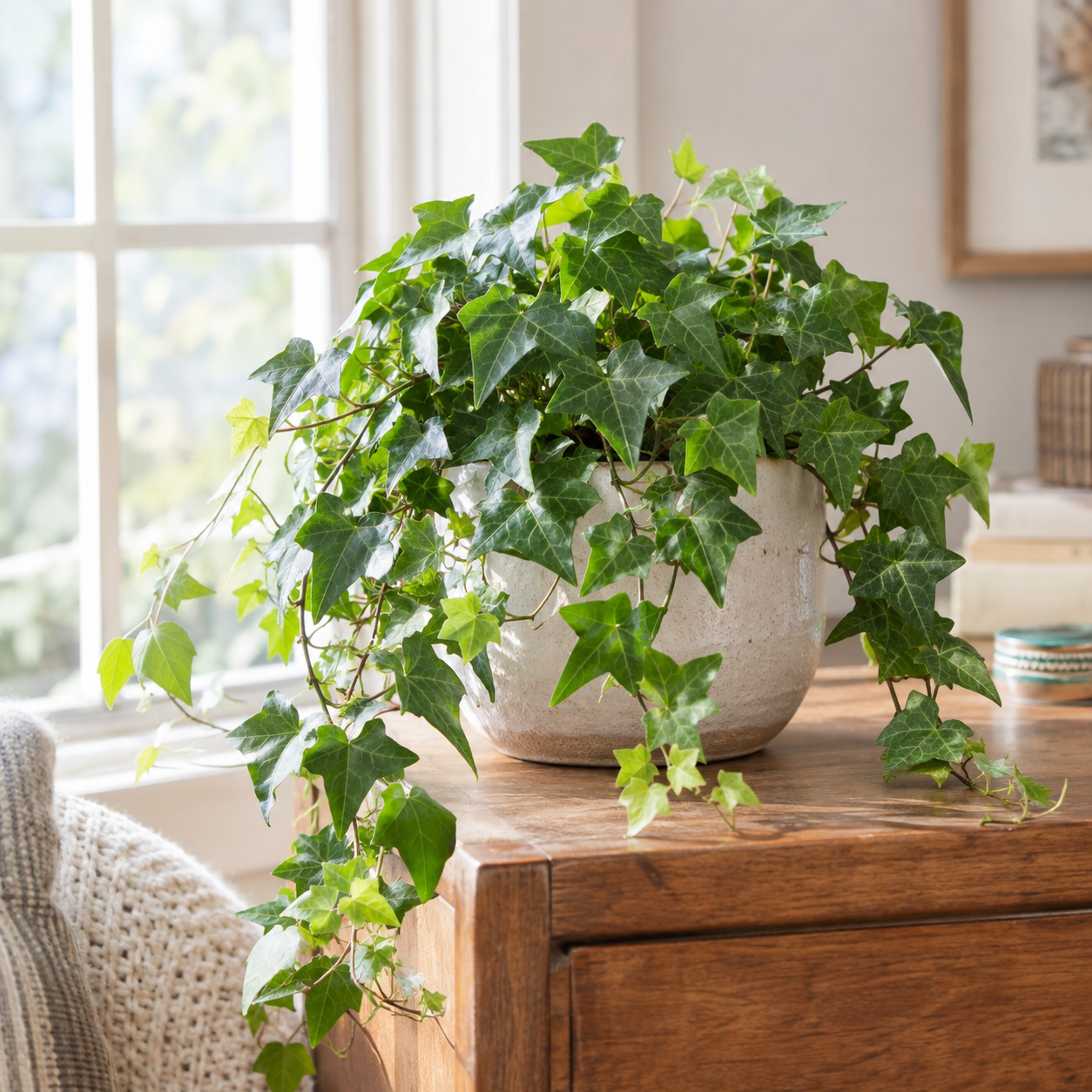
Meet the Plant
Why Grow English Ivy Indoors?
English Ivy, botanically known as Hedera helix, is known for its trailing stems and attractive lobed leaves. Depending on the variety, the foliage may be deep green or patterned with cream, white, or lighter green markings.
Indoors, English Ivy works especially well in hanging baskets, on high shelves, or in pots where its vines can trail naturally over the edge. It can also be trained around a small trellis or another support.
English Ivy is not difficult to grow, but it usually performs better when its care is kept consistent. Good light, proper watering, cooler temperatures, and enough humidity can make a noticeable difference in the quality of its foliage.
Try to avoid dramatic changes in light, temperature, and watering. Stable indoor conditions usually help the plant maintain healthier, fuller vines.
English Ivy Quick Care Guide
These are the main things your English Ivy needs to grow well indoors.
Light
Bright indirect light is best for healthy growth.
Water
Water when the upper soil begins to feel dry.
Soil
Use loose, well-draining indoor potting soil.
Temperature
English Ivy prefers relatively cool indoor conditions.
Humidity
Moderate humidity helps prevent dry, crispy foliage.
Pruning
Regular trimming encourages fuller, neater growth.
Light
How Much Light Does English Ivy Need?
English Ivy grows best indoors in bright, indirect light. A spot near a bright window usually gives the plant enough energy to produce dense, attractive foliage.
Gentle morning sun can be beneficial, but strong afternoon sunlight through glass may scorch the leaves, especially during summer.
Can English Ivy Grow in Low Light?
English Ivy can tolerate somewhat lower light, but growth may become slower and the stems may stretch toward the nearest window.
Variegated English Ivy generally benefits from brighter conditions because too little light can cause the leaf patterns to become less pronounced.
Signs Your English Ivy Needs More Light
- Long spaces develop between leaves.
- The plant grows slowly.
- Variegated leaves become greener.
- New growth looks small or weak.
- Vines stretch strongly toward the window.
Turn your English Ivy every week or two so light reaches all sides of the plant and growth stays more balanced.
Watering
How Often Should You Water English Ivy?
English Ivy prefers soil that is lightly moist but never constantly wet. The roots need both moisture and air, so soggy soil can quickly create problems.
Instead of watering on the same day every week, check the soil first. Indoor temperature, pot size, season, and light levels all influence how quickly the potting mix dries.
Check Before Watering
Feel the upper 2–3 cm of soil. If this layer feels dry, water the plant thoroughly. If it still feels damp, wait a little longer.
How to Water English Ivy Properly
-
1
Check the upper soil first.
-
2
Water evenly around the surface of the pot.
-
3
Continue until excess water drains from the bottom.
-
4
Empty standing water from the saucer or decorative pot.
💧 Signs It May Be Thirsty
- Leaves begin drooping
- Soil feels very dry
- Leaf edges become crispy
- Foliage feels less firm
⚠️ Signs of Too Much Water
- Yellow leaves
- Soft stems
- Wet soil for many days
- Leaf drop
- Dark or unhealthy-looking roots
Soil & Pot
Best Soil for English Ivy
English Ivy grows well in a loose indoor potting mix that retains some moisture but still drains freely.
If your potting mix feels heavy or compacted, adding perlite can help improve drainage and airflow around the roots.
Drainage Holes Are Important
Always use a pot that allows excess water to escape. English Ivy should not remain sitting in water after watering.
A nursery pot placed inside a decorative planter is a practical option because you can remove it, water thoroughly, and allow it to drain before putting it back.
Temperature
Best Temperature for English Ivy Indoors
English Ivy generally prefers cooler indoor conditions compared with many tropical houseplants.
A comfortable indoor range
Usually preferred over very hot rooms
Keep your plant away from hot radiators, heating vents, and other sources of very warm dry air.
Cold winter drafts are also best avoided, especially when the plant is positioned immediately beside a frequently opened window or door.
Humidity
Does English Ivy Need High Humidity?
English Ivy appreciates moderate humidity and can struggle in extremely hot, dry indoor air.
Winter heating can be particularly drying, so keep the plant away from radiators and check the foliage regularly.
Very dry indoor conditions can make English Ivy more vulnerable to spider mite problems. Good airflow and regular inspection are useful.
How to Make English Ivy Fuller and Bushier
English Ivy naturally produces trailing vines, but occasional pruning can encourage branching and help the plant look fuller near the pot.
Provide Good Light
Bright indirect light encourages denser, healthier growth.
Trim Long Vines
Prune stems that become long, sparse, or uneven.
Encourage Branching
New shoots can develop below pruning points.
Propagate Cuttings
Root healthy cuttings and add them back to the original pot.
Pruning
How to Prune English Ivy
English Ivy responds well to pruning and can usually be shaped without difficulty.
Use clean scissors to shorten excessively long vines, remove damaged foliage, or control the overall shape of the plant.
What Should You Remove?
- Long bare sections of vine
- Yellow or damaged leaves
- Dry stems
- Weak or sparse growth
- Vines growing in unwanted directions
Healthy sections removed during pruning can be used for propagation instead of being thrown away.
Feeding
How to Fertilize English Ivy
During spring and summer, English Ivy can benefit from occasional feeding while it is actively producing new growth.
A balanced liquid houseplant fertilizer used at a reduced strength every few weeks is generally enough.
Feeding can be reduced or stopped during winter when growth slows.
Too much fertilizer may lead to mineral buildup in the potting mix and can damage the roots or leaf edges.
How to Propagate English Ivy
English Ivy can be propagated from healthy stem cuttings, making pruning a perfect opportunity to grow new plants.
Choose a Healthy Vine
Select a healthy section of stem with several leaves and visible nodes.
Cut Below a Node
Use clean scissors to make a cutting just below a leaf node.
Remove Lower Leaves
Remove leaves from the bottom portion of the cutting so the lower nodes are exposed.
Root in Water or Soil
Place the exposed nodes in clean water or directly into lightly moist potting soil.
Give It Bright Indirect Light
Keep the cutting somewhere bright but protected from harsh direct sunlight while roots establish.
Several rooted cuttings can eventually be planted around the edges of the mother plant to create denser growth.
Repotting
When Should You Repot English Ivy?
English Ivy does not need to be moved into a larger pot constantly. Repot when the root system clearly begins outgrowing its container.
Signs It May Need Repotting
- Roots grow heavily through the drainage holes.
- The soil dries unusually quickly.
- Growth slows despite otherwise good care.
- The root ball has become extremely crowded.
- The potting mix has become old and compacted.
An oversized container can hold more moisture than the roots can use, increasing the risk of overly wet soil.
Yellow Leaves
Why Are My English Ivy Leaves Turning Yellow?
An occasional older yellow leaf is normal, but several yellow leaves appearing together can indicate that the plant is stressed.
Too Much Water
Constantly wet soil can damage roots and lead to yellow foliage.
Low Light
Very low light slows growth and reduces the amount of water the plant uses.
Poor Drainage
Dense soil or a pot without drainage can keep roots wet for too long.
Natural Aging
Individual older leaves may yellow naturally before falling.
Brown Leaves
Why Are English Ivy Leaves Brown and Crispy?
Brown or crispy foliage is often associated with dry conditions, inconsistent watering, excessive heat, or strong direct sunlight.
Soil Too Dry
Allowing the plant to become severely dry repeatedly can damage leaf edges.
Hot Dry Air
Radiators and heating vents can create very dry conditions around the foliage.
Strong Sun
Harsh direct sunlight may create pale or crispy patches.
Low Humidity
Very dry indoor air can contribute to crispy leaf margins.
Spider Mites and English Ivy
English Ivy can be particularly attractive to spider mites when indoor conditions become warm and dry.
Fine Webbing
Fine webbing around stems or between leaves can be an important warning sign.
Speckled Leaves
Tiny pale dots or stippling across leaves may indicate feeding damage.
Inspect Undersides
Check beneath the leaves regularly because pests can hide there.
What to Do if You Find Pests
Separate the affected plant from your other houseplants and inspect it carefully. Rinse the foliage when appropriate and treat the plant with a suitable houseplant pest treatment according to its label. Continue checking the plant because repeated treatment may be needed.
Display
Growing English Ivy in a Hanging Basket
Hanging baskets are one of the most attractive ways to display English Ivy because the vines naturally cascade downward.
Make sure the basket has drainage holes and is positioned somewhere you can easily reach for watering and regular pest inspection.
Remember to Rotate Hanging Plants
Light often reaches one side of a hanging plant more strongly than the other. Rotate the basket occasionally to encourage balanced growth.
English Ivy Care Through the Seasons
Spring
New growth increases. Spring is a good time for pruning, propagation, repotting, and restarting fertilizer.
Summer
Protect the plant from intense afternoon sun and check the soil more frequently during warm weather.
Autumn
Growth may begin slowing as daylight decreases. Gradually reduce feeding and monitor watering carefully.
Winter
Keep the plant away from hot radiators and give it as much bright natural light as possible.
English Ivy Care Do’s & Don’ts
Do
- Give it bright indirect light.
- Check the soil before watering.
- Use a pot with drainage holes.
- Keep it away from very hot air.
- Prune long vines for fuller growth.
- Check the foliage regularly for pests.
- Propagate healthy stem cuttings.
Don’t
- Don’t keep the soil constantly wet.
- Don’t leave roots sitting in water.
- Don’t place it beside a hot radiator.
- Don’t expose it suddenly to harsh sunlight.
- Don’t ignore fine webbing or speckled leaves.
- Don’t use an oversized pot unnecessarily.
- Don’t allow extremely long bare vines to build up.
Keep English Ivy Away From Pets
English Ivy should not be eaten by cats or dogs. If you have curious pets, position the plant where they cannot chew the leaves or trailing stems.
The plant’s sap may also irritate sensitive skin, so washing your hands after extensive pruning is a sensible precaution.
English Ivy Care FAQs
Quick answers to some of the most common questions about growing English Ivy indoors.
Is English Ivy easy to grow indoors?
English Ivy can grow very well indoors when it receives bright indirect light, consistent watering, cooler temperatures, and regular pest checks.
How often should I water English Ivy?
Avoid following a fixed watering schedule. Check the upper 2–3 cm of soil and water when that layer begins to feel dry.
Why is my English Ivy getting crispy leaves?
Crispy foliage can result from dry soil, very dry indoor air, excessive heat, or harsh direct sunlight. Check these conditions before changing your watering routine.
How do I make English Ivy grow fuller?
Give the plant plenty of bright indirect light, prune long vines, and root healthy cuttings that can eventually be planted back into the original pot.
Can English Ivy be propagated in water?
Yes. Place one or more exposed stem nodes in clean water while keeping the leaves above the waterline. Move the cutting into soil after a healthy root system develops.
Why does English Ivy get spider mites?
Spider mites often become more troublesome in warm and dry indoor conditions. Inspect the undersides of leaves regularly and keep English Ivy away from excessively hot, dry air.
Can English Ivy grow in a hanging basket?
Yes. English Ivy’s naturally trailing vines make it especially suitable for hanging baskets, shelves, and elevated planters.
Why are my English Ivy leaves turning yellow?
Several yellow leaves can be caused by overly wet soil, poor drainage, low light, or root stress. An occasional older yellow leaf can simply be part of the plant’s natural aging process.
Bright Light + Consistent Water + Regular Pruning
English Ivy can become a beautiful trailing houseplant when its basic needs are kept simple and consistent.
Give it bright indirect light, water when the upper soil begins to dry, protect it from hot dry air, and prune occasionally to maintain fuller growth.
Keep an eye on the foliage, especially during winter, and your English Ivy can reward you with long, elegant vines and plenty of fresh growth.