
How to Care for a Peace Lily Indoors
Peace Lily, or Spathiphyllum, is loved for its glossy green foliage and elegant white blooms. It can adapt to many indoor environments, but the healthiest plants receive bright indirect light, consistent moisture, comfortable humidity, and protection from harsh sun and cold drafts.
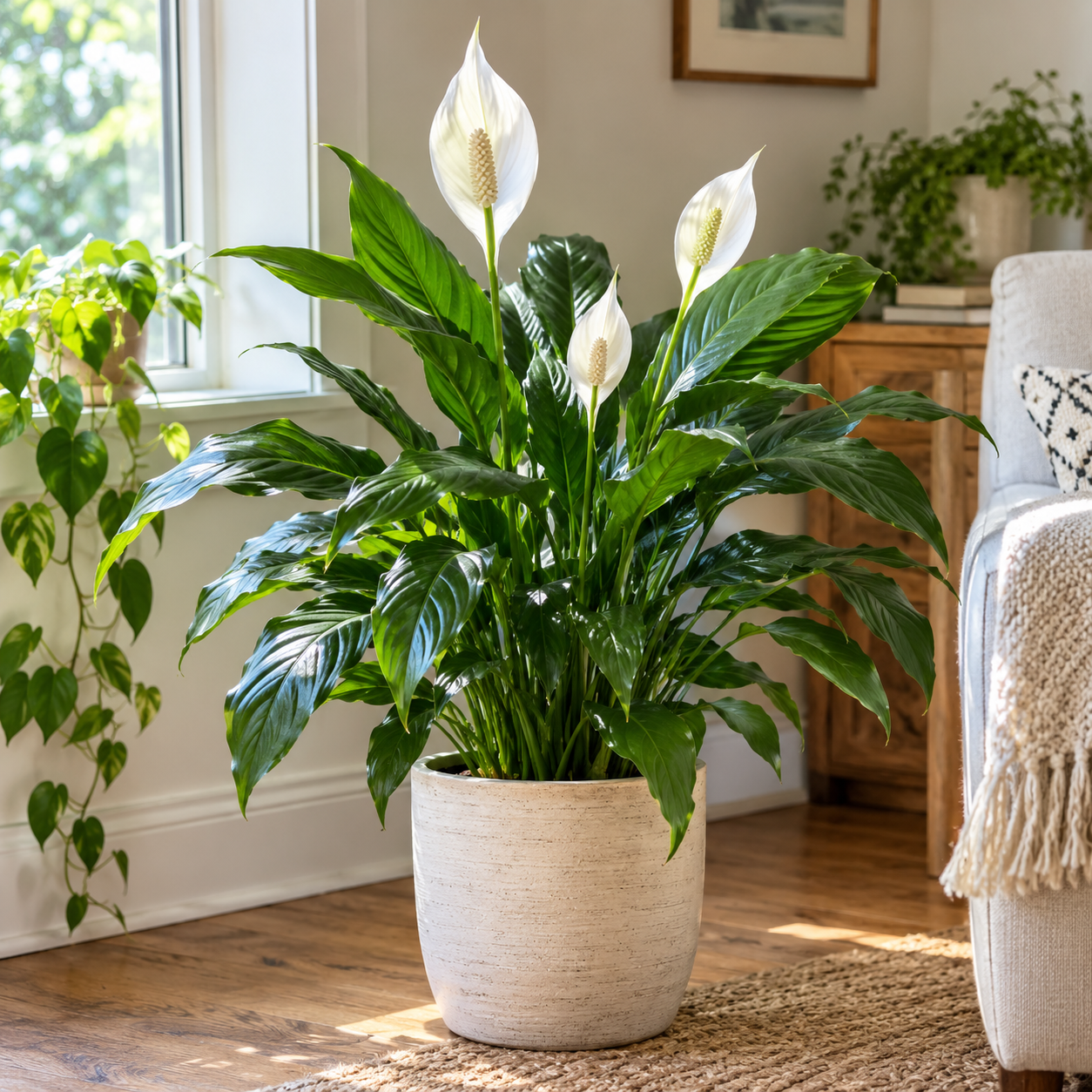
Meet the Plant
Why Grow a Peace Lily Indoors?
Peace Lilies are among the most recognizable indoor plants. Their glossy leaves create a lush tropical look, while mature plants may produce elegant white spathes surrounding a central flower spike.
They are popular because they can adapt to indoor life surprisingly well. A Peace Lily can tolerate somewhat lower light than many flowering houseplants, although brighter indirect light usually produces stronger growth and more flowers.
Peace Lilies are also expressive plants. When very thirsty, the foliage may noticeably droop, making changes in their condition relatively easy to spot.
The white portion is called a spathe. It surrounds the central flower spike, known as the spadix.
Peace Lily Quick Care Guide
Focus on these basics for a healthy Peace Lily indoors.
Light
Medium to bright indirect light is ideal.
Water
Keep slightly moist without leaving soil soggy.
Soil
Use loose, moisture-retentive but draining soil.
Humidity
Average to moderately humid air works well.
Temperature
Warm and stable indoor conditions are best.
Flowers
Brighter indirect light encourages blooming.
Light
How Much Light Does a Peace Lily Need?
Peace Lily grows best in medium to bright indirect light. It can survive in lower-light areas, but growth may become slower and flowering may decrease.
Avoid strong afternoon sunlight through a window because the leaves can scorch.
Signs Your Peace Lily May Need More Light
- Few or no flowers appear.
- New growth becomes smaller.
- The plant grows very slowly.
- Soil remains wet for unusually long periods.
- The foliage leans strongly toward a window.
Peace Lily tolerates lower light, but it still needs natural or suitable artificial light to remain healthy.
Watering
How Often Should You Water a Peace Lily?
Peace Lilies prefer consistent moisture but should never remain permanently waterlogged.
Instead of following a strict weekly schedule, check the soil. Indoor drying time changes throughout the year.
Check Before Watering
When the top 2–3 cm of soil begins to feel dry, water thoroughly until excess water drains from the bottom.
How to Water Properly
-
1
Check the top layer of soil.
-
2
Water slowly and evenly around the pot.
-
3
Allow excess water to drain completely.
-
4
Empty standing water from the saucer or decorative pot.
💧 Too Dry
- Leaves droop dramatically
- Brown crispy tips appear
- Soil pulls away from the pot
- Leaves lose firmness
⚠️ Too Wet
- Yellow leaves appear
- Soil remains wet for days
- Lower stems feel unhealthy
- Roots may begin to rot
Humidity
Does Peace Lily Need High Humidity?
Peace Lilies appreciate moderate humidity and can usually adapt to normal household conditions.
Extremely dry indoor air may contribute to brown leaf tips and crispy edges.
Humidifier
Useful when indoor air becomes particularly dry.
Group Plants
Grouping houseplants may slightly increase local humidity.
Avoid Dry Heat
Keep foliage away from radiators and heating vents.
Soil & Pot
Best Soil for Peace Lily
Peace Lily prefers a potting mix that holds some moisture while still allowing excess water to drain and air to reach the roots.
A quality indoor potting mix amended with perlite and some bark can work well.
Potting Mix
Provides moisture retention and nutrients.
Perlite
Improves drainage and root aeration.
Bark
Adds structure and prevents excessive compaction.
Avoid planting Peace Lily directly into a decorative pot with no way for excess water to escape.
Temperature
Best Temperature for Peace Lily
Peace Lily prefers warm and relatively stable indoor temperatures.
Comfortable indoor growing conditions
Protect from cold drafts and sudden temperature changes
Keep the plant away from cold windows in winter, frequently opened exterior doors, and hot radiator air.
Feeding
How to Fertilize a Peace Lily
During active growth in spring and summer, Peace Lily can benefit from occasional feeding.
Use a balanced liquid houseplant fertilizer diluted according to the label instructions.
Avoid heavy feeding. Too much fertilizer may contribute to damaged roots, brown tips, or excess salt buildup.
Good light and healthy roots are just as important for growth and flowering as fertilizer.
How to Get a Peace Lily to Bloom
A healthy Peace Lily can survive in lower light, but flowering usually improves when growing conditions are brighter and more balanced.
Increase Indirect Light
Move the plant closer to a bright window without exposing it to harsh sun.
Keep Moisture Consistent
Avoid repeated cycles of severe drought and soaking.
Feed Gently
Provide balanced nutrition during active growth.
Be Patient
Mature, healthy plants are more likely to flower.
Spathes commonly become greener as they age. This is often part of the natural flowering cycle rather than a problem.
Pruning
How to Prune a Peace Lily
Peace Lily does not require regular shaping. Pruning mainly keeps the plant clean and directs energy toward healthy foliage.
- Remove fully yellow leaves.
- Remove completely brown leaves.
- Cut faded flower stalks near the base.
- Trim damaged leaves when necessary.
Cut old flower stalks and damaged leaves close to the soil rather than leaving long bare stems behind.
Repotting
When Should You Repot a Peace Lily?
Repot when the root system becomes crowded rather than simply moving it to a larger pot every year.
Signs It May Need Repotting
- Roots grow heavily through drainage holes.
- The root ball is tightly packed.
- The soil dries much faster than before.
- The plant becomes unstable.
- Several divisions have crowded the pot.
Oversized pots can hold excess moisture around the root system.
How to Propagate a Peace Lily
Peace Lily is most easily propagated by dividing a mature plant.
Remove the Plant
Gently slide the Peace Lily from its pot.
Inspect the Clumps
Look for natural sections with their own leaves and roots.
Separate Carefully
Gently divide the root ball into healthy sections.
Pot Separately
Plant each division in an appropriately sized container.
Keep Conditions Gentle
Provide indirect light and consistent moisture while the divisions settle.
A leaf placed in water will not develop into a complete new Peace Lily. Division is the practical propagation method.
Drooping
Why Is My Peace Lily Drooping?
Peace Lilies are famous for drooping when thirsty, but dry soil is not the only possible cause.
Dry Soil
The plant may wilt dramatically when moisture becomes too low.
Overwatering
Damaged roots can also cause drooping.
Cold Stress
Cold drafts can cause sudden loss of firmness.
Root Stress
Repotting or damaged roots may temporarily affect the leaves.
A drooping Peace Lily with wet soil needs a different solution from one growing in very dry soil.
Yellow Leaves
Why Are Peace Lily Leaves Turning Yellow?
An occasional older yellow leaf is normal. Several yellow leaves at once may indicate a care problem.
Overwatering
Constantly wet soil can damage roots.
Low Light
Low light slows growth and water use.
Poor Drainage
Dense soil may remain saturated for too long.
Natural Aging
Older lower foliage naturally declines over time.
Brown Tips
Why Does My Peace Lily Have Brown Tips?
- The soil may be drying too much between waterings.
- Indoor humidity may be very low.
- Excess fertilizer may have built up in the soil.
- Hot radiator air may be drying the foliage.
- The plant may be reacting to mineral buildup or inconsistent care.
Use clean scissors and follow the natural shape of the leaf while leaving healthy green tissue intact whenever possible.
Black Leaves
Why Are Peace Lily Leaves Turning Black?
Dark or black damaged areas may appear when the plant experiences severe root stress, cold damage, excessive moisture, or tissue injury.
- Check whether the soil has remained wet for too long.
- Inspect roots if the plant is also collapsing.
- Keep the plant away from freezing drafts.
- Check for extensive sun or heat damage.
Curling Leaves
Why Are Peace Lily Leaves Curling?
Curling can appear when the plant is reacting to moisture or environmental stress.
- Check whether the soil is excessively dry.
- Look for very dry indoor air.
- Protect foliage from strong direct sun.
- Check for temperature extremes.
- Inspect carefully for pests.
How to Recognize Peace Lily Root Rot
Root problems often develop when soil remains saturated and poorly aerated for long periods.
Yellowing
Several leaves may yellow at the same time.
Drooping
The plant may wilt even though its soil is wet.
Wet Soil
The pot remains saturated for many days.
Damaged Roots
Unhealthy roots may appear dark, soft, or mushy.
Common Peace Lily Pests
Spider Mites
Look for pale speckling and very fine webbing.
Mealybugs
Check for white cotton-like clusters around stems and leaves.
Scale
Look for small attached bumps along stems and foliage.
Early detection makes houseplant pests much easier to manage.
Common Peace Lily Problems
Drooping
Check soil moisture and root condition.
Yellow Leaves
Review watering, drainage, and light.
Brown Tips
Check dryness, humidity, heat, and fertilizer.
Black Leaves
Look for root, cold, or moisture stress.
No Flowers
Increase indirect light and review overall plant health.
Pests
Inspect leaves and stems regularly.
Peace Lily Care Through the Seasons
Spring
New growth increases. Begin feeding and repot or divide the plant if necessary.
Summer
Check moisture more frequently and protect foliage from harsh sun.
Autumn
Growth may gradually slow as daylight decreases. Reduce fertilizer.
Winter
Give it bright indirect light and protect it from cold drafts and dry heating air.
Peace Lily Care Do’s & Don’ts
Do
- Give it medium to bright indirect light.
- Check the soil before watering.
- Keep moisture relatively consistent.
- Use a pot with drainage holes.
- Trim faded flowers.
- Keep temperatures stable.
- Inspect leaves for pests.
Don’t
- Don’t leave roots sitting in water.
- Don’t expose foliage to harsh midday sun.
- Don’t overfertilize.
- Don’t use an oversized pot unnecessarily.
- Don’t assume every droop means it needs water.
- Don’t place it beside cold drafts.
- Don’t allow pets to chew the plant.
Is Peace Lily Safe for Cats and Dogs?
No. Peace Lily contains insoluble calcium oxalate crystals and should not be chewed or eaten by cats or dogs.
Keep the plant somewhere pets cannot access it. If your pet eats part of the plant and develops symptoms, contact your veterinarian.
Love the Peace Lily?
Peace Lily is a beautiful choice for adding glossy green foliage and elegant white blooms to living rooms, bedrooms, offices, and bright indoor corners.
Plant size, price, availability, and shipping may change. Check the seller’s current listing before purchasing.
Peace Lily Care FAQs
Is Peace Lily easy to care for?
Yes. Peace Lily is relatively manageable when given indirect light, consistent moisture, good drainage, and warm indoor temperatures.
How often should I water a Peace Lily?
Check the soil rather than following a fixed schedule. Water when the upper 2–3 cm begins to dry.
Why is my Peace Lily drooping?
Dry soil is a common reason, but overly wet roots, temperature stress, or root problems can also cause drooping.
Why are my Peace Lily leaves turning yellow?
Yellow leaves may result from overwatering, poor drainage, low light, root stress, or natural aging.
Why does my Peace Lily have brown tips?
Brown tips can be associated with inconsistent watering, dry air, heat, fertilizer buildup, or mineral accumulation.
Why won’t my Peace Lily bloom?
Insufficient light is a common reason. Move the plant gradually toward brighter indirect light while maintaining good overall care.
Can Peace Lily grow in low light?
It can tolerate lower light, but growth will usually be slower and flowering may become less frequent.
How do you propagate a Peace Lily?
Divide a mature plant into sections that each contain healthy leaves and roots. Peace Lily does not propagate successfully from a single leaf cutting.
Are Peace Lilies toxic to pets?
Yes. Peace Lily contains calcium oxalate crystals and should be kept away from cats and dogs that may chew plants.
Indirect Light + Consistent Moisture + Good Drainage
Peace Lily is a beautiful indoor plant that becomes much easier to care for once you understand its watering rhythm.
Give it plenty of indirect light, avoid letting the roots stay soggy, protect it from cold drafts, and remove fading flowers when needed.
With consistent care, your Peace Lily can reward you with glossy foliage, graceful growth, and elegant white blooms.