
How to Care for Alocasia Polly Indoors
Alocasia Polly is one of the most dramatic houseplants you can grow indoors. Its glossy, arrow-shaped leaves feature deep green coloring, striking pale veins, and beautifully sculpted edges. Although it needs a little more attention than some beginner plants, the right balance of light, moisture, humidity, and warmth can keep it growing beautifully.
Meet the Plant
Why Grow Alocasia Polly Indoors?
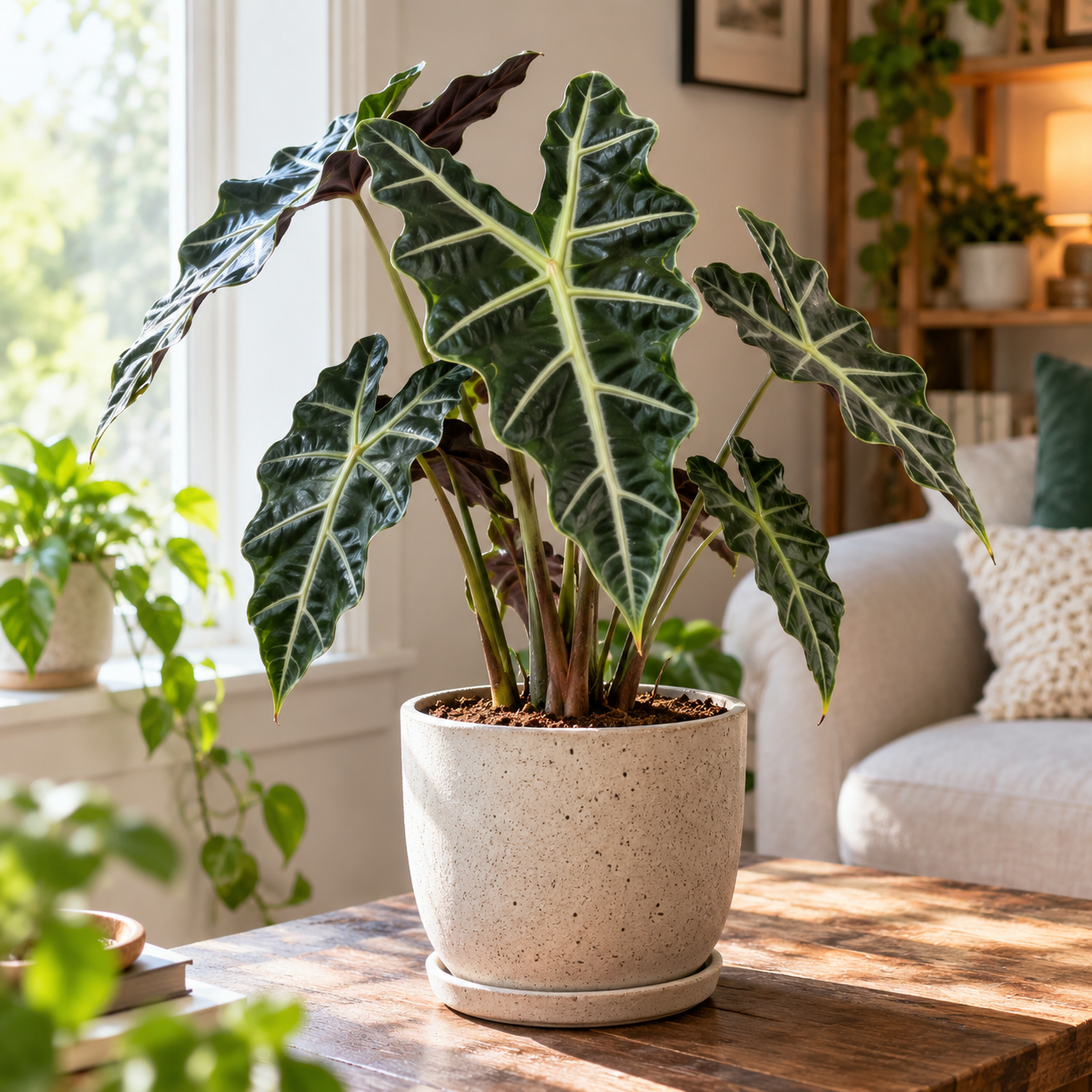
Alocasia Polly is known for bold foliage that almost looks hand-painted. Each leaf has a dark green surface with contrasting pale veins and a strong arrowhead shape.
Its upright growth makes it especially beautiful as a statement plant on a side table, plant stand, shelf, or bright corner.
Alocasia is not quite as forgiving as Pothos or Parlor Palm, but once you understand its preferences, the care becomes much easier.
Alocasia Polly dislikes extreme changes. Stable light, warmth, moisture, and humidity usually produce the healthiest growth.
Alocasia Polly Quick Care Guide
These are the key conditions to focus on when growing Alocasia Polly indoors.
Light
Bright indirect light supports strong leaf growth.
Water
Keep lightly moist, but never permanently soggy.
Soil
Use an airy, well-draining tropical plant mix.
Humidity
Moderate to high humidity is preferred.
Temperature
Warm and stable conditions are best.
Growth
New leaves emerge individually from the base.
Light
How Much Light Does Alocasia Polly Need?
Bright indirect light is ideal. Place the plant close to a bright window where it receives plenty of filtered daylight without sitting in harsh midday sun.
Gentle morning sun may be tolerated, but strong afternoon sunlight can scorch the dark leaves.
Signs Your Alocasia May Need More Light
- New leaves become smaller.
- Growth slows significantly.
- Stems stretch strongly toward the window.
- The plant produces fewer new leaves.
- Soil stays wet for unusually long periods.
Enough light encourages stronger foliage while avoiding the leaf scorch that intense direct sun may cause.
Watering
How Often Should You Water Alocasia Polly?
Alocasia Polly likes soil that remains lightly moist during active growth, but its roots are sensitive to waterlogged conditions.
Rather than following a strict schedule, check the soil regularly and water according to how quickly it dries.
Check Before Watering
When the upper 2–3 cm of soil has begun to dry, water thoroughly and allow excess moisture to drain.
How to Water Properly
-
1
Check the top layer of soil.
-
2
Water slowly and evenly around the pot.
-
3
Allow water to drain through the holes.
-
4
Empty any collected water from the saucer.
💧 Signs It May Be Too Dry
- Drooping leaves
- Dry crispy edges
- Curling foliage
- Very dry soil
⚠️ Signs of Too Much Water
- Yellow leaves
- Soft stems
- Soil staying wet for many days
- Unhealthy or soft roots
How Much Humidity Does Alocasia Polly Need?
Alocasia generally appreciates more humidity than many common houseplants.
Use a Humidifier
A humidifier is one of the most reliable ways to increase humidity.
Group Plants
Keeping several plants together can slightly increase local humidity.
Avoid Dry Heat
Radiators and heating vents may quickly dry delicate leaf edges.
Around 50–70% humidity is often comfortable for Alocasia Polly, although stable conditions matter as much as chasing an exact number.
Soil & Pot
Best Soil for Alocasia Polly
Alocasia needs a potting mix that retains some moisture while still allowing plenty of air around the roots.
A chunky tropical mix containing indoor potting soil, perlite, and bark can work well.
Potting Soil
Provides moisture retention and nutrients.
Perlite
Adds drainage and airflow.
Bark
Creates a looser and chunkier root environment.
Never allow the pot to sit permanently in standing water.
Temperature
Best Temperature for Alocasia Polly
Alocasia prefers warm indoor conditions and dislikes cold drafts.
Comfortable indoor growing conditions
Avoid cold windows and sudden temperature drops
During winter, keep the plant away from frequently opened doors, cold glass, and strong drafts.
Feeding
How to Fertilize Alocasia Polly
Alocasia Polly can benefit from regular but gentle feeding while it is actively growing.
During spring and summer, use a balanced liquid houseplant fertilizer diluted according to the label instructions.
Reduce feeding during autumn and winter if growth slows.
Overfeeding can damage roots and contribute to brown leaf edges.
How to Help Alocasia Polly Grow New Leaves
Alocasia produces new leaves when its growing conditions are balanced. Instead of trying to force rapid growth, focus on creating a stable environment.
Increase Light
Provide plenty of bright indirect daylight.
Maintain Moisture
Avoid extreme cycles of soaking and complete dryness.
Keep It Warm
Warm conditions encourage active tropical growth.
Feed Gently
Provide nutrients during the active growing season.
Pruning
How to Prune Alocasia Polly
Alocasia does not require regular shaping. Most pruning involves removing old, damaged, or fully yellow leaves.
- Fully yellow leaves
- Severely damaged leaves
- Dead foliage
- Old leaves naturally declining
Use clean pruning scissors and remove an old leaf stem near the soil rather than cutting through healthy foliage.
Repotting
When Should You Repot Alocasia Polly?
Alocasia does not need to be moved into a larger pot every year. Repot when the roots clearly need more space or when the soil has degraded.
Signs It May Need Repotting
- Roots grow heavily through drainage holes.
- The plant dries much faster than before.
- The pot is packed tightly with roots and corms.
- The soil has become dense and compacted.
- The plant has become unstable.
A pot that is much too large may remain wet for too long.
How to Propagate Alocasia Polly
Alocasia does not propagate from leaf or stem cuttings like Pothos. Instead, propagation is usually done by dividing offsets or separating corms.
Remove the Plant Carefully
Gently remove the plant from its pot and loosen the root ball.
Look for Offsets or Corms
Examine the root system for small separate growth points.
Separate Carefully
Separate established offsets with their own roots whenever possible.
Pot Individually
Place the new plant in a small container with airy potting mix.
Keep Warm and Humid
Give the new plant bright indirect light while it establishes.
Does Alocasia Polly Go Dormant?
Alocasia can slow down considerably during darker and cooler months. Some plants may even lose one or more leaves.
If the underground corm and roots remain healthy, the plant may produce new growth again when light and temperatures improve.
Drooping
Why Is My Alocasia Polly Drooping?
Drooping leaves can happen for several reasons, which means adding water immediately is not always the right solution.
Dry Soil
A thirsty Alocasia may lose firmness and droop.
Overwatering
Damaged roots can also cause leaves to droop.
Cold Stress
Cold temperatures may cause sudden decline.
Old Leaves
An older leaf may droop before naturally yellowing.
Yellow Leaves
Why Are My Alocasia Polly Leaves Turning Yellow?
One older yellow leaf can be normal, especially when the plant is producing new growth. Several yellow leaves at once may indicate stress.
Too Much Water
Waterlogged roots cannot function properly.
Poor Drainage
Dense soil may hold water for too long.
Low Light
Low light slows water use and growth.
Natural Aging
Older leaves eventually yellow and decline.
Brown Edges
Why Are My Alocasia Leaves Brown and Crispy?
- Humidity may be too low.
- The soil may be drying too severely between waterings.
- The foliage may be exposed to hot dry air.
- Strong direct sunlight may be scorching the leaves.
- Excess fertilizer may be stressing the roots.
Curling Leaves
Why Are Alocasia Polly Leaves Curling?
Curling may occur when the plant is trying to conserve moisture or reacting to environmental stress.
- Check soil moisture.
- Check humidity.
- Look for strong direct sun.
- Check for temperature stress.
- Inspect the plant carefully for pests.
Spider Mites and Alocasia Polly
Spider mites are one of the most common pests to watch for on Alocasia.
Fine Webbing
Look around leaf joints and undersides.
Pale Speckles
Feeding may create tiny pale dots across the foliage.
Inspect Often
Check both sides of every leaf regularly.
Isolate an affected plant from your collection and use an appropriate houseplant pest treatment according to its instructions.
How to Recognize Root Rot
Rapid Yellowing
Several leaves may decline together.
Persistent Drooping
The plant may remain wilted even while soil is wet.
Wet Soil
Soil may stay saturated for many days.
Soft Roots
Unhealthy roots may appear dark, soft, or damaged.
Common Alocasia Polly Problems
Drooping
Check moisture, roots, temperature, and pests.
Yellow Leaves
Review watering and drainage first.
Brown Edges
Check humidity, dryness, heat, and fertilizer.
Curling Leaves
Look for moisture or environmental stress.
Spider Mites
Inspect foliage for webbing and pale speckles.
Leaf Loss
Seasonal slowing or dormancy may be responsible.
Alocasia Polly Care Through the Seasons
Spring
Growth begins to increase. Resume feeding and repot or propagate if necessary.
Summer
Monitor moisture frequently and maintain good humidity.
Autumn
Growth may slow as daylight decreases. Reduce fertilizer gradually.
Winter
Give maximum indirect light, reduce watering if growth slows, and protect the plant from cold drafts.
Alocasia Polly Care Do’s & Don’ts
Do
- Give it bright indirect light.
- Maintain slightly moist soil.
- Use an airy potting mix.
- Provide moderate to high humidity.
- Keep it warm.
- Inspect regularly for spider mites.
- Reduce watering if winter growth slows.
Don’t
- Don’t leave the roots sitting in water.
- Don’t let it dry completely for long periods.
- Don’t expose it to harsh midday sun.
- Don’t place it beside a cold draft.
- Don’t overfertilize.
- Don’t propagate from leaf cuttings.
- Don’t ignore signs of spider mites.
Keep Alocasia Polly Away From Pets
Alocasia contains calcium oxalate crystals and should not be eaten by cats, dogs, or other pets.
Keep the plant somewhere pets cannot chew it. If a pet eats part of the plant or develops symptoms, contact your veterinarian.
Love Alocasia Polly?
With its dramatic dark leaves and striking pale veins, Alocasia Polly makes a beautiful statement plant for bright indoor spaces.
Plant sizes, prices, availability, and shipping can change. Always check the seller’s current listing before purchasing.
Alocasia Polly Care FAQs
Is Alocasia Polly difficult to care for?
It requires more consistency than many beginner houseplants, but it can grow very well indoors when given bright indirect light, steady moisture, warmth, humidity, and good drainage.
How often should I water Alocasia Polly?
Check the soil regularly rather than following a fixed schedule. Water when the upper 2–3 cm has begun to dry.
Why is my Alocasia Polly drooping?
Drooping may result from dry soil, overly wet roots, temperature stress, pest damage, or an older leaf naturally declining.
Why are my Alocasia leaves turning yellow?
Yellow leaves can result from overwatering, poor drainage, low light, root stress, or normal aging of an older leaf.
Does Alocasia Polly need high humidity?
It prefers moderate to high humidity. Around 50–70% is often a comfortable indoor range.
Can Alocasia Polly go dormant?
Yes. Growth may slow considerably during darker or cooler months, and the plant may occasionally lose leaves before growing again.
How do you propagate Alocasia Polly?
Alocasia is usually propagated by separating offsets or corms. A single leaf cutting will not produce a new plant.
Why does my Alocasia keep getting spider mites?
Spider mites often thrive in warm, dry indoor environments. Inspect the foliage regularly and address infestations as soon as they are noticed.
Is Alocasia Polly safe for cats and dogs?
No. Alocasia should be kept away from pets because ingestion can cause irritation.
Bright Light + Moisture + Humidity + Warmth
Alocasia Polly can be slightly demanding, but its dramatic foliage makes the extra attention worthwhile.
Give it bright indirect light, lightly moist but well-drained soil, comfortable humidity, and protection from cold temperatures.
Once you learn how your Alocasia responds to its environment, caring for those striking dark leaves becomes much easier.