
How to Care for Coleus (Plectranthus scutellarioides) Indoors
Coleus (Plectranthus scutellarioides) is a colorful tropical foliage plant known for its dramatic leaves in shades of burgundy, red, pink, lime green, yellow, purple, and almost black.
Although coleus is commonly grown outdoors during the warmer months, it can also grow beautifully indoors when it receives enough light, regular pruning, consistent moisture, and warm temperatures.
Mature plants may also produce tall spikes covered with small blue, lavender, or purple flowers. These flowers are completely normal, but you can remove them if you prefer the plant to focus on bushy foliage.
Coleus Care at a Glance
Bright indirect light with some gentle morning sun.
Water when the top 2–5 cm of soil begins to dry.
Warm conditions, ideally around 18–27°C.
Pinch growing tips regularly for a fuller plant.
What Is Coleus (Plectranthus scutellarioides)?
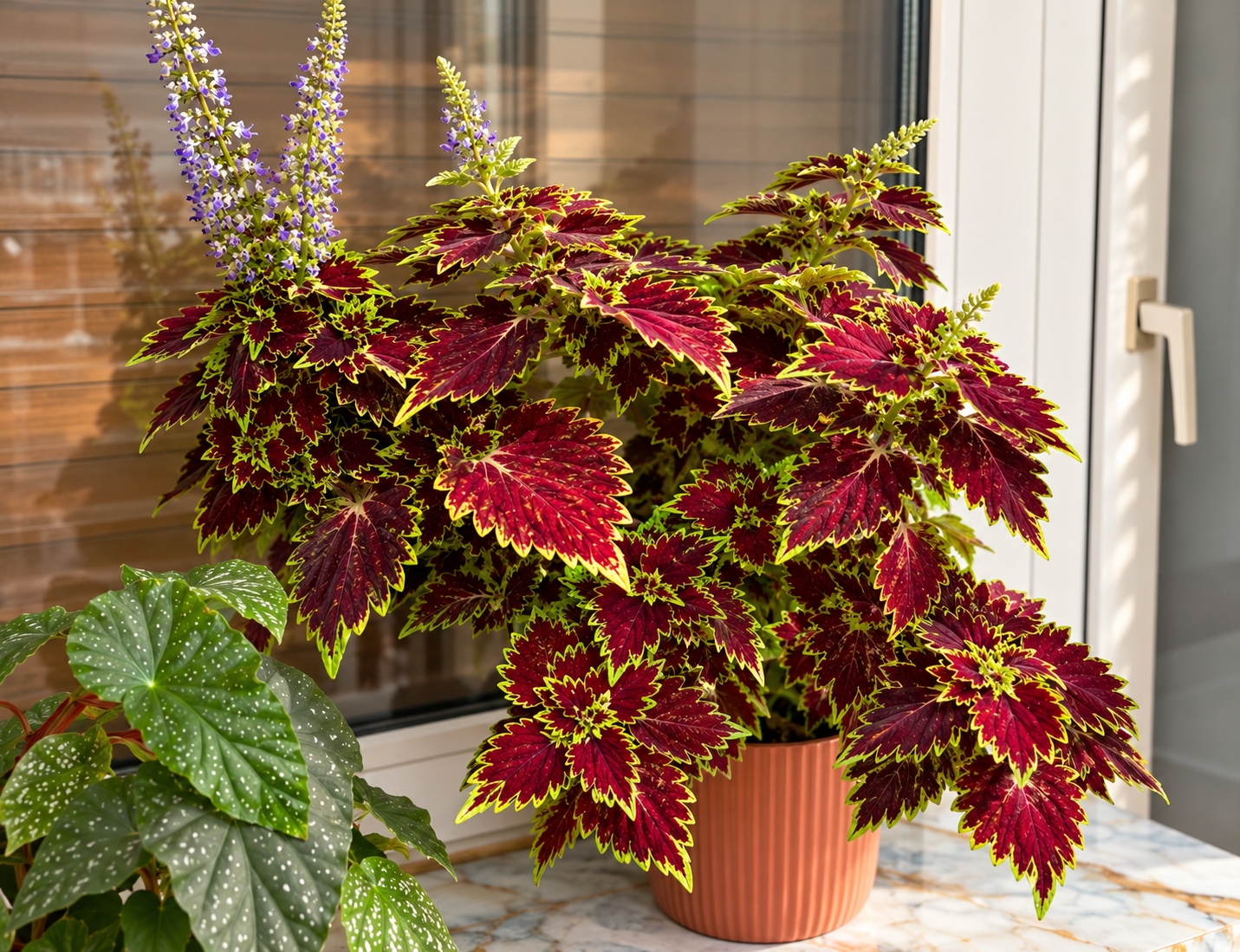
Coleus (Plectranthus scutellarioides) is a tropical perennial grown primarily for its ornamental foliage rather than its flowers.
Different cultivars can have dramatically different leaf shapes and colors. Some have solid burgundy foliage, while others combine red, magenta, green, cream, yellow, or pink.
The coleus shown in your photo has deep burgundy-red leaves edged in bright lime green, along with tall flowering spikes carrying tiny purple-blue blooms.
Coleus grows quickly in warm, bright conditions and responds extremely well to pruning, making it easy to shape into a dense, bushy indoor plant.
How Much Light Does Coleus (Plectranthus scutellarioides) Need Indoors?
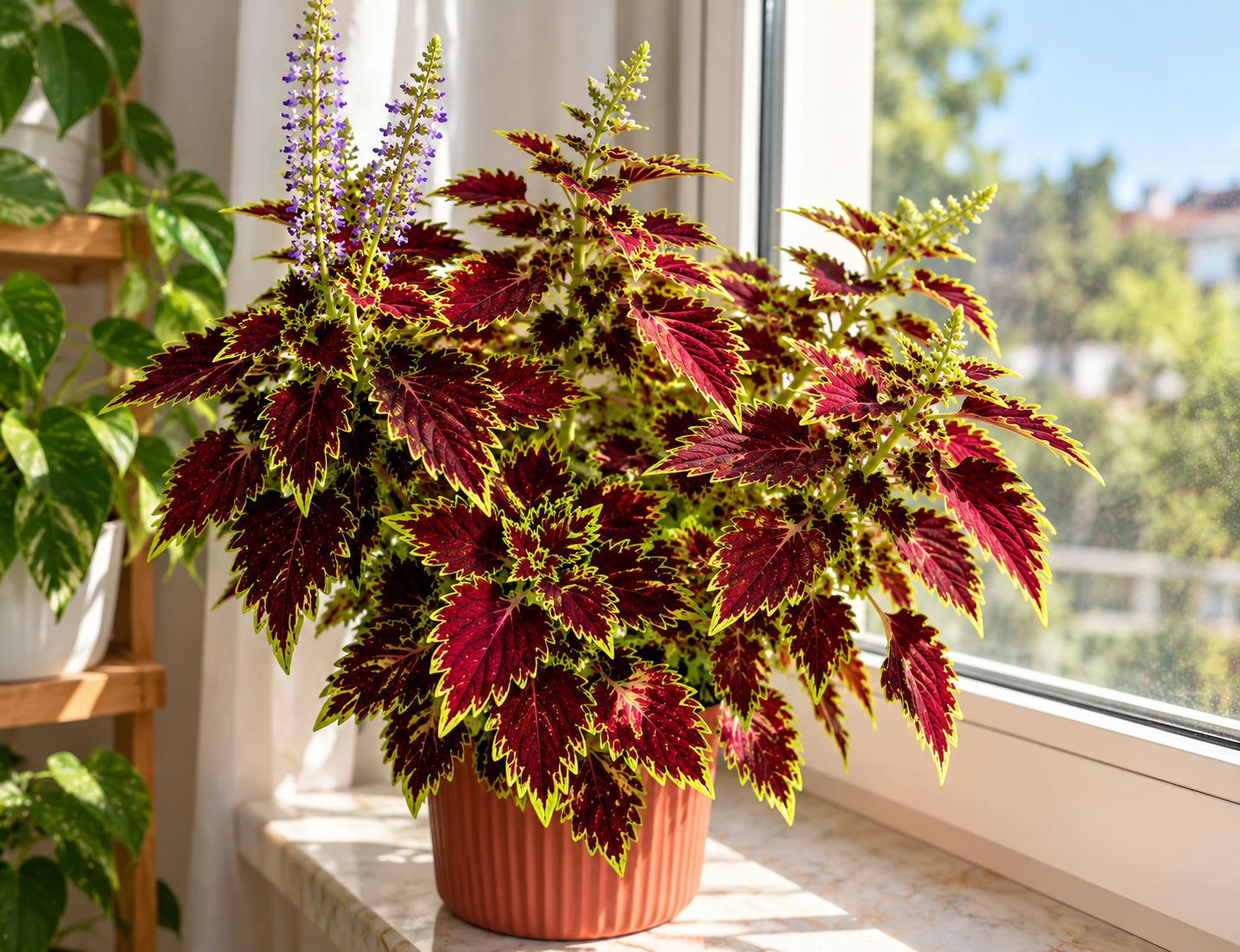
Coleus develops its strongest color and most compact growth when it receives plenty of bright light.
Indoors, place it close to a bright window where it can receive bright indirect light for much of the day.
Best Indoor Locations
- Near a bright east-facing window
- Close to a bright west-facing window with some protection
- Near a south-facing window behind a sheer curtain
- Under a grow light when winter daylight is limited
Intense midday or afternoon sunlight through glass can scorch foliage, especially when the plant has not been gradually acclimated to stronger light.
Signs Your Coleus Needs More Light
- Long spaces develop between leaves.
- The stems become thin and stretched.
- The foliage loses some of its intense color.
- The plant leans strongly toward the nearest window.
- New leaves become smaller.
How Often Should You Water Coleus?
Coleus prefers more consistent soil moisture than drought-tolerant plants such as Snake Plants, Jade Plants, or many succulents.
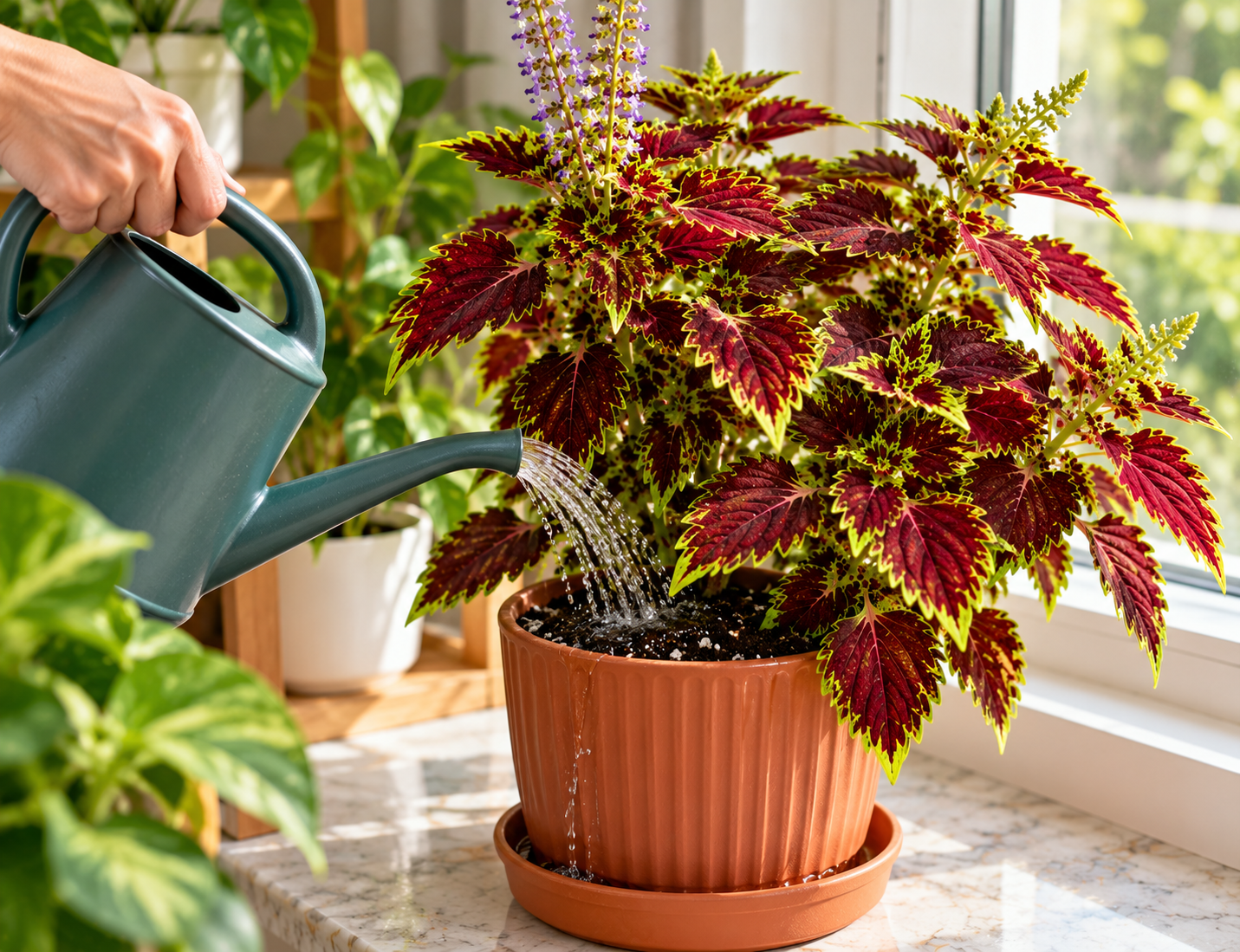
Check the soil regularly and water when approximately the top 2–5 cm begins to feel dry.
Water thoroughly until excess moisture drains from the bottom of the container. Empty any water that collects in the saucer or decorative outer pot.
Too Dry
Leaves may droop dramatically, curl inward, or develop crispy brown edges.
Too Wet
Leaves may yellow, stems may soften, and roots can eventually begin to rot.
Best Soil for Coleus
Coleus prefers a loose, nutrient-rich potting mix that holds some moisture while still allowing excess water to drain.
The goal is a mix that remains slightly moist without becoming dense, muddy, or waterlogged.
Avoid using heavy garden soil indoors. It can compact inside containers and may hold too much moisture around the root system.
Use a Pot With Good Drainage
Coleus enjoys consistent moisture, but the roots should not sit in stagnant water.
A container with drainage holes makes watering much safer because excess moisture can leave the root zone.
When repotting, increase the container size gradually. A very large amount of unused soil can remain wet for too long around a smaller root system.
Temperature & Humidity for Coleus (Plectranthus scutellarioides)
Coleus is a tropical plant and grows best in warm, relatively stable indoor conditions.
Ideal Temperature
18–27°CWarm indoor temperatures encourage healthy foliage and active growth.
Avoid Cold
Below About 10°CProlonged cold temperatures can stress and damage the foliage.
Humidity
Average to ModerateAverage indoor humidity is often adequate, although extremely dry heated air can contribute to crispy leaf edges.
How to Fertilize Coleus
Coleus can grow rapidly during spring and summer, especially when temperatures are warm and light levels are high.
During active growth, you can use a balanced liquid houseplant fertilizer according to the directions on the product label.
Reduce feeding during fall and winter if the plant’s growth slows significantly.
Excess fertilizer can damage roots, contribute to brown leaf tips, and create a buildup of soluble salts in the potting mix.
How to Make Coleus Bushier
Regular pinching and pruning help prevent Coleus (Plectranthus scutellarioides) from becoming tall, sparse, and leggy.
Choose a Long Stem
Find a stem that is becoming taller than the rest of the plant.
Find a Leaf Node
Look for the point where a pair of leaves joins the stem.
Cut Above the Node
Use clean scissors and make the cut just above a healthy leaf node.
Encourage Branching
Side shoots can develop below the cut and create a fuller plant.
Why Is My Coleus Growing Purple Flower Spikes?
The tall flowering spikes that appear above the colorful foliage are completely normal.
Coleus (Plectranthus scutellarioides) can produce long spikes covered with tiny blue, lavender, or purple flowers.
Flowering may become more noticeable as stems mature or as seasonal conditions change.
Should You Remove Coleus Flowers?
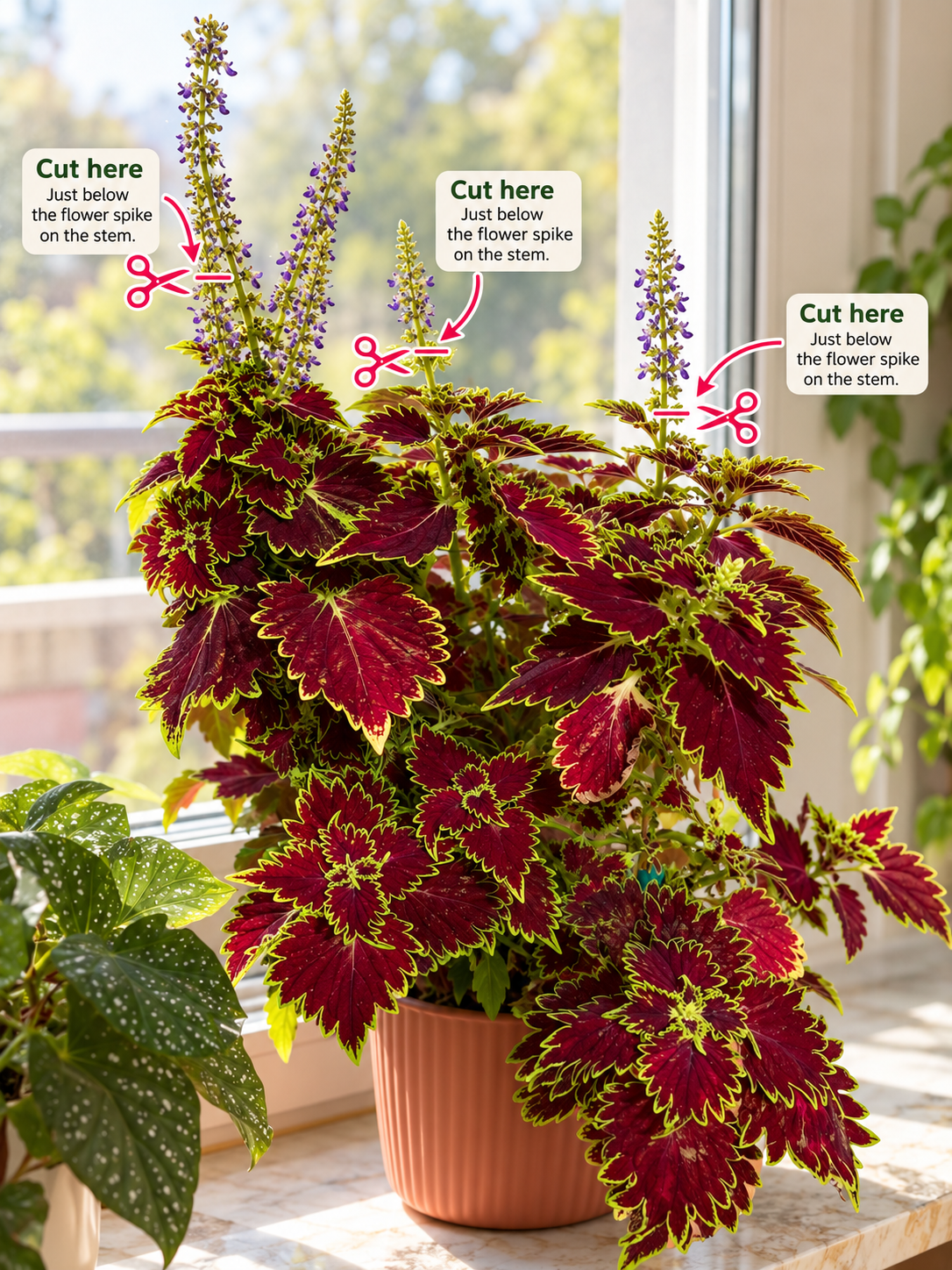
Removing the flowers is optional.
If you enjoy the blooms, you can leave them in place. However, many people grow coleus primarily for its colorful foliage and pinch the flower spikes off to help maintain a compact, leafy shape.
Flower production is a normal part of the plant’s life cycle.
How to Propagate Coleus
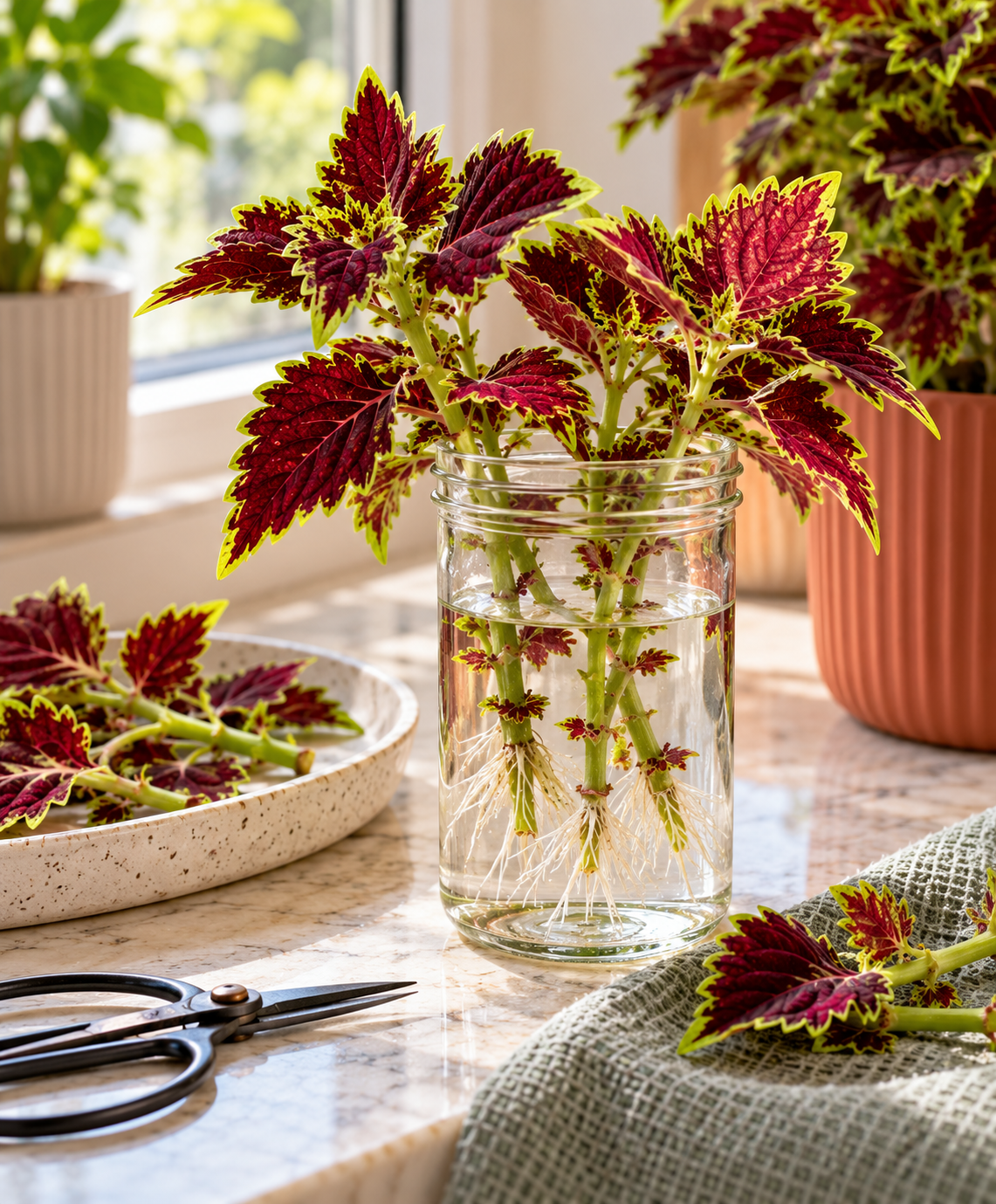
Coleus is one of the easier houseplants to propagate from stem cuttings.
How to Root Coleus in Water
- Choose a healthy non-damaged stem.
- Cut a section approximately 10–15 cm long.
- Make the cut just below a leaf node.
- Remove the leaves from the lower part of the cutting.
- Place at least one bare node below the waterline.
- Keep the remaining leaves above the water.
- Place the cutting in bright indirect light.
- Replace the water regularly.
- Plant it in soil once a healthy root system has developed.
When Should You Repot Coleus (Plectranthus scutellarioides)?
Coleus can grow quickly in favorable conditions and may eventually fill its container with roots.
Signs It May Need Repotting
- Roots densely fill the container.
- Roots circle around the inside of the pot.
- The plant starts drying much faster than before.
- Water passes through the soil unusually quickly.
- The plant becomes unstable or top-heavy.
- The potting mix has become compacted or degraded.
Move the plant into a container only slightly larger than the existing one. Spring and early summer are convenient times for routine repotting because growth is usually active.
Common Coleus Problems
Drooping Leaves
Check soil moisture first. Coleus can wilt dramatically when dry, but root problems can also cause wilting.
Brown Crispy Edges
Dry soil, very dry air, excess heat, or fertilizer buildup may be responsible.
Yellow Leaves
Frequently wet soil, poor drainage, or natural aging of older leaves can cause yellowing.
Long Leggy Growth
Increase light if necessary and prune long stems regularly to encourage branching.
Faded Leaf Color
Insufficient light can reduce the intensity of colorful coleus foliage.
Pest Problems
Inspect regularly for aphids, spider mites, mealybugs, whiteflies, and other common houseplant pests.
How to Care for Coleus in Winter
Coleus often receives much less natural light indoors during winter. Growth may slow, and stems may begin stretching toward the brightest window.
Winter Care Tips
- Keep the plant near the brightest suitable window.
- Consider a grow light if natural light is limited.
- Water less frequently if the potting mix dries more slowly.
- Keep foliage away from cold window glass.
- Avoid placing it directly beside a radiator.
- Reduce fertilizer if growth slows.
- Continue pinching leggy growth when necessary.
If your Coleus (Plectranthus scutellarioides) spends summer on a balcony, patio, or garden, move it indoors before cold fall nights and frost arrive.
Coleus (Plectranthus scutellarioides) Care FAQs
Can Coleus (Plectranthus scutellarioides) live indoors?
Yes. Coleus can grow indoors year-round when it receives sufficient light, warm temperatures, appropriate watering, and regular pruning.
How often should I water indoor coleus?
Avoid following a rigid schedule. Check the soil and water when the upper 2–5 cm begins to feel dry.
Why is my coleus tall and leggy?
Insufficient light and lack of pruning are common causes. Give the plant brighter light and pinch long stems above healthy leaf nodes.
Should I remove the purple flowers from coleus?
It is optional. You can enjoy the flowers, or remove the flower spikes to maintain a more compact foliage-focused plant.
Why is my coleus losing its bright color?
Light levels strongly influence foliage color. If the plant becomes dull and stretched, gradually move it into brighter light.
Can coleus be propagated in water?
Yes. Healthy stem cuttings usually root readily in water when at least one bare leaf node is submerged.
Is coleus an annual or perennial?
Coleus is a tender tropical perennial, but it is commonly grown as an annual outdoors in regions with cold winters.
Can coleus survive winter indoors?
Yes. Bring outdoor coleus inside before prolonged cold weather, provide bright light, and adjust watering as growth slows.
Why is my coleus suddenly flowering?
Flowering is normal and often appears as the plant matures or as seasonal conditions change. The flower spikes can be left or removed depending on your preference.
Keep Your Coleus (Plectranthus scutellarioides) Bright & Bushy
Give your coleus plenty of bright light, keep the potting mix moderately moist without leaving it waterlogged, and pinch long stems regularly to encourage branching.
When tall purple flower spikes appear, you can enjoy them as part of the plant’s natural cycle or remove them to keep the focus on colorful leafy growth.