
Parlor Palm Care & Brown-Tip Solutions (Chamaedorea elegans)
Parlor Palm (Chamaedorea elegans) is one of the most forgiving indoor palms, but keeping it lush, green, and full requires more than simply placing it in a dark corner and watering occasionally.
Brown tips, slow growth, thin-looking stems, yellow fronds, dry soil, and confusion about fertilizer are some of the most common problems people experience with this plant.
In this complete Parlor Palm care guide, we will look at how to make your palm look fuller, encourage better growth, prevent brown leaf tips, fertilize correctly, propagate it, repot it safely, and recognize problems before they become serious.
Parlor Palm at a Glance
Chamaedorea elegans
Bright indirect light; tolerates lower light.
Water after the upper layer of soil starts drying.
Best growth around 20–27°C.
Naturally slow.
Generally considered non-toxic to cats and dogs.
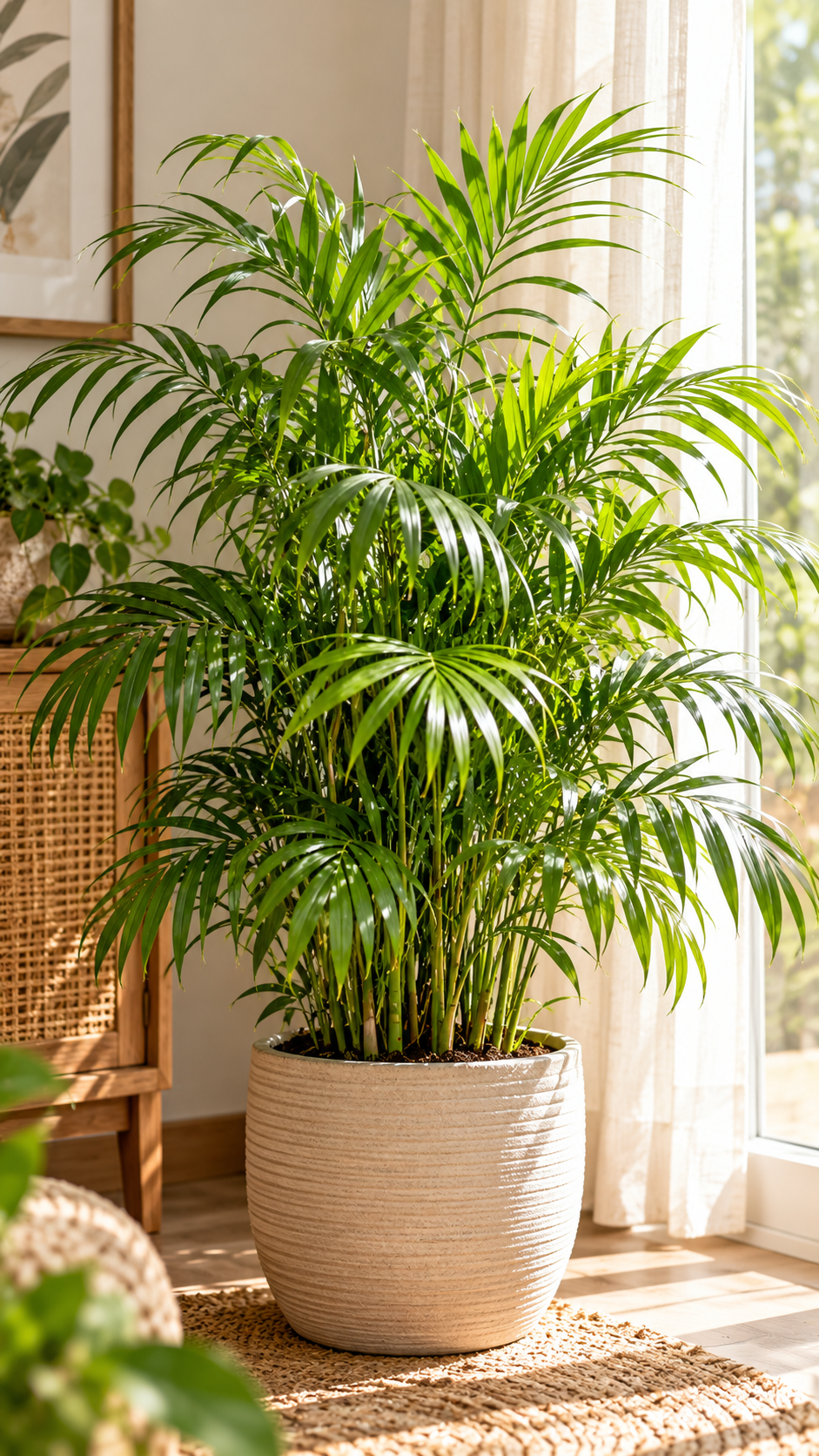
What Is a Parlor Palm (Chamaedorea elegans)?
The Parlor Palm is a tropical understory palm native to parts of southern Mexico and Central America.
In its natural habitat, it grows beneath taller forest plants, which explains why it is adapted to filtered light rather than intense direct sun.
One of the most important things to understand about this plant is that it is naturally slow-growing.
A palm that produces only a few new fronds each year is not necessarily unhealthy.
Commercial growers commonly plant several young palms together in one container. Each individual stem does not branch like a pothos, coleus, or ficus.
Best Light for Faster, Healthier Parlor Palm Growth
Parlor Palms are famous for tolerating relatively low indoor light, but tolerating low light and growing strongly in low light are not the same thing.
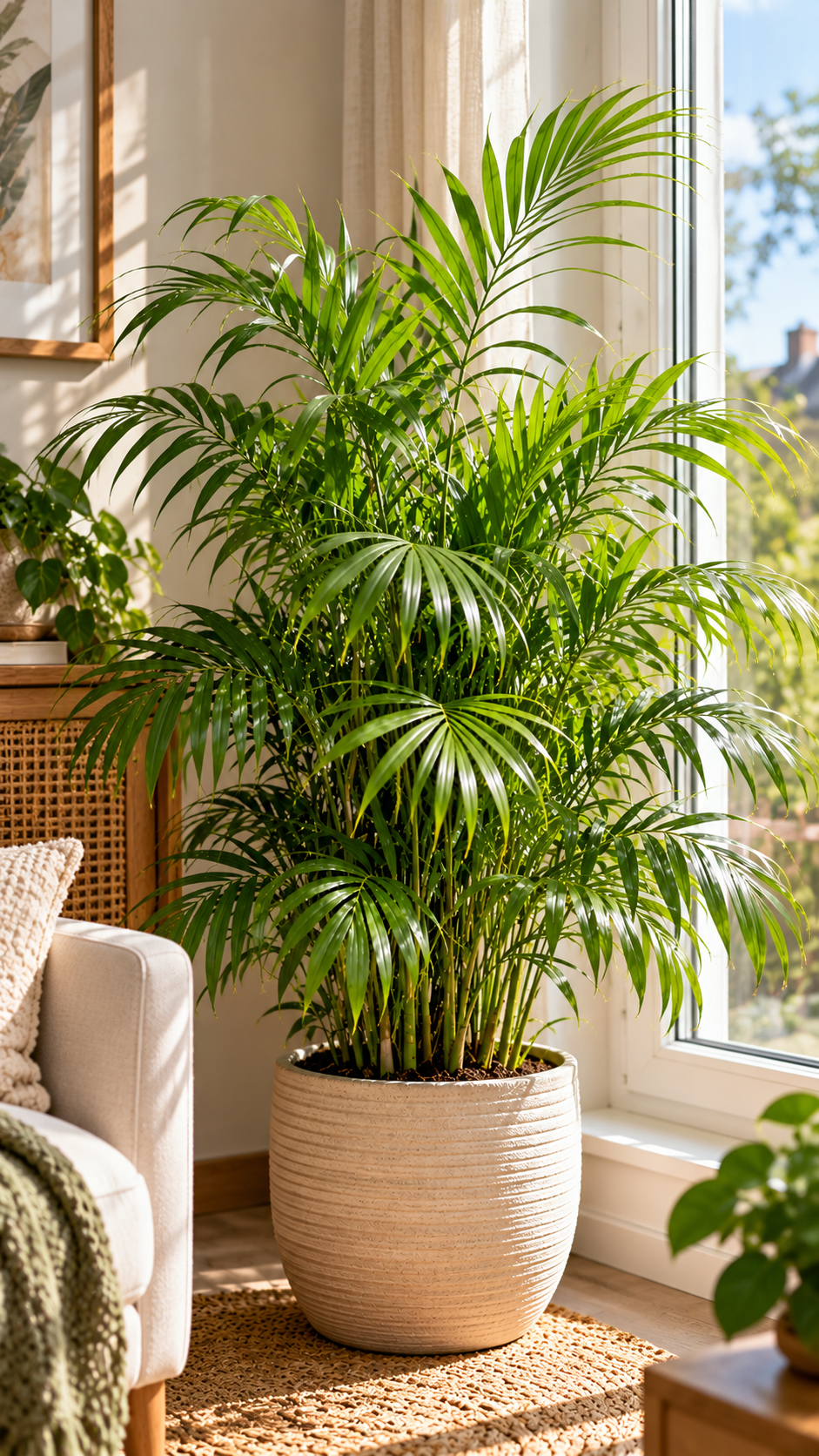
For the healthiest growth, give your palm bright indirect light.
Good Locations
- Near an east-facing window
- Near a bright north-facing window
- A few feet back from a bright south-facing window
- Behind a sheer curtain where sunlight is strong
Low Light
The plant may survive in lower light, but growth usually becomes slower and less vigorous.
Too Much Sun
Strong direct sunlight can bleach or scorch the delicate leaflets and may contribute to brown patches or crispy foliage.
How Often Should You Water a Parlor Palm?
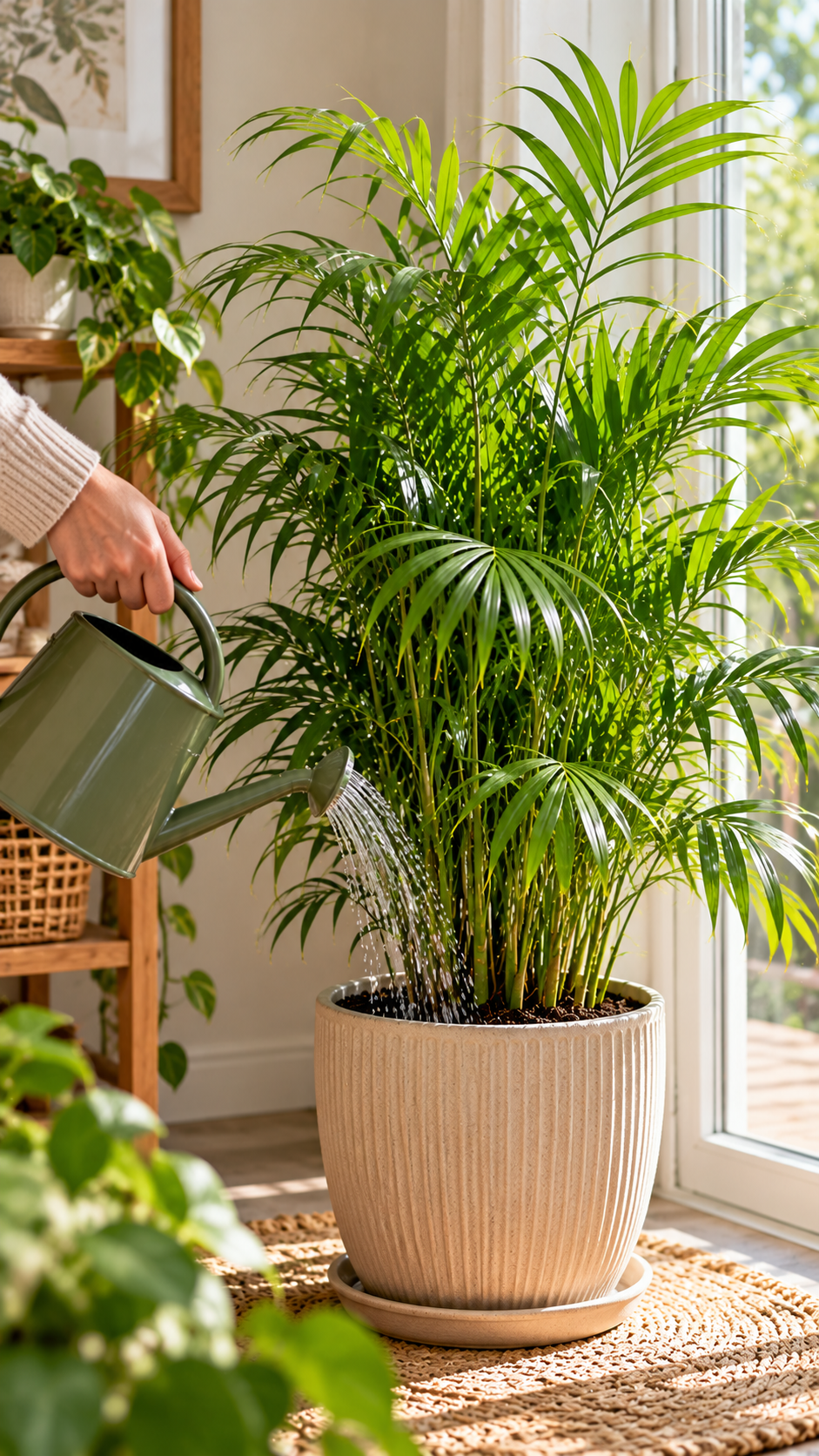
Avoid watering your Parlor Palm according to a fixed calendar.
Instead, check the potting mix first.
Water when the upper layer of soil has begun to dry while the deeper root zone still retains some moisture.
How to Water Properly
- Feel the upper few centimeters of soil.
- If it still feels wet, wait.
- If the surface has dried, water thoroughly.
- Allow excess water to drain from the bottom.
- Empty the decorative pot or saucer afterward.
Too Dry
Brown tips, crispy leaflets, drooping fronds, and very dry soil.
Too Wet
Yellowing, consistently wet soil, root stress, weak growth, and eventual root rot.
What Water Is Best?
If your tap water is very hard, mineral buildup can gradually create problems.
Rainwater, filtered water, or another low-mineral water source can be useful if your palm repeatedly develops brown tips despite otherwise good care.
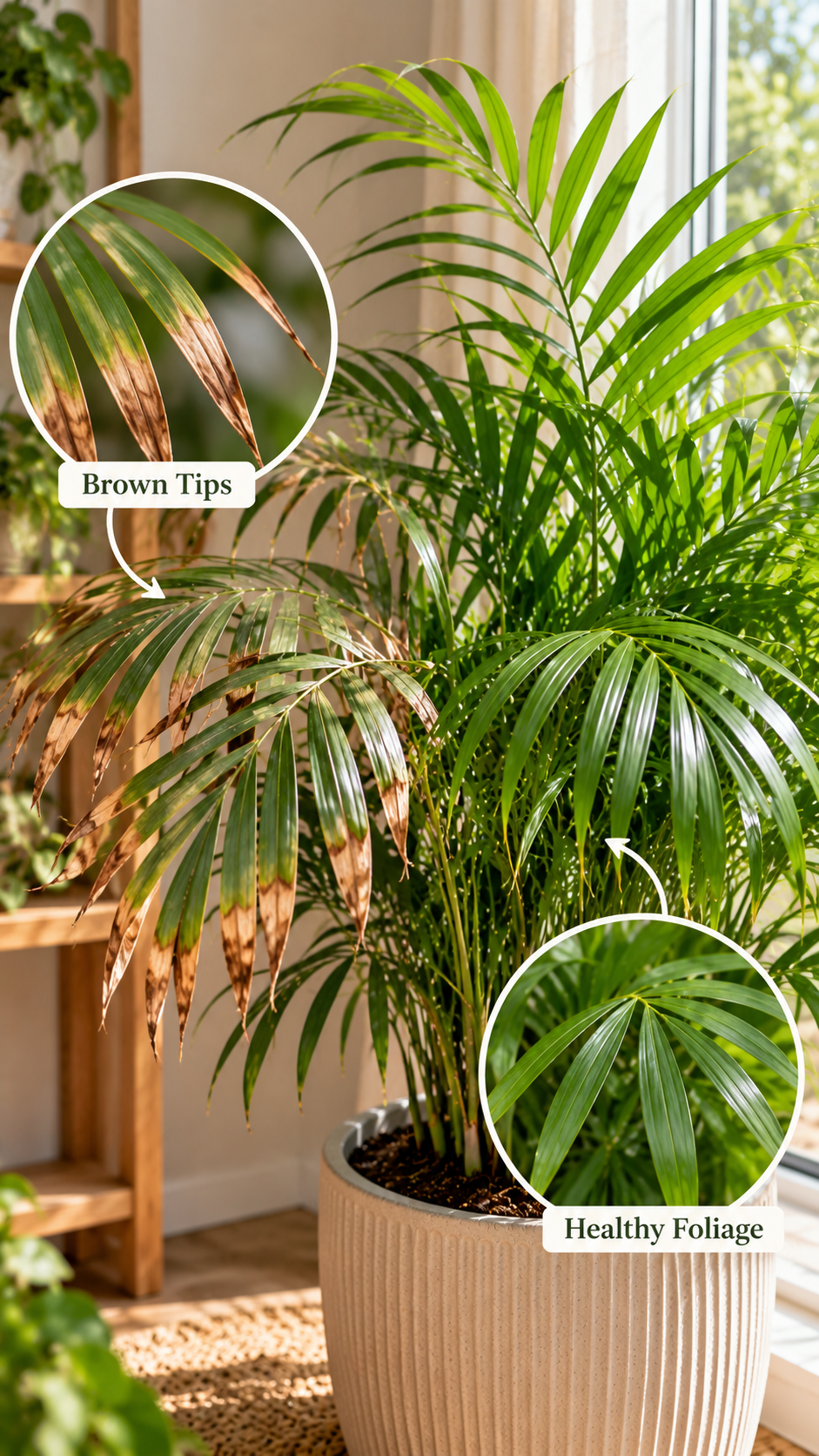
Why Does My Parlor Palm Have Brown Tips?
Brown tips are one of the most common Parlor Palm complaints, and there is not always one single cause.
Dry Soil
Repeatedly allowing the root ball to become extremely dry can cause leaf tips to turn brown and crispy.
Dry Air
Very dry heated indoor air can increase moisture loss from the foliage.
Hard Water
Regular use of highly mineralized or alkaline tap water can contribute to browning.
Too Much Fertilizer
Excess soluble salts in the potting mix can damage roots and show up as brown leaf tips.
Direct Sun
Strong direct sunlight can scorch foliage and create dry brown areas.
Root Stress
Constantly wet soil can damage roots so they can no longer supply the foliage properly.
Cold Drafts
Cold windows, doors, or ventilation drafts may damage sensitive foliage.
Old Fronds
An occasional older frond naturally declining is normal and is not necessarily a care problem.
How to Fix Brown Tips
- Check soil moisture before changing anything else.
- Keep watering more consistent.
- Move the palm away from harsh direct sun.
- Try lower-mineral water if your tap water is hard.
- Reduce fertilizer if you have been feeding frequently.
- Flush the potting mix occasionally with clean water.
- Keep the plant away from radiators and cold drafts.
- Check the roots if the soil remains wet for unusually long periods.
How to Make a Parlor Palm Look Bushier
This is where Parlor Palm care differs significantly from plants such as pothos, coleus, or many branching houseplants.
Cutting the top of a Parlor Palm will not make that stem branch.
Each stem grows from one growing point. Commercial pots appear bushy because growers often plant several individual palms together.
✓ Do This for a Fuller Palm
- Provide brighter indirect light.
- Keep several healthy stems in the same pot.
- Rotate the pot regularly for even growth.
- Feed lightly during active growth.
- Keep roots healthy and well aerated.
- Remove only completely dead fronds.
- Add additional established Parlor Palms to the pot if appropriate.
✕ Don’t Do This
- Do not cut stems in half expecting branching.
- Do not cut the central growing point.
- Do not overfertilize to force faster growth.
- Do not move it suddenly into intense sunlight.
- Do not repot into an oversized container.
The safest way to maintain a lush appearance is to protect the healthy stems already growing in the pot.
How to Make a Parlor Palm Grow Better
Because Parlor Palms are naturally slow-growing, the goal should be healthier growth rather than trying to force rapid growth.
Increase Indirect Light
A brighter location can dramatically improve growth compared with deep shade.
Improve Watering
Avoid alternating between bone-dry soil and constantly saturated soil.
Feed During Active Growth
Use moderate fertilizer rather than repeatedly increasing the dose.
Keep Leaves Clean
Dusty foliage reduces the amount of usable light reaching the leaflets.
Check the Roots
Extremely compacted soil or badly crowded roots can eventually restrict growth.
Be Patient
Even under excellent care, this palm will never grow as rapidly as pothos or monstera.
Best Soil for Parlor Palm
The ideal mix should retain some moisture while allowing plenty of air around the roots.
Avoid extremely heavy soil that stays saturated for long periods.
Drainage Holes Are Important
Always use a container that allows excess water to escape.
Temperature & Humidity
Ideal range for active growth.
Helpful for keeping fine leaflets from becoming overly dry.
Keep away from frequently opened cold windows and doors.
Parlor Palms tolerate normal indoor humidity better than many tropical plants, but extremely dry winter air can contribute to brown tips.
Do You Need to Mist?
Misting creates only a short-lived rise in humidity. If your room is extremely dry, a humidifier or grouping plants together generally provides a more consistent effect.
When Should You Fertilize a Parlor Palm?
Feeding should support healthy active growth—not force the palm to grow faster than its natural pace.
Spring
Begin feeding once you see active new growth and daylight increases.
Summer
Continue with a balanced liquid fertilizer approximately once a month according to the product directions.
Autumn
Reduce feeding as growth and daylight begin to slow.
Winter
Usually stop feeding while the plant is growing slowly.
Too much fertilizer can create soluble-salt buildup, damage the roots, and make brown-tip problems worse.
How to Prune a Parlor Palm Correctly
Parlor Palms need very little pruning.
You Can Remove:
- Completely brown fronds
- Dead lower leaves
- Severely damaged fronds
Do Not Cut:
- Healthy green fronds simply to reduce height
- The central growing point
- Healthy stems in half
Can You Trim Brown Tips?
Yes. Use clean scissors and carefully trim only the dead brown tissue.
Follow the natural shape of the leaflet and leave a very thin brown margin rather than cutting deeply into healthy green tissue.
How to Propagate a Parlor Palm
Parlor Palm propagation is very different from propagating pothos, tradescantia, coleus, or monstera.
You Cannot Propagate It From a Stem Cutting
Cutting a Parlor Palm stem and placing it in water will not produce a new rooted palm in the way a pothos cutting would.
Division
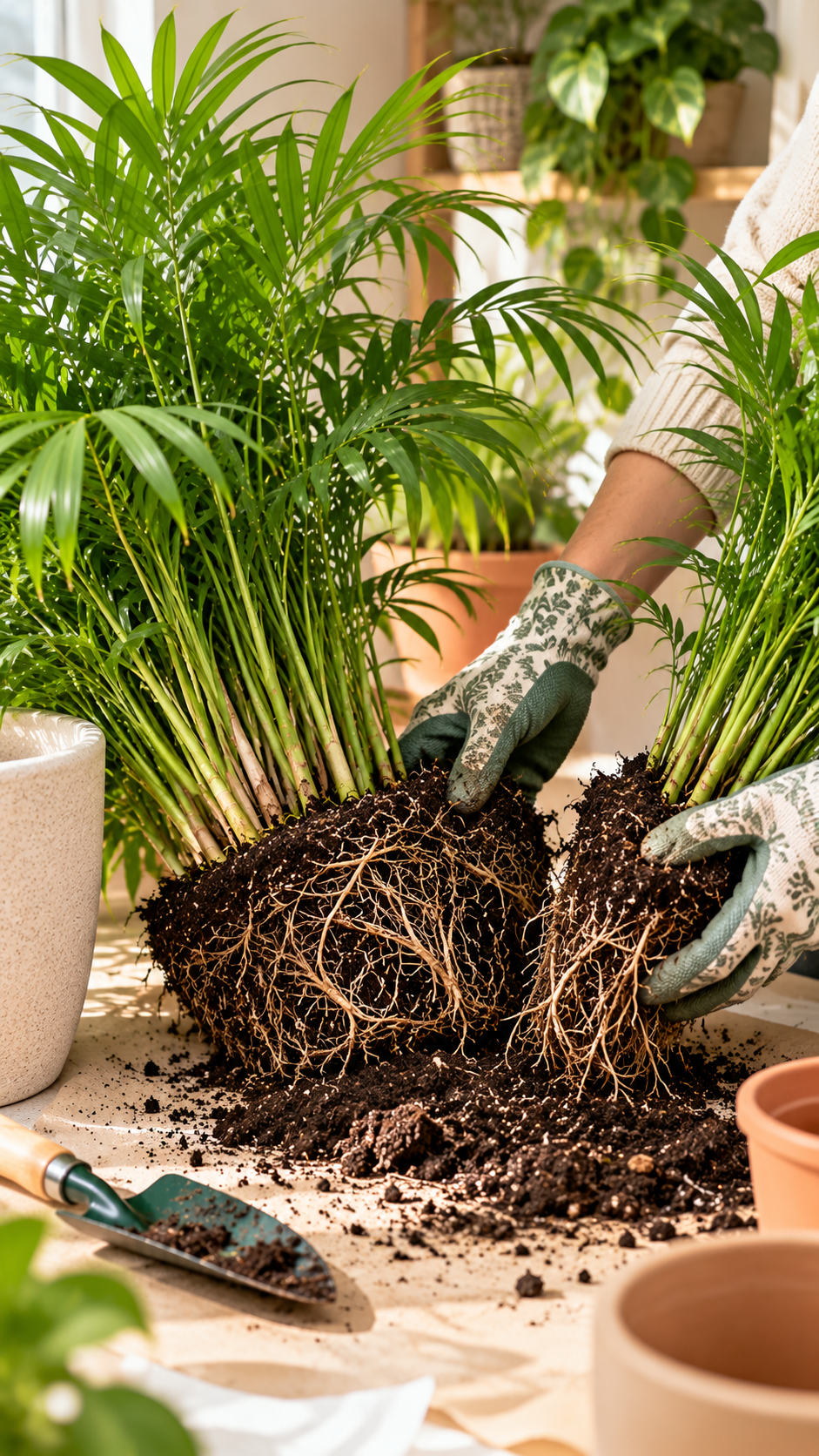
Many nursery pots contain several young palms planted together.
A mature multi-plant pot can sometimes be separated carefully, provided each divided section has its own healthy roots.
- Water the plant lightly the day before.
- Remove the entire root ball carefully.
- Identify naturally separable rooted sections.
- Gently loosen roots rather than tearing aggressively.
- Keep several stems together for a fuller appearance.
- Pot each section into an appropriately sized container.
- Keep in bright indirect light while recovering.
Seed
Parlor Palms can also be propagated from seed, although this process is much slower.
The species has separate male and female plants, so successful seed production requires pollination between them.
Seeds need consistently warm conditions to germinate successfully.
When Should You Repot a Parlor Palm?
Parlor Palms are slow-growing and generally do not need frequent repotting.
Repot when the roots have genuinely filled the container rather than automatically changing the pot every year.
Signs Repotting May Be Needed
- Roots densely circle the container.
- Roots emerge from drainage holes.
- The plant dries unusually quickly after watering.
- The soil has broken down and become compacted.
- The plant has become unstable in its container.
Choose a new pot only a few centimeters wider than the old one. Oversized pots can remain wet too long and increase the risk of root problems.
Why Are My Parlor Palm Leaves Turning Yellow?
Yellow foliage can develop for several reasons.
Overwatering
One of the first things to check when several fronds yellow.
Low Light
Very dark conditions can weaken growth over time.
Root Problems
Damaged roots cannot support healthy foliage.
Natural Aging
An occasional oldest lower frond turning yellow is normal.
Common Parlor Palm Pests
Although generally easy to maintain, indoor Parlor Palms can sometimes develop pest problems.
Watch For:
- Spider mites
- Scale insects
- Mealybugs
- Thrips
Early Warning Signs
- Fine webbing
- Pale stippling on leaflets
- Sticky residue
- Small cottony clusters
- Brown or silvery damaged areas
Check both sides of the leaflets and the points where leaves meet the stems.
Parlor Palm Winter Care
Growth naturally slows when days become shorter.
- Move the palm closer to bright indirect light if necessary.
- Check soil carefully before watering.
- Expect the potting mix to dry more slowly.
- Stop or greatly reduce fertilizer.
- Keep away from cold drafts.
- Do not place directly beside a radiator.
- Inspect occasionally for spider mites.
Parlor Palm Care Checklist
Bright indirect light
Allow the surface to begin drying
20–27°C for best active growth
Average to moderate
Monthly during active growth
Only when genuinely root crowded
Remove dead fronds only
Naturally slow
Trusted Plant-Care References
This care guide was cross-checked against horticultural guidance from established plant and extension organizations.
Parlor Palm Care FAQs
How do I make my Parlor Palm bushier?
Individual Parlor Palm stems do not branch when cut. A full-looking pot normally contains several individual palms. Give the existing stems bright indirect light, correct watering, and appropriate feeding, and preserve as many healthy stems as possible.
Why are the tips of my Parlor Palm turning brown?
Common causes include dry soil, dry air, hard tap water, excessive fertilizer, strong direct sun, cold drafts, and root stress from constantly wet soil.
Can I cut the brown tips off my Parlor Palm?
Yes. Trim only the dead brown tissue using clean scissors and follow the natural shape of the leaflet.
How quickly does a Parlor Palm grow?
Slowly. Parlor Palm is naturally a slow-growing species, so healthy plants may still produce only modest amounts of new growth each year.
When should I fertilize my Parlor Palm?
Feed lightly during active spring and summer growth. A balanced liquid fertilizer approximately once a month is generally sufficient. Reduce feeding in autumn and usually stop during winter.
Can I propagate Parlor Palm cuttings in water?
No. Ordinary stem cuttings will not root like pothos or coleus. Parlor Palms are propagated primarily from seed or, in suitable multi-plant pots, by carefully separating rooted sections.
Does Parlor Palm need high humidity?
It tolerates average indoor humidity fairly well, but extremely dry air can contribute to brown tips and spider-mite problems.
Should I mist my Parlor Palm?
Occasional misting can clean foliage and temporarily increase moisture around the leaves, but it does not provide a lasting humidity increase. A humidifier is more effective in very dry rooms.
Does Parlor Palm like to be root bound?
It tolerates a relatively snug pot and does not need frequent repotting. However, severely crowded roots or degraded soil may eventually restrict healthy growth.
Is Parlor Palm safe for cats and dogs?
Parlor Palm is generally regarded as a pet-friendly houseplant.
The Secret to a Fuller, Healthier Parlor Palm
Do not try to force your Parlor Palm to grow quickly. Give Chamaedorea elegans brighter indirect light, consistent but careful watering, healthy roots, and moderate feeding during active growth.
Most importantly, remember that a bushy Parlor Palm is usually a group of several individual palms—not one palm that has been encouraged to branch.
Healthy roots + appropriate light + steady care will do far more for your palm than aggressive pruning or heavy fertilizer.