
Aglaonema Care Indoors: How to Keep Chinese Evergreen Colorful, Full & Healthy
Aglaonema, commonly called Chinese Evergreen, is one of the most beautiful foliage plants you can grow indoors. Depending on the variety, its leaves may be deep green, silver, cream, pink, red, yellow, or a mixture of several colors.
Although Aglaonema has a reputation for being easy to grow, problems such as yellow leaves, faded colors, brown tips, slow growth, drooping, and root rot can still happen when its light, watering, or soil conditions are not quite right.
This complete Aglaonema care guide explains how to water Chinese Evergreen correctly, keep colorful varieties vibrant, encourage fuller growth, fertilize at the right time, propagate your plant, repot it safely, and troubleshoot the most common problems.
Aglaonema at a Glance
Chinese Evergreen
Low to bright indirect light depending on variety.
Water when the upper few centimeters of soil dry.
Warm indoor conditions, ideally around 18–24°C.
Clumping, upright, multi-stemmed foliage plant.
Division or stem cuttings.

What Is Aglaonema?
Aglaonema is a genus of tropical evergreen plants in the Araceae family. It is commonly known as Chinese Evergreen and is grown primarily for its striking ornamental foliage.
Different cultivars can look surprisingly different from one another. Some have mostly green and silver leaves, while others display pink, red, cream, yellow, or highly patterned foliage.
Aglaonema naturally forms clumps of upright stems rather than producing long vines. As the plant matures, new shoots can develop from around the base, gradually creating a fuller appearance.
Green and silver cultivars usually tolerate lower light better, while highly colored pink and red types generally perform best in brighter indirect light.
How Much Light Does Aglaonema Need Indoors?
One reason Chinese Evergreen is so popular is its ability to tolerate lower indoor light better than many colorful houseplants.
However, low-light tolerance does not mean every Aglaonema should be kept in a dark room.
Green & Silver Aglaonema
Green and silver varieties can tolerate lower to medium indirect light surprisingly well.
They are useful for rooms where many other tropical foliage plants would become weak or stretched.
Pink, Red & Highly Variegated Aglaonema
High-color cultivars usually need brighter indirect light to maintain strong pink, red, cream, or yellow coloration.
If they are placed too far from natural light, newer growth may become greener and less dramatically patterned.
Best Indoor Locations
- Near a bright east-facing window
- Near a north-facing window with good daylight
- A short distance from a south or west-facing window
- Behind a sheer curtain where sunlight is intense
Strong sun can scorch Aglaonema foliage, especially delicate variegated leaves.

How to Keep Pink & Red Aglaonema Colorful
If you bought a vibrant pink or red Aglaonema and the newest leaves are becoming increasingly green, lighting is one of the first things to examine.
Increase Indirect Light
Move the plant gradually closer to a bright window without placing it in harsh midday sun.
Use Filtered Sunlight
Sheer curtains can provide strong light while reducing scorching.
Rotate the Pot
Turn the plant occasionally so all sides receive reasonably even exposure.
Consider a Grow Light
During dark winter months, supplemental light can help maintain better growth and coloration.
Light is usually far more important for maintaining variegation than adding additional fertilizer.
How Often Should You Water Aglaonema?
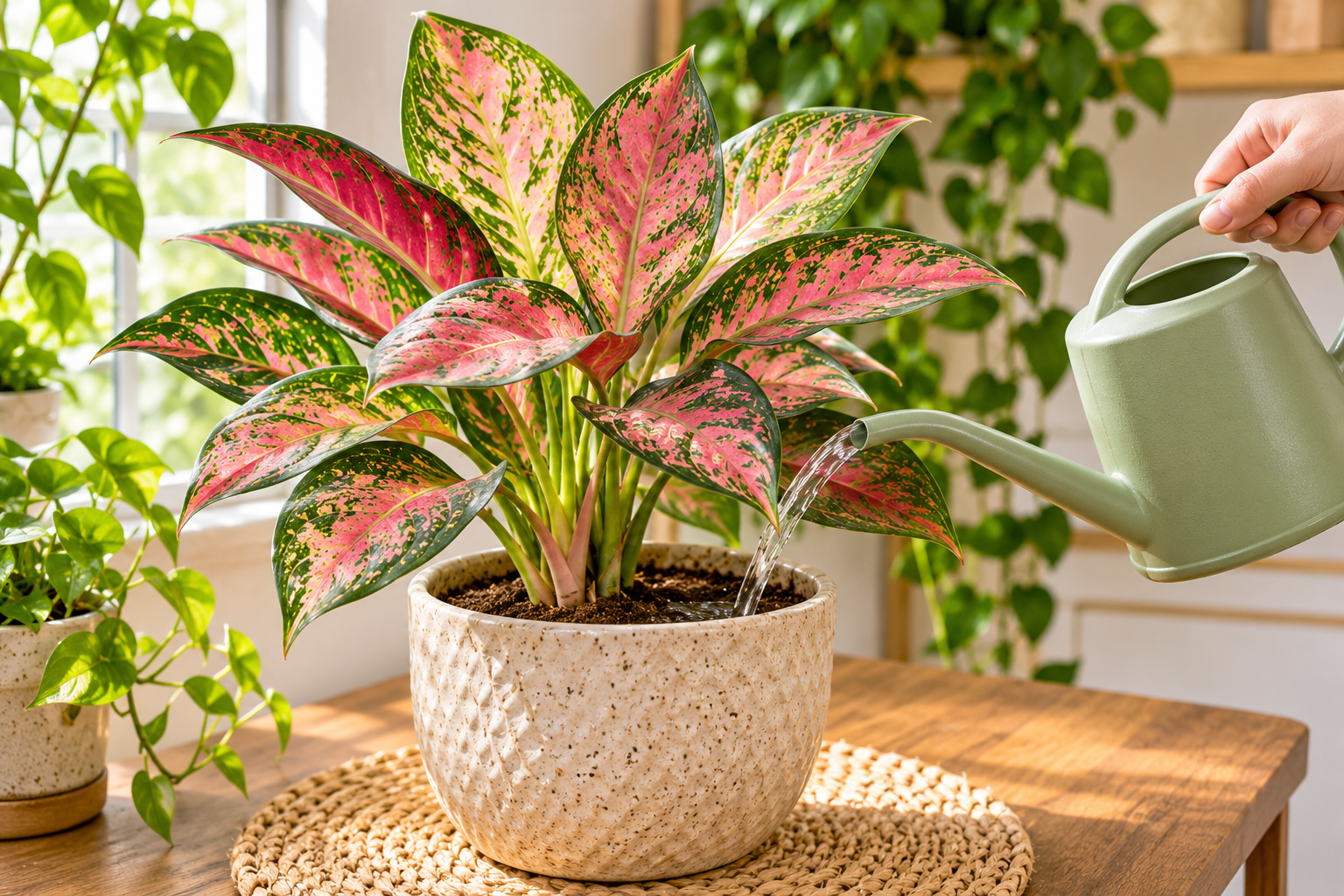
The safest way to water Aglaonema is by checking the soil rather than following a strict weekly schedule.
Allow the upper few centimeters of potting mix to dry before watering again.
How to Water Correctly
- Push your finger into the upper layer of soil.
- If it still feels wet, wait.
- If the upper soil feels dry, water thoroughly.
- Allow excess water to leave through drainage holes.
- Empty standing water from the saucer or decorative pot.
Too Dry
The plant may droop, curl, develop brown edges, or dry more rapidly than normal.
Too Wet
Yellow leaves, soft stems, consistently wet soil, and root rot may develop.
Best Soil for Aglaonema
Aglaonema prefers a potting mix that holds some moisture but still allows oxygen to reach the roots.
Dense soil that remains wet for long periods increases the risk of stem and root problems.
The exact recipe is less important than achieving a mix that drains properly without drying instantly.
Choose a Pot With Drainage
Drainage holes are extremely helpful when growing Chinese Evergreen indoors because they allow you to water thoroughly without trapping excess moisture around the roots.
If you prefer decorative ceramic pots without drainage, keep the plant in a plastic nursery pot inside the decorative container.
Move up gradually when repotting. A large volume of unused soil can stay wet much longer than the plant needs.
Temperature & Humidity for Aglaonema
Temperature
About 18–24°CWarm, stable temperatures support healthy tropical growth.
Humidity
Average to ModerateAglaonema appreciates humidity but can adapt to many normal indoor environments.
Cold Protection
Avoid ChillingKeep it away from cold drafts, very cold windows, and sudden temperature changes.
When Should You Fertilize Aglaonema?
Fertilizer should support healthy growth rather than force a plant to grow rapidly.
Spring
Begin feeding when active new growth becomes noticeable.
Summer
Feed approximately monthly using a balanced liquid fertilizer according to product directions.
Autumn
Begin reducing feeding as daylight and growth slow.
Winter
Reduce greatly or pause fertilizer when the plant is barely growing.
If growth is slow, first check light levels, watering, temperature, and root condition.
How to Make Aglaonema Fuller and Bushier
Aglaonema naturally develops a clumping, multi-stemmed growth habit. The best way to create a full plant is to encourage healthy basal shoots and preserve multiple rooted stems.
✓ Do This
- Give the plant appropriate indirect light.
- Rotate the pot so all sides receive light.
- Keep multiple healthy shoots together.
- Feed moderately during active growth.
- Keep the root system healthy.
- Remove only damaged or declining foliage.
- Replant propagated shoots together for a denser pot.
✕ Avoid This
- Do not heavily prune healthy leaves just to create fullness.
- Do not overfertilize to force shoots.
- Do not keep the plant constantly wet.
- Do not place colorful varieties in deep shade.
- Do not use an oversized container.
How to Make Aglaonema Grow Better
Improve Light
Move it gradually into brighter indirect light if growth is unusually slow or stretched.
Fix Watering
Constantly wet soil can damage roots, while severe drought can halt growth.
Feed During Growth
Use moderate balanced fertilizer during spring and summer.
Keep Leaves Clean
Dust-free foliage receives light more effectively and looks much healthier.
Check the Roots
Compacted mix or root rot can dramatically reduce new growth.
Keep It Warm
Cold conditions slow tropical plant growth significantly.
How to Prune Aglaonema
Chinese Evergreen generally requires very little regular pruning.
Remove:
- Completely yellow leaves
- Brown or badly damaged leaves
- Soft or rotting stems
- Old declining foliage near the base
Use clean scissors or pruning shears and make cuts close to the base without damaging neighboring healthy shoots.
How to Propagate Aglaonema
Chinese Evergreen can be propagated by division and, depending on the plant, by stem cuttings.
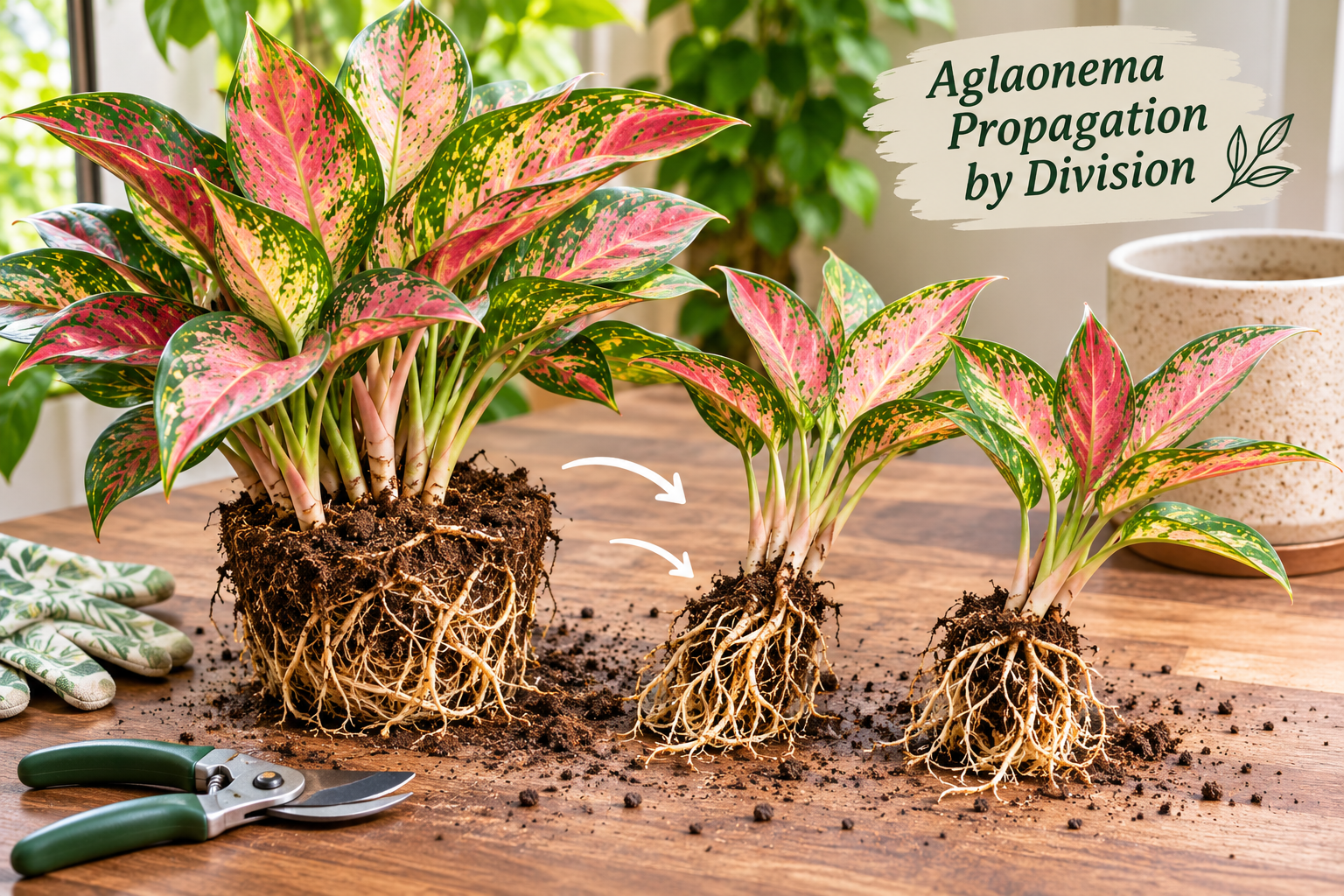
Propagation by Division
Division is ideal when the plant already has several established basal shoots.
- Water the plant lightly before dividing.
- Remove the root ball carefully from the pot.
- Look for naturally separate shoots with their own roots.
- Gently separate the root systems.
- Keep several shoots together if you want a fuller new plant.
- Pot into fresh, well-draining mix.
- Return to warm bright indirect light.
Propagation by Stem Cutting
Older or elongated Aglaonema stems can sometimes be propagated from healthy stem sections.
- Select a healthy section of stem.
- Use clean tools to make the cut.
- Allow the cutting to remain warm and protected.
- Root it in an appropriate moist propagation medium.
- Keep the medium lightly moist rather than saturated.
- Wait for new roots and growth before treating it as an established plant.
When Should You Repot Aglaonema?
Aglaonema generally does not need annual repotting.
Repot when the root system has genuinely filled the container or when the potting mix has broken down.
Signs It May Be Time
- Roots circle tightly around the pot.
- Roots emerge from drainage holes.
- The plant dries much faster than it used to.
- The soil has become compacted.
- Growth has slowed despite good light and care.
Choose a container only slightly larger than the current one rather than dramatically increasing pot size.
Why Are My Aglaonema Leaves Turning Yellow?
Yellow leaves are one of the most common Chinese Evergreen problems.
Overwatering
Frequently wet soil can damage roots and cause widespread yellowing.
Poor Drainage
Water trapped in a decorative pot can keep the root zone saturated.
Cold Stress
Chilling and cold drafts can cause tropical foliage to decline.
Very Low Light
Extremely dark conditions can weaken growth and reduce water use.
Root Damage
Damaged roots cannot support healthy foliage effectively.
Natural Aging
An occasional oldest lower leaf turning yellow can be completely normal.
Why Does Aglaonema Develop Brown Tips?
Brown tips or dry leaf margins can have several causes.
- Repeatedly dry soil
- Very dry indoor air
- Excess fertilizer salts
- Root stress
- Strong direct sunlight
- Temperature stress
Can You Trim Brown Tips?
Yes. Use clean scissors and remove only the dead brown tissue while following the natural shape of the leaf.
More importantly, identify why the browning happened so new leaves do not develop the same problem.
Why Are Aglaonema Leaves Curling or Drooping?
Dry Soil
Severe dryness can cause leaves to curl and the whole plant to droop.
Wet Roots
Root damage can also cause drooping even when the soil is wet.
Cold Air
Cold drafts can cause leaf damage and stress.
Excess Sun
Too much direct light can create curling, bleaching, or scorched patches.
Common Aglaonema Pests & Root Rot
Watch for:
- Mealybugs
- Spider mites
- Scale insects
Check leaf undersides, stems, and tight areas where leaf stalks meet the main stem.
Root Rot
Root rot is far more likely when the potting mix remains wet for long periods.
Possible Signs
- Multiple yellow leaves
- Soft stems
- Slow or collapsing growth
- Wet soil that does not dry
- Dark, mushy roots
Aglaonema Winter Care
Increase Light
Move the plant closer to a bright window if winter daylight is weak.
Reduce Watering
Soil usually dries more slowly when growth slows.
Reduce Fertilizer
Pause or greatly reduce feeding during slow winter growth.
Avoid Cold Glass
Keep foliage away from freezing-cold windows and drafts.
Popular Aglaonema Varieties
Aglaonema is available in many cultivars, ranging from subtle silver foliage to dramatic pink and red leaves.
Silver Bay
Broad green leaves with large silver centers.
Silver Queen
Elegant narrow leaves with extensive silver patterning.
Maria
Deep green leaves with attractive lighter markings.
Siam Aurora
Green foliage edged and veined with red or pink tones.
Red Valentine
Highly colorful pink-red foliage with contrasting green.
Pink Dalmatian
Green foliage covered with beautiful pink spotting.
The more colorful and variegated the foliage, the more likely the plant is to benefit from brighter indirect light.
Trusted Plant-Care References
The care recommendations in this guide were cross-checked against horticultural guidance from established plant and extension organizations.
Aglaonema Care FAQs
Can Aglaonema grow in low light?
Yes. Green and silver Aglaonema varieties tolerate lower light particularly well. Highly colorful pink and red varieties generally perform better in brighter indirect light.
Why is my pink Aglaonema turning green?
Insufficient light is a common reason highly colorful varieties lose some of their pink or red intensity. Gradually move the plant into brighter indirect light.
How often should I water Aglaonema?
Avoid a fixed schedule. Water when the upper few centimeters of potting mix have dried, then allow excess water to drain.
How do I make Aglaonema bushier?
Provide appropriate light, maintain healthy roots, feed moderately during active growth, and keep multiple healthy basal shoots together in the same pot.
Why are my Aglaonema leaves turning yellow?
Overwatering and poor drainage are common causes. Other possibilities include cold stress, low light, root damage, or natural aging of older lower leaves.
Can I propagate Aglaonema?
Yes. Established multi-stem plants can be divided, and Aglaonema may also be propagated using suitable stem cuttings.
When should I fertilize Aglaonema?
Feed during active spring and summer growth using a balanced liquid fertilizer. Reduce feeding as growth slows in autumn and winter.
Does Aglaonema like humidity?
Yes. Chinese Evergreen appreciates moderate to higher humidity, although many varieties adapt well to normal indoor humidity.
How often should Aglaonema be repotted?
It normally does not need annual repotting. Repot when the plant becomes genuinely root crowded or the potting mix has deteriorated.
Is Aglaonema safe for pets?
No. Aglaonema contains calcium oxalate crystals and should be kept away from pets and children who may chew the foliage.
Keep Your Aglaonema Colorful, Full & Healthy
The secret to successful Aglaonema care is not complicated: give the plant appropriate indirect light, let the upper soil dry before watering, protect the roots from waterlogging, and feed moderately during active growth.
Green varieties can handle relatively low light, while pink and red varieties deserve a brighter spot if you want to preserve their dramatic foliage.
Healthy roots + suitable light + careful watering will do more for your Chinese Evergreen than aggressive pruning or heavy fertilizer.