
Glass Plant Propagation Station: An Easy Way to Root Houseplant Cuttings
Propagating houseplants in water is one of the easiest ways to grow new plants from the ones you already love. A glass propagation station makes the process simple to monitor while turning your cuttings into a beautiful part of your indoor plant display.
This wooden propagation station features three glass bulb-shaped vases, giving you separate spaces for several cuttings while keeping the setup compact enough for a shelf, desk, windowsill, sideboard, or plant corner.
Buy Yours Now →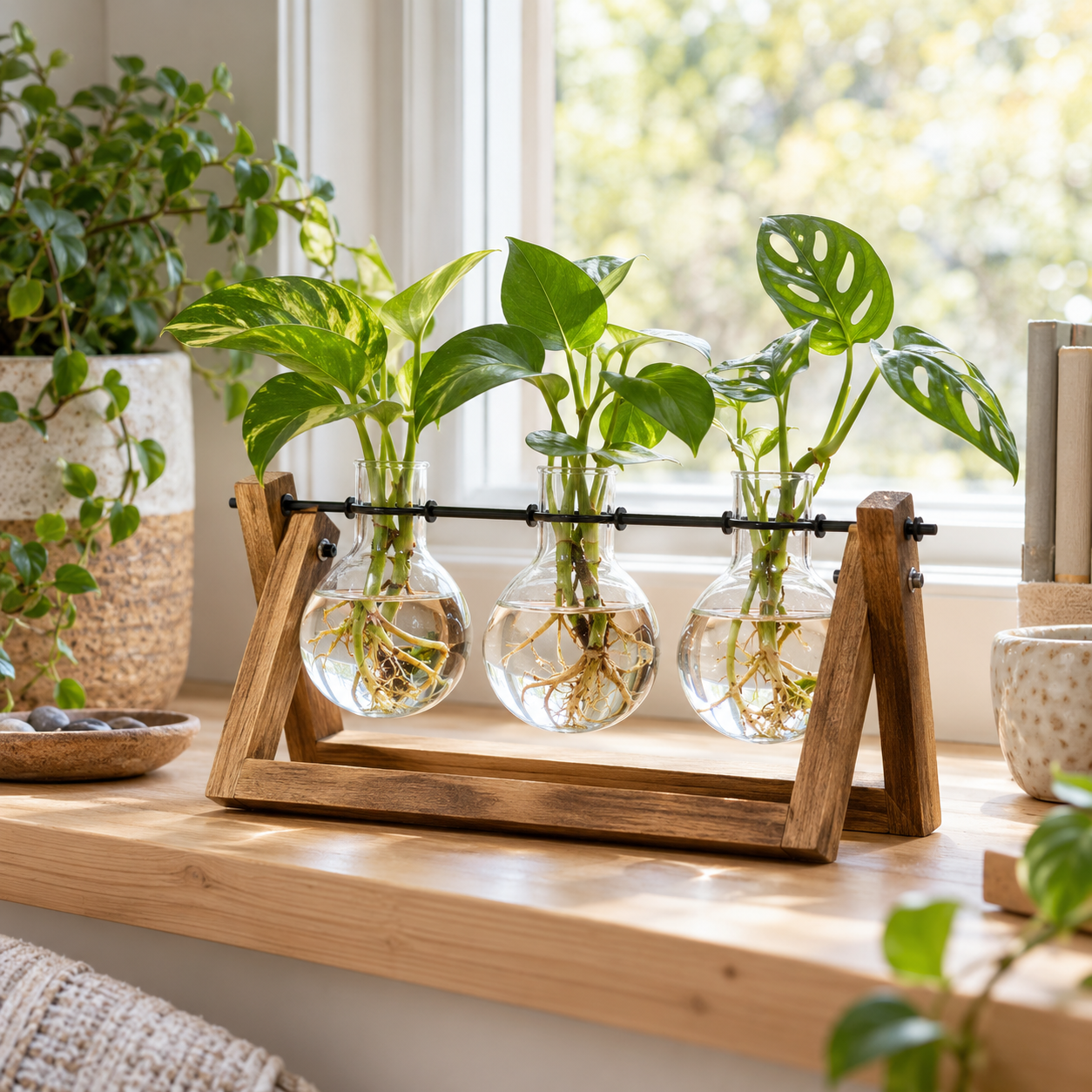
The Basics
What Is a Plant Propagation Station?
A plant propagation station is a container or group of containers used to hold plant cuttings in water while they develop roots.
Instead of placing cuttings in random jars or drinking glasses around your home, a dedicated propagation station keeps everything together and turns the rooting process into an attractive indoor plant display.
Clear glass is particularly useful because you can watch roots develop without pulling the cutting out of the water and disturbing the new growth.
A propagation station gives your cuttings a dedicated place to root while allowing them to become part of your cozy indoor plant setup.
Featured Plant Find
XXXFLOWER Glass Plant Propagation Station
This tabletop propagation station combines a natural-looking wooden frame with three rounded glass vases, giving plant cuttings a dedicated place to develop roots.
Each vase can hold a separate cutting, so you can propagate several stems at once or create a small display using a mix of vines, herbs, or fresh greenery.
Keep several plant cuttings growing separately at the same time.
Watch developing roots without removing your cuttings.
Natural wood works beautifully with cozy and botanical decor.
Style it on a shelf, desk, side table, or bright windowsill.
As an Amazon Associate, I may earn from qualifying purchases. Price and availability may change.
Why Use It?
Why Use a Glass Propagation Station?
You certainly do not need a special propagation vessel to root a plant cutting, but having a dedicated station makes the process tidier, easier to monitor, and much more attractive.
Watch Roots Grow
Transparent glass makes it easy to follow root development.
Grow More Plants
Turn healthy cuttings from your existing plants into new plants.
Decorative Display
Your cuttings can become part of your decor while they are rooting.
Beginner Friendly
Water propagation lets beginners actually see what is happening.
Best Plants for a Propagation Station
Many common houseplants can form new roots from healthy stem cuttings placed in water.
Pothos
Pothos is one of the easiest houseplants to propagate in water.
Philodendron
Healthy stem cuttings containing a node can root beautifully.
Tradescantia
Fast-growing stems make Tradescantia excellent for propagation.
Monstera
Smaller Monstera node cuttings can be rooted in water.
Coleus
Soft Coleus stems can produce new roots surprisingly quickly.
Herbs
Mint and some other herbs can also root from healthy cuttings.
For many popular houseplants, roots develop from nodes along the stem. A stem without the appropriate growth point may not produce roots.
How to Use a Plant Propagation Station
Setting up your first water propagation cutting takes only a few minutes.
Choose a Healthy Stem
Select growth without obvious pest damage, rot, or disease.
Cut Below a Node
Use clean scissors or pruning shears to take your cutting.
Remove Lower Leaves
Remove any leaves that would otherwise sit below the water.
Add Clean Water
Fill the vase with enough water to cover the rooting node.
Add Your Cutting
Position the stem with the node below water and foliage above it.
Give It Light
Place your cuttings in bright indirect light while roots develop.
The Cutting
How to Take a Good Plant Cutting
Start with a healthy parent plant. Avoid using stems that are rotting, heavily damaged, weak, or covered in pests.
A Good Cutting Usually Has:
- Healthy green growth
- At least one usable node
- A few healthy leaves
- No obvious pests
- No soft or rotting stem tissue
Clean scissors or pruning shears help reduce unnecessary damage to both the parent plant and your new cutting.
Water Care
How Often Should You Change Propagation Water?
Keep an eye on the water while your cuttings are forming roots.
Refresh it whenever it becomes cloudy, develops an odor, or begins collecting plant debris.
You should also top the vase up as water evaporates so the node or rooting portion of the cutting does not dry out.
Keep the Node Wet
Keep the portion that needs to root beneath the water line.
Keep Leaves Above Water
Remove lower leaves rather than submerging unnecessary foliage.
Keep Water Clean
Refresh cloudy water instead of allowing it to remain stagnant.
Placement
Where Should You Put a Propagation Station?
Most common tropical houseplant cuttings appreciate bright indirect light while they are producing new roots.
A bright shelf, desk near a window, sideboard, or filtered windowsill can make an ideal propagation area.
Good Locations
- Bright indoor room
- Near an east-facing window
- Filtered window light
- Well-lit plant shelf
- Bright home office
Avoid
- Harsh afternoon sunlight
- Very dark corners
- Cold windows during winter
- Direct radiator heat
- Strong drafts
Watching New Roots Grow
One of the nicest things about clear propagation glass is being able to watch the entire rooting process.
First Root
Small pale roots begin developing around the node.
Root Expansion
Those initial roots gradually become longer and more numerous.
Ready for Soil
Once a healthy root system develops, you can begin transitioning the cutting into potting mix.
Next Step
When Should You Move Water-Propagated Cuttings to Soil?
There is no single perfect root length for every plant species. However, you generally do not need to move the cutting into soil the moment the first tiny root appears.
Give the cutting time to establish several healthy roots before moving it into an appropriately sized pot.
When You Pot It Up:
- Choose a small pot with drainage holes.
- Use potting mix suitable for that particular plant.
- Handle the new roots gently.
- Keep the soil appropriately moist during the initial transition.
- Continue providing suitable indirect light.
How to Style a Propagation Station at Home
The combination of clear glass, water, green cuttings, and natural wood makes this style of propagation station easy to incorporate into a cozy home.
Bookshelf
Style it beside books, candles, and small indoor plants.
Window Area
Create a small propagation corner close to gentle natural light.
Home Office
Add living greenery to your desk without using a large planter.
Plant Shelf
Display your cuttings beside mature plants for a mini nursery look.
Kitchen
Try suitable herb cuttings or simply display fresh greenery.
Gift Idea
Pair the propagation station with a few plant cuttings for a thoughtful gift.
Cleaning
How to Keep Glass Propagation Vases Clean
Clear glass looks best when it is free from algae, mineral marks, and old plant debris.
Remove your cutting carefully.
Empty the old propagation water.
Rinse the glass thoroughly.
Clean buildup gently with a suitable bottle brush.
Rinse again before returning the cutting.
A clear vase lets you see developing roots, cloudy water, and deteriorating plant material quickly.
Why I Like This Style of Propagation Station
Why It Works
- Three cuttings can be displayed separately.
- Clear glass makes developing roots visible.
- The wooden frame suits cozy and natural interiors.
- It is compact enough for smaller surfaces.
- Useful as both propagation equipment and plant decor.
- Can make a thoughtful gift for houseplant lovers.
Things to Keep in Mind
- The glass will need occasional cleaning.
- Water levels should be checked as water evaporates.
- Larger cuttings may eventually outgrow the glass vessels.
- Some plants are better propagated directly in soil.
- Propagation speed varies greatly between plant species.
Buy Yours Now
If you regularly save Pothos vines, Tradescantia stems, Philodendron cuttings, herbs, or other easy-to-root plants, this propagation station gives them a dedicated place to grow while also adding greenery to your home.
As an Amazon Associate, I may earn from qualifying purchases. Price and availability may change.
Plant Propagation Station FAQs
What is a plant propagation station used for?
A propagation station holds plant cuttings in water while they develop roots. Clear glass also allows you to monitor root growth.
What plants are easiest to propagate in water?
Pothos, many Philodendrons, Tradescantia, Coleus, and several common vining plants are popular choices for water propagation.
Do I need to change propagation water?
Refresh the water when it becomes cloudy, develops an odor, or contains plant debris. Top it up when evaporation lowers the water below the rooting portion of the cutting.
Should plant leaves be underwater?
Usually no. Keep the node or rooting portion of the stem underwater while keeping unnecessary leaves above the water line.
Does a propagation station need sunlight?
Most common houseplant cuttings benefit from bright indirect light. Avoid suddenly exposing delicate cuttings to intense afternoon sun.
When should I move propagated cuttings into soil?
Give the cutting time to develop an established root system rather than moving it as soon as its first tiny root appears.
Can plants stay in propagation glass permanently?
A propagation vessel works beautifully for rooting and displaying cuttings, but many houseplants will eventually benefit from moving into an appropriate long-term growing setup.
Is a propagation station a good plant-lover gift?
Yes. It can be a useful and decorative gift for someone who enjoys indoor plants, propagation, botanical decor, or gardening projects.
Turn Your Favorite Plant Cuttings Into New Plants
Instead of hiding cuttings in random jars, turn the propagation process into part of your indoor plant display.
Buy Yours Now →