
How to Care for Tradescantia Indoors
Tradescantia is loved for its colorful striped leaves, trailing growth, and incredibly easy propagation. With bright light, careful watering, and regular pruning, this fast-growing houseplant can stay full, vibrant, and beautiful indoors.
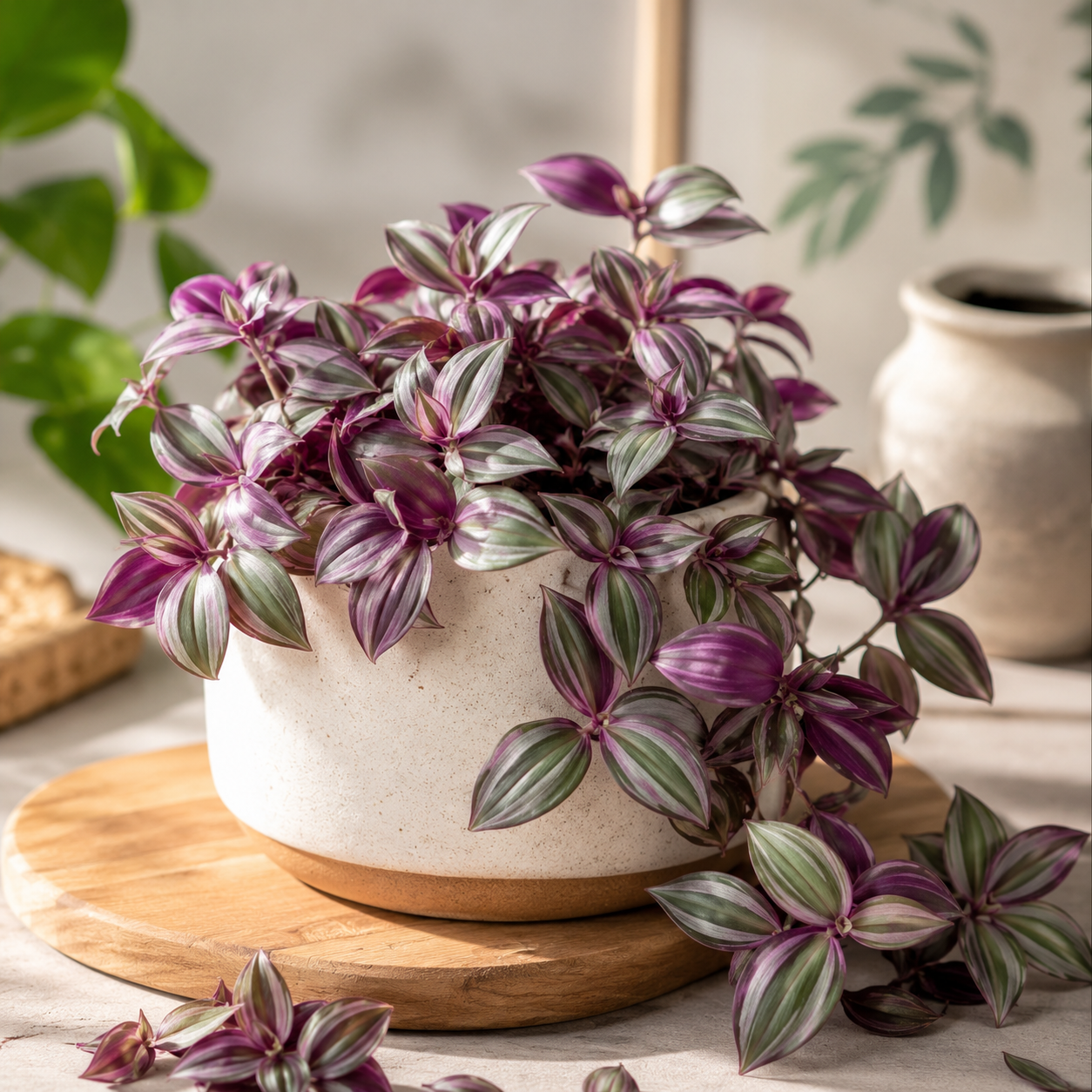
Meet the Plant
Why Grow Tradescantia Indoors?
Tradescantia is one of those houseplants that immediately adds color to a room. Depending on the variety, its leaves may contain shades of green, silver, purple, burgundy, cream, or pink.
It naturally develops long stems that trail over the sides of the pot, making it especially beautiful in hanging baskets, on shelves, or in pots placed slightly above eye level.
Tradescantia is also fast-growing and very easy to propagate, making it a rewarding plant for beginners.
Tradescantia kept in a bright location usually develops stronger pink, purple, and burgundy tones than plants growing in a dark corner.
Tradescantia Quick Care Guide
These simple basics will help your Tradescantia stay colorful and full.
Light
Bright indirect light with gentle morning sun.
Water
Water when the upper soil begins to dry.
Soil
Loose, well-draining indoor potting soil.
Temperature
Warm indoor temperatures around 18–25°C.
Humidity
Average household humidity usually works well.
Pruning
Trim regularly to encourage fuller growth.
Light
How Much Light Does Tradescantia Need?
Tradescantia grows best in bright, indirect light. Good lighting helps the plant produce compact growth and maintain the beautiful colors and patterns in its leaves.
A location close to an east- or west-facing window is often ideal. Gentle morning sunlight is usually beneficial, while extremely strong afternoon sun may scorch the foliage.
Signs Your Tradescantia Needs More Light
- Pink or purple colors begin fading.
- Stems become long and stretched.
- Large spaces develop between leaves.
- New leaves become smaller.
- The plant leans strongly toward the window.
If your colorful Tradescantia becomes noticeably greener or less vibrant, try gradually moving it into a brighter location.
Watering
How Often Should You Water Tradescantia?
Tradescantia prefers fairly consistent moisture, but it should not sit in permanently wet soil.
The best approach is to check the soil rather than watering on the same day every week.
Check the Topsoil
Feel the upper 2–3 cm of soil. If it feels dry, water the plant. If it still feels moist, wait a little longer.
The Best Way to Water Tradescantia
-
1
Check the soil before adding water.
-
2
Water evenly around the surface of the pot.
-
3
Allow excess water to flow through the drainage holes.
-
4
Empty any water remaining in the saucer or decorative pot.
💧 Signs It May Be Thirsty
- Drooping stems
- Dry potting soil
- Leaves curling inward
- Crispy leaf edges
⚠️ Signs of Overwatering
- Yellow leaves
- Soft stems
- Leaves falling while still soft
- Soil remaining wet for many days
- Dark or mushy growth near the base
Soil & Pot
Best Soil for Tradescantia
Tradescantia grows well in a light indoor potting mix that holds some moisture without becoming dense or waterlogged.
If your potting mix feels heavy, adding perlite can help increase drainage and improve airflow around the roots.
Drainage Matters
Always use a container with drainage holes. A nursery pot placed inside a decorative cover pot is an easy option.
After watering, allow the inner pot to drain completely before placing it back inside the decorative container.
Temperature
Best Temperature for Tradescantia Indoors
Tradescantia prefers warm household temperatures and generally grows happily in the same conditions that are comfortable for people.
Comfortable indoor growing range
Protect from prolonged cold
Avoid very cold windows, freezing temperatures, strong drafts, and placing the plant directly beside hot radiators.
Can Tradescantia Go Outside in Summer?
Yes. Tradescantia can enjoy warm summer weather outdoors, especially somewhere with bright shade or gentle morning sunlight.
Acclimate the plant slowly and bring it indoors again before temperatures become cold.
Humidity
Does Tradescantia Need High Humidity?
Tradescantia generally adapts well to average household humidity. You do not need to create tropical greenhouse conditions for it.
However, extremely dry air may contribute to crispy leaf edges, especially during winter.
Hot, dry air directly from a heater can cause the foliage to dry much faster than normal.
How to Make Tradescantia Bushy
Tradescantia naturally develops trailing stems, but regular trimming can prevent the plant from becoming sparse near the top of the pot.
Find Long Stems
Look for stems that have become noticeably longer than the rest.
Cut Above a Node
Trim the stem using clean scissors just above a healthy leaf node.
Encourage Branching
New growth can develop below the cut, helping the plant look fuller.
Reuse the Cuttings
Root the trimmed stems and plant them back into the original pot.
Leggy Growth
Why Is My Tradescantia Getting Leggy?
Long bare sections of stem usually develop when the plant does not receive enough light or has been allowed to grow without pruning.
How to Fix a Leggy Tradescantia
- Move the plant gradually into brighter indirect light.
- Cut back long bare stems.
- Pinch growing tips regularly.
- Rotate the pot every week or two.
- Root cuttings and return them to the mother pot.
Tradescantia grows quickly. Cutting back long stems often results in a much fuller and more attractive plant.
How to Propagate Tradescantia
Tradescantia is one of the easiest houseplants to propagate from stem cuttings.
Take a Healthy Cutting
Cut a healthy stem approximately 8–12 cm long just below a node.
Remove Lower Leaves
Remove leaves from the bottom section so one or two nodes are exposed.
Choose Water or Soil
Place the cutting into water or insert the exposed nodes directly into lightly moist potting soil.
Give It Bright Light
Keep the cutting somewhere bright but away from harsh direct sun.
Instead of starting a completely separate plant, place several rooted cuttings back around the edges of the original pot. This can quickly create a much denser appearance.
Feeding
How to Fertilize Tradescantia
Tradescantia grows quickly during spring and summer and can benefit from light feeding while actively growing.
Use a balanced liquid houseplant fertilizer at a diluted strength every few weeks.
Reduce or pause feeding during winter when growth slows.
Excess fertilizer may cause salt buildup in the soil and can damage the roots. More fertilizer does not automatically produce better growth.
Repotting
When Should You Repot Tradescantia?
Tradescantia can grow quickly, but it does not need an oversized container.
Signs It May Be Time to Repot
- Roots are growing heavily through drainage holes.
- The soil dries extremely quickly.
- There is little potting mix left around the roots.
- Growth has slowed despite good care.
- The plant has become unstable in its container.
Choose a new pot only slightly larger than the existing one and use fresh, well-draining potting soil.
Common Tradescantia Problems
Changes in the leaves and stems can help you understand what your plant needs.
Brown Leaf Tips
Check for overly dry soil, hot air, low humidity, or damaged older foliage.
Yellow Leaves
Excess water and constantly wet soil are common causes.
Leggy Growth
Move the plant into brighter light and prune long stems.
Fading Color
Insufficient light can cause colorful foliage to become greener or duller.
Drooping Leaves
Check whether the soil is extremely dry or whether the roots have remained wet for too long.
Scorched Leaves
Pale or crispy patches can appear after sudden exposure to intense direct sunlight.
Tradescantia Care Through the Seasons
Spring
Growth begins increasing. Prune long stems, propagate cuttings, and begin light feeding.
Summer
Check the soil regularly and protect the foliage from intense afternoon sunlight.
Autumn
Bring outdoor plants inside before temperatures drop and inspect the foliage carefully for pests.
Winter
Keep the plant close to a bright window and reduce watering as growth slows.
Tradescantia Care Do’s & Don’ts
Do
- Give it bright indirect light.
- Check the soil before watering.
- Use a pot with drainage holes.
- Pinch and prune long stems.
- Rotate the plant for balanced growth.
- Propagate healthy cuttings.
- Plant cuttings back into the pot for fullness.
Don’t
- Don’t leave the roots standing in water.
- Don’t keep the soil permanently soggy.
- Don’t place it in a very dark corner.
- Don’t suddenly expose it to harsh sunlight.
- Don’t be afraid to prune leggy stems.
- Don’t keep it beside a hot radiator.
- Don’t expose it to freezing temperatures.
Tradescantia Care FAQs
Is Tradescantia easy to grow indoors?
Yes. Tradescantia is fast-growing, forgiving, and easy to propagate, making it a good indoor plant for beginners.
How often should I water Tradescantia?
Check the upper 2–3 cm of soil rather than following a fixed schedule. Water when this layer begins to feel dry.
How do I make Tradescantia grow fuller?
Provide bright light, regularly pinch long stems, and plant rooted cuttings back into the original pot.
Why is my Tradescantia losing its pink color?
Insufficient light can make colorful Tradescantia varieties appear greener or less vibrant. Gradually move the plant into brighter indirect light.
Can Tradescantia be propagated in water?
Yes. Place the exposed nodes of a stem cutting in water while keeping the leaves above the waterline. Roots usually develop readily.
Can Tradescantia grow in a hanging basket?
Yes. Its naturally trailing stems make Tradescantia particularly attractive in hanging pots and elevated planters.
Bright Light + Careful Watering + Regular Pruning
Tradescantia is one of the easiest colorful houseplants to grow once you understand its basic needs.
Give it plenty of bright indirect light, water when the upper soil begins drying, and regularly trim long stems to maintain a compact shape.
Best of all, every stem you trim can become another plant — or be planted straight back into the original pot to make it even fuller.