
Why Are My Houseplant Leaves Turning Yellow?
Yellow leaves are one of the most common houseplant problems, but they do not always mean the same thing. Too much water, too little water, poor drainage, low light, root damage, temperature stress, pests, and even normal aging can all cause leaves to lose their green color.
The key is to look at the entire plant before trying to fix the problem.
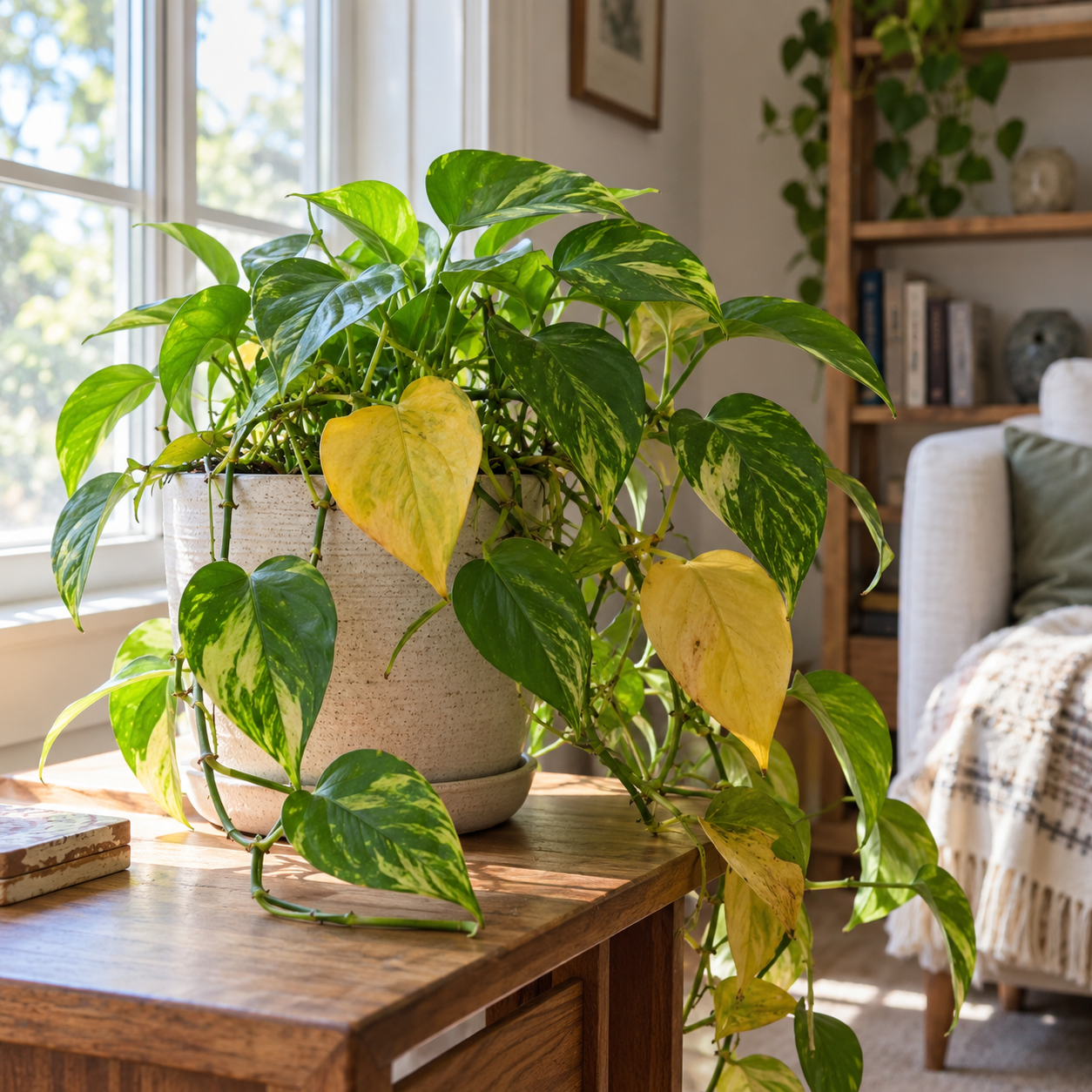
Start Here
What Should You Check First When Leaves Turn Yellow?
Do not reach for fertilizer or immediately water the plant just because you notice a yellow leaf.
Yellowing is a symptom rather than a diagnosis. Two plants can have almost identical yellow leaves while suffering from completely different problems.
Before changing anything, look at the soil, roots, location, and the pattern of yellowing.
Touch the Soil
Is it wet, slightly moist, or completely dry several centimeters below the surface?
Look at the Leaves
Are the oldest leaves yellow, the newest leaves yellow, or is the whole plant changing color?
Check the Texture
Are yellow leaves soft and limp, dry and crispy, spotted, or still firm?
Inspect the Environment
Has the plant recently been moved, repotted, overwatered, exposed to cold, or placed in different light?
If the rest of the plant looks healthy and only one older lower leaf is yellowing, it may simply be natural aging.
What Does the Yellowing Pattern Tell You?
Where and how yellowing appears can provide important clues about the cause.
Older Lower Leaves
Often natural aging, overwatering, or a plant redirecting energy to new growth.
New Leaves Yellow
Consider nutrient availability, damaged roots, soil problems, or environmental stress.
Yellow + Soft Leaves
Frequently associated with excess moisture, poor drainage, or root problems.
Yellow + Crispy Leaves
Prolonged dryness, intense sunlight, heat, or damaged roots may be involved.
Yellow + Brown Spots
Inspect for sunburn, pest damage, leaf disease, or damaged tissue.
Whole Plant Pale
Check light levels, root health, watering habits, and nutrient availability.
Watering
1. Overwatering
Overwatering is one of the first things to investigate when several leaves begin turning yellow.
The problem is not simply that the plant received a large amount of water once. The real issue is usually that the roots are remaining wet for too long and cannot access enough oxygen.
Common Signs of Overwatering
- Several leaves turn yellow at the same time.
- Leaves feel soft rather than dry.
- The soil remains wet for many days.
- The pot feels unusually heavy.
- Lower leaves may fall from the plant.
- Stems may begin to soften near the soil.
What to Do
Stop watering until the plant actually needs moisture again. Check whether the pot has drainage holes, improve airflow around the soil, and make sure the plant receives enough appropriate light.
Plants such as ZZ Plant, Snake Plant, and Jade Plant are particularly vulnerable to problems caused by overly frequent watering.
Dry Soil
2. Underwatering
Yellow leaves do not always mean too much water. Plants that remain dry for too long can also sacrifice older foliage.
When a plant cannot access enough moisture, older leaves may turn pale, yellow, crispy, or brown before falling.
Signs the Plant May Be Too Dry
- The soil feels dry throughout the pot.
- The pot feels very light when lifted.
- Leaves are limp, curled, or wrinkled.
- Leaf edges become dry or crispy.
- The plant perks up after watering.
When the plant truly needs water, thoroughly moisten the root zone and allow excess water to drain from the pot.
Drainage
3. Poor Drainage
Sometimes your watering schedule is not the main problem. The pot or soil may simply be holding too much moisture.
Dense potting soil, oversized containers, decorative pots without drainage holes, and compacted old soil can all keep roots wet longer than the plant can tolerate.
No Drainage Hole
Water collects at the bottom of the container instead of escaping.
Dense Soil
Compacted mixtures may hold moisture while limiting airflow.
Oversized Pot
Extra unused soil can stay damp much longer than the roots need.
For plants that dislike wet soil, adding ingredients such as perlite, bark, or other coarse materials can help create a more open potting mix.
4. Root Rot
Persistent yellowing combined with wet soil and declining growth can indicate damaged roots.
Repeated Yellowing
More leaves continue yellowing even though the plant is not dry.
Wilting in Wet Soil
The plant appears thirsty even though moisture is present.
Damaged Roots
Rotten roots may appear dark, soft, or unhealthy instead of firm.
Soft Plant Base
Stems or rhizomes may become soft in severe cases.
Check other symptoms first. Unnecessary repotting can create even more stress for a plant whose roots are otherwise healthy.
Light
5. Too Little Light
Light and watering are closely connected. A plant in very low light usually uses water more slowly.
If the soil stays wet because the plant receives insufficient light, yellowing may eventually appear even when your watering habits have not changed.
Possible Signs of Insufficient Light
- New growth becomes smaller or stretched.
- The plant leans toward a window.
- Variegation becomes weaker.
- The soil remains damp unusually long.
- Growth slows dramatically.
If a plant has been living in low light, do not immediately place it in intense direct sun. Increase the light gradually.
Sun Stress
6. Too Much Direct Sunlight
Plants adapted to filtered tropical light can develop yellow or faded areas when suddenly exposed to intense direct sun.
Sun damage is often strongest on the side of the plant facing the window.
Sun Stress Often Looks Like:
Move the plant slightly farther from intense afternoon sun or filter the light with a sheer curtain.
Nutrition
7. Nutrient Problems
Plants need nutrients to maintain healthy green foliage, but yellow leaves should not automatically be treated with fertilizer.
Nutrient deficiencies are possible, particularly when a plant has been growing in the same depleted soil for a long time, but damaged roots can also prevent a plant from absorbing nutrients properly.
Adding fertilizer to waterlogged or damaged roots can make the situation worse. First rule out watering, drainage, and root problems.
When Feeding May Help
- The plant is actively growing.
- Roots appear healthy.
- The soil is draining correctly.
- The plant has not been fertilized for a long period.
- Growth looks pale or weak rather than soft and rotten.
Temperature
8. Temperature Stress
Sudden changes in temperature can trigger yellowing and leaf drop, especially in tropical houseplants.
Cold Windows
Leaves touching very cold glass may become damaged.
Cold Drafts
Frequently opened doors and windows can create sudden temperature changes.
Hot Radiators
Strong dry heat can stress foliage and dry the root zone quickly.
Try to keep houseplants in a stable location rather than moving them repeatedly between dramatically different environments.
9. Houseplant Pests
Sap-sucking pests can cause pale speckles, yellow patches, weakened growth, and eventually leaf loss.
Spider Mites
Look for tiny pale speckles and fine webbing around leaves and stems.
Mealybugs
Look for white, cotton-like material around stems and leaf joints.
Scale
Small attached bumps may appear along stems or leaves.
Other Pests
Inspect leaf undersides and new growth whenever unexplained damage appears.
Always inspect both sides of leaves, stems, leaf joints, and the surface of the soil rather than looking only at the top of the plant.
Normal Growth
10. Natural Leaf Aging
Not every yellow leaf needs to be fixed.
Plants regularly replace older foliage. An older leaf near the bottom of an otherwise healthy plant may gradually turn pale, then yellow, before falling naturally.
Probably Normal
Only one older leaf is yellowing.
The plant is producing healthy new growth.
Roots and soil appear healthy.
Needs Investigation
Many leaves yellow quickly.
New growth is also affected.
The plant is wilting or losing leaves rapidly.
Plant Stress
11. Repotting or Moving Stress
Houseplants can react to sudden environmental changes by sacrificing some foliage.
Yellowing can appear after repotting, moving the plant to a new home, changing windows, or exposing it to very different humidity and temperatures.
After Repotting
Avoid repeatedly disturbing the plant. Give it appropriate light, correct moisture, and time to recover unless there are clear signs that the roots are rotting.
Soil Health
12. Old or Compacted Potting Soil
Potting mix changes over time. Organic material breaks down, particles compress, and soil may begin holding water differently than it did when the plant was first potted.
Signs the Soil May Need Attention
- Water sits on the surface before draining.
- The soil remains wet much longer than before.
- The mix has become hard and compacted.
- Roots have completely filled the pot.
- The plant dries out extremely fast despite regular watering.
Repot when there is a genuine need rather than simply because one leaf has turned yellow.
How to Fix Yellow Leaves on Houseplants
Instead of making several changes at once, work through the problem in a logical order.
Check Moisture
Determine whether the root zone is wet, comfortably moist, or completely dry.
Check Drainage
Make sure excess water can leave the container.
Check Light
Compare the plant’s current position with the light it actually prefers.
Inspect for Pests
Look closely at leaf undersides, stems, and new growth.
Check Roots if Needed
Investigate roots when yellowing is severe and soil conditions suggest root damage.
Change One Thing
Correct the most likely cause and give the plant time to respond.
Judge recovery by the health of new growth and whether additional leaves stop yellowing.
Pruning
Should You Cut Yellow Leaves Off a Houseplant?
Fully yellow leaves can usually be removed once you understand why they are yellowing.
Use clean scissors or pruning shears and cut the damaged leaf or stem without injuring healthy tissue.
Cutting off yellow leaves improves appearance, but it will not solve overwatering, poor drainage, root rot, pests, or light problems.
How to Prevent Yellow Leaves
Check Before Watering
Water according to soil moisture rather than a fixed calendar.
Use Drainage
Keep houseplants in containers that allow excess water to escape.
Provide Proper Light
Match each plant with the type and amount of light it prefers.
Use Suitable Soil
Choose a potting mix appropriate for the plant’s moisture needs.
Inspect Regularly
Check foliage for pests and early signs of stress.
Avoid Extreme Changes
Protect indoor plants from cold drafts and excessive heat.
Plant-Specific Yellow Leaf Guides
Different species respond differently to moisture and light. Use the complete care guide for your plant when diagnosing persistent problems.
Peace Lily
Drooping, yellow leaves, brown tips and watering problems.
Read the guide → 🌱Rubber Plant
Yellow leaves, leaf drop, curling and root problems.
Read the guide → 🌿ZZ Plant
Yellow stems, rhizome rot, watering and slow growth.
Read the guide → 🌱Snake Plant
Yellow leaves, floppy leaves, mushy growth and root rot.
Read the guide → 🌴Parlor Palm
Yellow fronds, brown tips, pests and watering problems.
Read the guide → 🍃Fittonia
Drooping, yellow leaves, humidity and moisture problems.
Read the guide →Yellow Houseplant Leaves FAQs
What is the most common cause of yellow houseplant leaves?
Watering problems are very common, especially soil remaining wet for too long. However, yellow leaves can also result from dryness, lighting problems, pests, temperature stress, damaged roots, or natural leaf aging.
Do yellow leaves always mean overwatering?
No. Underwatering, low light, excessive sun, pests, root damage, nutrient problems, and natural aging can also cause yellow leaves.
Can a yellow leaf turn green again?
A leaf that has become fully yellow usually does not return to its original green color. Focus on correcting the cause and watching the health of future growth.
Should I remove yellow leaves?
Fully yellow leaves can usually be removed with clean scissors or pruning shears. However, identify the underlying problem rather than treating pruning as the solution.
Why are only the bottom leaves turning yellow?
An occasional older lower leaf may be aging naturally. If many lower leaves yellow together, also investigate watering, light, and root health.
Why are new leaves turning yellow?
Yellowing new growth can be associated with root stress, nutrient availability, soil conditions, or other environmental problems. Look at the whole plant before making changes.
Should I fertilize a plant with yellow leaves?
Not automatically. First rule out excess moisture, damaged roots, poor drainage, pests, and inappropriate light. Fertilizing stressed roots may make the problem worse.
Why is my plant yellow even though the soil is wet?
Persistently wet soil can reduce oxygen around the roots and may eventually damage them. Check drainage, pot size, soil texture, and root health.
Yellow Leaves Are a Clue, Not a Diagnosis
A yellow leaf is your plant’s way of showing that something is changing, but the leaf alone cannot tell you exactly what went wrong.
Check the soil, drainage, light, roots, pests, temperature, and the location of the yellowing before changing your care routine.
Correct the cause rather than chasing the symptom, and use healthy new growth as your best sign that the plant is recovering.