
How to Care for a Snake Plant Indoors
Snake Plant is one of the easiest and most recognizable indoor plants. Its tall, upright leaves, drought-tolerant roots, and ability to adapt to different light conditions make it an excellent choice for both beginners and experienced plant lovers.
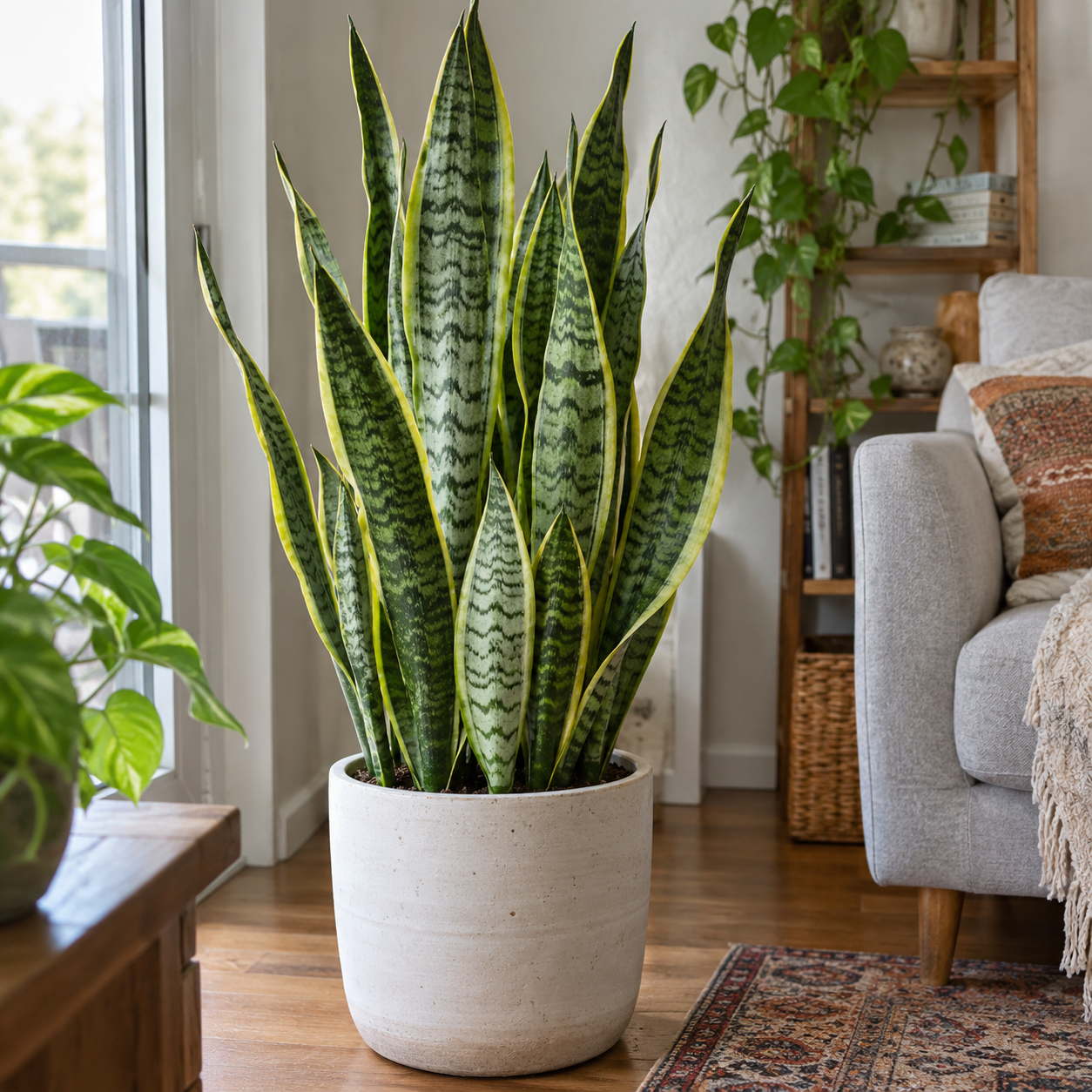
Meet the Plant
Why Grow a Snake Plant Indoors?
Snake Plant is loved for its tall, sword-shaped leaves and strong architectural form. Depending on the variety, the foliage may be deep green, striped, silver-green, or edged with yellow.
Its thick leaves and underground rhizomes store moisture, allowing the plant to tolerate periods of dryness much better than many tropical houseplants.
Snake Plant can tolerate lower light, but brighter indirect light generally produces stronger growth and more new shoots.
Snake Plants tolerate dry soil far better than soil that remains wet for long periods.
Snake Plant Quick Care Guide
Focus on these basics for a healthy indoor Snake Plant.
Light
Low to bright indirect light.
Water
Let the soil dry well before watering.
Soil
Use a fast-draining potting mix.
Humidity
Normal household humidity is fine.
Temperature
Warm and stable conditions are best.
Growth
New pups emerge from underground rhizomes.
Light
How Much Light Does a Snake Plant Need?
Snake Plants are highly adaptable. They can tolerate lower light, but medium to bright indirect light usually produces healthier and faster growth.
Some gentle direct morning sun can be tolerated, especially when the plant has been gradually acclimated.
Signs It May Need More Light
- Growth becomes extremely slow.
- New leaves are thin or weak.
- Variegation becomes less noticeable.
- The plant leans toward the window.
- Soil stays wet for too long.
A Snake Plant may survive in a dim corner, but brighter indirect light is better if you want new leaves and pups.
Watering
How Often Should You Water a Snake Plant?
Let the potting mix dry substantially between waterings. Snake Plants store moisture in their leaves and rhizomes and do not need constantly moist soil.
Watering frequency changes with season, light, pot size, temperature, and soil type, so avoid following a strict weekly schedule.
Check Before Watering
Wait until most or all of the potting mix has dried before giving the plant another thorough watering.
How to Water Properly
-
1
Check moisture deeper inside the pot.
-
2
Water thoroughly once the soil has dried.
-
3
Allow excess water to drain completely.
-
4
Never leave standing water in the outer pot or saucer.
🏜️ Too Dry
- Leaves wrinkle slightly
- Leaf edges curl inward
- Dry brown tips appear
- Soil is dry throughout
⚠️ Too Wet
- Yellow leaves appear
- Leaves become soft
- Lower portions turn mushy
- Roots and rhizomes begin to rot
Soil & Drainage
Best Soil for Snake Plant
Snake Plant needs a loose, airy mixture that allows water to drain quickly around its roots and rhizomes.
Potting Mix
Provides structure and nutrients.
Perlite
Improves airflow and drainage.
Coarse Mix
Cactus or succulent amendments work well.
Avoid growing Snake Plants directly in decorative containers with no way for excess water to escape.
Humidity
Does a Snake Plant Need High Humidity?
No. Snake Plants generally perform well in normal household humidity and do not require a humidifier.
Average Humidity
Normal indoor conditions usually work well.
Avoid Hot Air
Do not place leaves directly against heating vents.
No Misting Needed
Routine misting is unnecessary.
Temperature
Best Temperature for Snake Plant
Snake Plants prefer warm household temperatures and should be protected from cold drafts.
Comfortable indoor growing range
Avoid cold windows and sudden temperature drops
Feeding
How to Fertilize a Snake Plant
Snake Plants do not need heavy feeding. A diluted balanced houseplant or succulent fertilizer can be used occasionally during spring and summer.
Reduce or stop feeding during winter when growth slows.
Excess fertilizer can damage roots and contribute to brown leaf tips.
How to Encourage Snake Plant Pups
New shoots emerge from underground rhizomes beside the parent plant.
Increase Light
Bright indirect light supports active growth.
Keep Roots Healthy
Avoid wet soil and rhizome rot.
Feed Lightly
Provide gentle nutrition during spring and summer.
Give It Time
Mature plants naturally produce pups when conditions are good.
Repotting
When Should You Repot a Snake Plant?
Snake Plants generally do not need frequent repotting and can tolerate being somewhat snug in their pots.
Signs It May Need Repotting
- Rhizomes are pressing against the sides of the pot.
- Roots are growing heavily from drainage holes.
- The container begins to crack or distort.
- The plant becomes top-heavy.
- Several pups have crowded the container.
A pot that is much larger than the root system can hold too much moisture.
How to Propagate a Snake Plant
Snake Plants can be propagated by division or by leaf cuttings.
Division
Separate a pup or section of rhizome with its own roots and plant it in a small container.
Leaf Cuttings
Healthy leaf sections can be rooted in water or an appropriate potting medium.
Leaf cuttings from some variegated Snake Plant cultivars may produce green offspring rather than maintaining the parent plant’s pattern.
Yellow Leaves
Why Is My Snake Plant Turning Yellow?
Overwatering
Constantly wet soil is one of the most common causes.
Poor Drainage
Dense soil keeps roots wet for too long.
Cold Stress
Cold temperatures may damage leaves and roots.
Natural Aging
An occasional older leaf may naturally decline.
Floppy Leaves
Why Are My Snake Plant Leaves Falling Over?
- Too little light may produce weaker growth.
- Overwatering can soften the lower leaf tissue.
- Root or rhizome rot can weaken the plant.
- Physical damage can bend individual leaves.
- Very tall mature leaves may naturally lean slightly.
Curling Leaves
Why Are Snake Plant Leaves Curling?
Curling can occur when the plant experiences prolonged dryness, heat, root stress, or pest activity.
- Check whether the soil is extremely dry.
- Inspect the leaf surfaces for pests.
- Protect the plant from extreme heat.
- Check root health if the soil has remained wet.
Brown Tips
Why Does My Snake Plant Have Brown Tips?
- The plant may have remained dry for too long.
- The leaf tip may have been physically damaged.
- Excess fertilizer may have caused salt buildup.
- Sudden environmental changes may have stressed the plant.
Soft Leaves
Why Are Snake Plant Leaves Soft or Mushy?
Soft, mushy tissue near the base of the leaves often points to excess moisture and possible rot.
Healthy rhizomes should feel firm. Soft, dark, or mushy areas may indicate rot and should be addressed quickly.
How to Recognize Snake Plant Root Rot
Yellow Leaves
Several leaves may yellow together.
Weak Growth
Leaves may soften and fall sideways.
Wet Soil
The potting mix remains damp for many days.
Soft Rhizomes
Healthy rhizomes should remain firm.
Common Snake Plant Pests
Spider Mites
Check for fine webbing and tiny pale spots.
Mealybugs
Look for white cotton-like clusters.
Scale
Watch for small attached bumps on the leaves.
Pests can hide where upright leaves meet near the soil.
Snake Plant Care Through the Seasons
Spring
Growth increases. Repot, divide pups, or begin gentle feeding if needed.
Summer
Soil may dry faster, but always check before watering.
Autumn
Reduce fertilizer as daylight and growth begin to decrease.
Winter
Water much less frequently and protect the plant from cold drafts.
Snake Plant Care Do’s & Don’ts
Do
- Let the soil dry between waterings.
- Use fast-draining soil.
- Choose a pot with drainage holes.
- Give it indirect light.
- Repot only when necessary.
- Divide mature plants to propagate them.
- Inspect leaves occasionally for pests.
Don’t
- Don’t water every week automatically.
- Don’t leave roots sitting in water.
- Don’t use very dense soil.
- Don’t use an oversized pot unnecessarily.
- Don’t mist routinely.
- Don’t overfertilize.
- Don’t allow pets to chew the leaves.
Is Snake Plant Safe for Cats and Dogs?
No. Snake Plant contains compounds that can cause gastrointestinal upset if eaten by cats or dogs.
Keep the plant somewhere pets cannot chew it. If your pet eats part of the plant and develops symptoms, contact your veterinarian.
Love the Snake Plant?
Snake Plant is an excellent choice if you want an architectural, low-maintenance indoor plant that works beautifully in bedrooms, living rooms, offices, and minimal interiors.
Plant sizes, prices, shipping, and availability may change. Check the seller’s current listing before purchasing.
Snake Plant Care FAQs
Is Snake Plant easy to care for?
Yes. Snake Plant is very beginner friendly because it tolerates periods of dryness and a wide range of indoor light conditions.
How often should I water a Snake Plant?
Allow most or all of the potting mix to dry before watering again. The exact timing varies by season and growing conditions.
Can Snake Plant grow in low light?
Yes, although growth is typically slower. Medium to bright indirect light generally produces stronger growth.
Why is my Snake Plant turning yellow?
Overwatering and poor drainage are common causes. Also check for cold stress, root rot, and natural aging.
Why are my Snake Plant leaves falling over?
Possible causes include low light, excess water, damaged roots, physical damage, or normal leaning of tall mature leaves.
How do I get more Snake Plant pups?
Give the plant brighter indirect light, healthy roots, correct watering, gentle feeding during active growth, and time to mature.
How do you propagate a Snake Plant?
Snake Plant can be propagated by dividing rhizomes and pups or by rooting healthy leaf sections.
Why is my Snake Plant soft and mushy?
Soft tissue often suggests excess moisture or rot. Check the soil, roots, and rhizomes immediately.
Is Snake Plant safe for pets?
No. Keep Snake Plant away from cats and dogs that may chew the foliage.
Dry Soil + Good Drainage + Indirect Light
Snake Plant is one of the easiest houseplants to maintain once you resist the temptation to water it too often.
Give it indirect light, allow the potting mix to dry between waterings, use fast-draining soil, and protect it from cold temperatures.
With simple, consistent care, your Snake Plant can continue producing tall architectural leaves and fresh pups for years.