
How to Care for a ZZ Plant Indoors
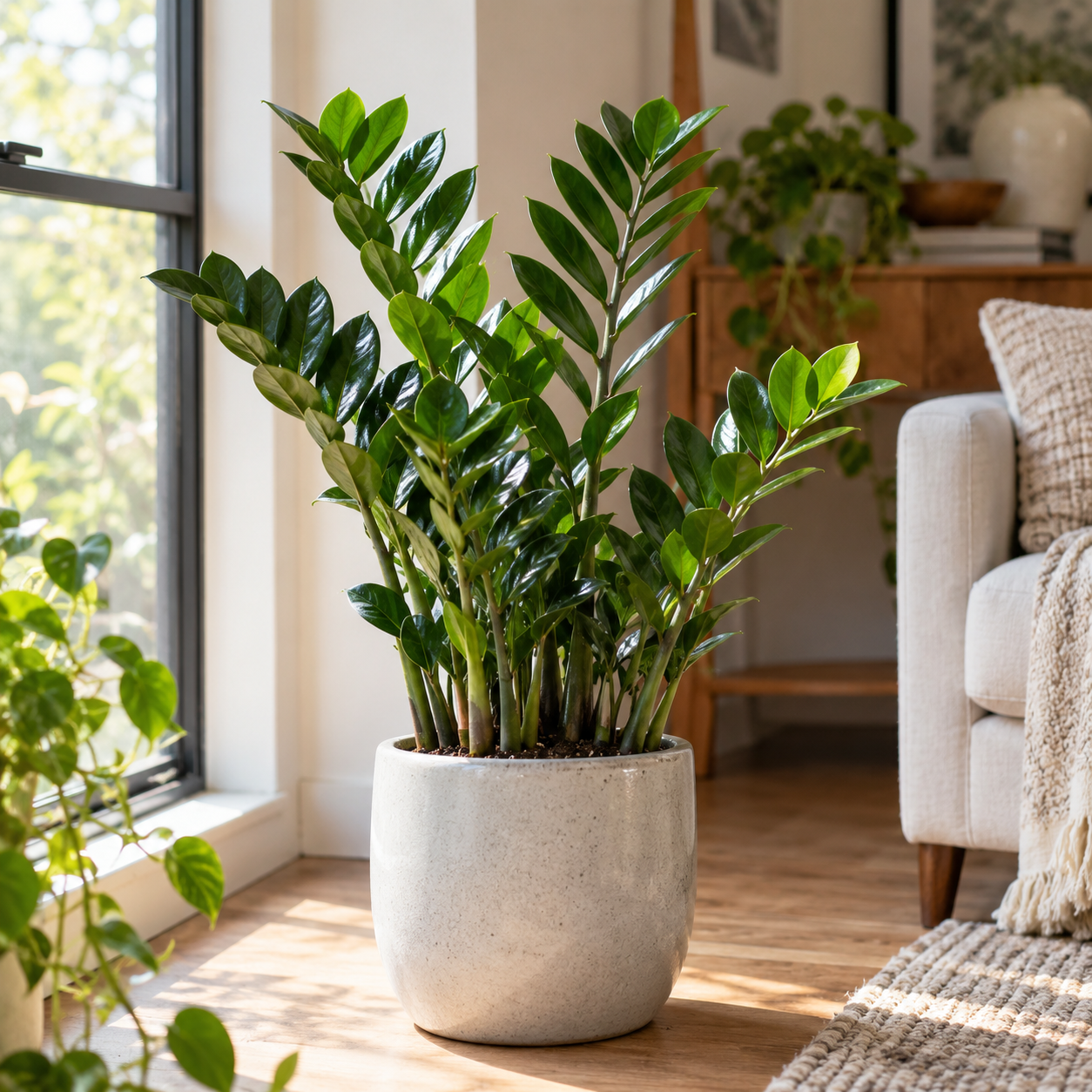
ZZ Plant, or Zamioculcas zamiifolia, is one of the easiest indoor plants to grow. Its glossy green leaves, upright stems, and thick underground rhizomes allow it to tolerate missed waterings and a range of indoor light conditions.
Meet the Plant
Why Grow a ZZ Plant Indoors?
ZZ Plant is loved for its thick, glossy leaflets and upright stems that create a clean, structured look indoors.
It is especially useful for people who want a low-maintenance plant. Its underground rhizomes store water, which allows it to tolerate periods of dryness better than many tropical houseplants.
ZZ Plant can adapt to lower-light rooms, although brighter indirect light usually encourages faster and denser growth.
ZZ Plants grow from thick rhizomes that store both water and nutrients, helping the plant survive dry periods.
ZZ Plant Quick Care Guide
These simple conditions are usually enough to keep a ZZ Plant healthy.
Light
Low to bright indirect light.
Water
Allow much of the soil to dry first.
Soil
Loose, fast-draining potting mix.
Humidity
Average household humidity works well.
Temperature
Warm and stable indoor conditions.
Growth
New shoots emerge directly from rhizomes.
Light
How Much Light Does a ZZ Plant Need?
ZZ Plants are famous for tolerating lower light, but that does not mean they prefer darkness.
Bright indirect light usually produces faster growth, stronger stems, and a fuller appearance.
Avoid intense direct afternoon sun because it may scorch the glossy leaflets.
Signs It May Need More Light
- Growth becomes extremely slow.
- New stems appear thin or stretched.
- The plant leans strongly toward a window.
- Soil takes a very long time to dry.
A ZZ Plant may survive in lower light, but brighter indirect light usually creates a healthier and fuller plant.
Watering
How Often Should You Water a ZZ Plant?
ZZ Plant is much more sensitive to overwatering than occasional underwatering.
Because the rhizomes store water, the potting mix should be allowed to dry significantly before watering again.
Let the Soil Dry
Allow at least half, and often most, of the potting mix to dry before watering thoroughly.
How to Water Properly
-
1
Check moisture several centimeters below the surface.
-
2
Water only when the pot has dried significantly.
-
3
Water thoroughly until excess moisture drains out.
-
4
Empty standing water from the saucer or decorative planter.
🏜️ Too Dry
- Wrinkled stems
- Dry soil throughout the pot
- Leaflets may become dry
- Stems may lose firmness
⚠️ Too Wet
- Yellow leaves
- Soft stems
- Wet soil for many days
- Soft or rotting rhizomes
Soil & Pot
Best Soil for ZZ Plant
ZZ Plant prefers an airy, fast-draining mix that does not remain wet around the rhizomes for long periods.
Potting Soil
Provides structure and nutrients.
Perlite
Improves drainage and airflow.
Coarse Material
Helps prevent the mix from becoming too dense.
ZZ Plants should never sit in a container where excess water cannot escape.
Understanding ZZ Plant Rhizomes
The thick, potato-like structures beneath the soil are rhizomes. They store water and produce roots and new shoots.
Store Water
Rhizomes help the plant tolerate periods without watering.
Produce New Shoots
Fresh stems emerge from growth points around the rhizomes.
Can Rot
Constantly wet soil can cause these storage organs to become soft.
Humidity
Does ZZ Plant Need High Humidity?
No. ZZ Plant generally adapts well to average household humidity.
It does not require the high humidity levels preferred by plants such as Alocasia or Fittonia.
Normal Homes
Average indoor humidity is usually suitable.
Avoid Direct Heat
Keep the plant away from hot radiators and vents.
No Special Setup
A humidifier is usually unnecessary.
Temperature
Best Temperature for ZZ Plant
ZZ Plants prefer comfortable, warm indoor temperatures.
Comfortable indoor growing range
Avoid sudden cold drafts and temperature extremes
Feeding
How to Fertilize a ZZ Plant
ZZ Plant is not a heavy feeder.
During spring and summer, a diluted balanced houseplant fertilizer can be used occasionally while new growth is actively developing.
Reduce or stop feeding during winter when growth slows.
ZZ Plants are naturally slow growers, so avoid excessive feeding.
How to Make a ZZ Plant Fuller
ZZ Plant does not branch from pruning the way many woody houseplants do. A fuller plant comes from producing more shoots from its rhizomes.
Increase Light
Bright indirect light supports faster new growth.
Water Correctly
Healthy rhizomes are essential for new shoots.
Feed Gently
Provide nutrients during active growth.
Be Patient
New ZZ stems can take time to appear.
How to Clean ZZ Plant Leaves
Dust can dull the naturally glossy leaflets and reduce the amount of light reaching the plant.
Use a Damp Cloth
Gently wipe dust from each leaflet.
Support the Stem
Avoid pulling or bending the upright stems.
Inspect for Pests
Use cleaning time to check both sides of the foliage.
Plain water and a soft cloth are usually enough. Heavy leaf-shine products are unnecessary.
Repotting
When Should You Repot a ZZ Plant?
ZZ Plants do not need frequent repotting. Repot when the rhizomes and roots have clearly filled the container.
Signs It May Need Repotting
- Rhizomes press strongly against the pot.
- Roots grow heavily through drainage holes.
- The pot begins to distort or crack.
- The plant becomes unstable.
- The potting mix has become compacted.
Too much extra soil can stay wet for too long and increase the risk of rhizome rot.
How to Propagate a ZZ Plant
ZZ Plant can be propagated by division, stem cuttings, or individual leaflets, although some methods are much slower than others.
Division
Separate established rhizomes during repotting. This is usually the quickest method.
Stem Cutting
A healthy stem can be rooted in water or a suitable propagation mix.
Leaflet Cutting
Individual leaflets can eventually form rhizomes, but this can take a long time.
It can take months before roots and small rhizomes become established.
Slow Growth
Why Is My ZZ Plant Not Growing?
ZZ Plant naturally grows slowly, so long periods without visible new stems do not necessarily indicate a problem.
- Move it into brighter indirect light.
- Check that the roots are healthy.
- Avoid keeping the soil permanently wet.
- Feed lightly during spring and summer.
- Keep the plant warm.
A ZZ Plant may seem inactive for months and then suddenly produce several fresh shoots.
Yellow Leaves
Why Are ZZ Plant Leaves Turning Yellow?
Yellow foliage is one of the most common ZZ Plant problems and overwatering is often the first thing to investigate.
Overwatering
Constantly wet soil can damage roots and rhizomes.
Poor Drainage
Dense soil can hold too much moisture.
Very Low Light
Low light means the plant uses water more slowly.
Natural Aging
Older stems may occasionally decline naturally.
Brown Tips
Why Does My ZZ Plant Have Brown Tips?
- The plant may have stayed dry for too long.
- Very hot air may be drying the foliage.
- Excess fertilizer may have built up in the soil.
- Strong direct sunlight may have scorched the leaflets.
Drooping Stems
Why Are My ZZ Plant Stems Drooping?
Too Much Water
Soft roots and rhizomes may weaken stems.
Severe Dryness
Very dehydrated stems may lose firmness.
Low Light
New growth may stretch and become weaker.
Natural Shape
Older stems sometimes arch outward naturally.
Wrinkled Stems
Why Are My ZZ Plant Stems Wrinkled?
Wrinkled stems can indicate that the plant has used much of its stored moisture.
Check the potting mix before watering. If the soil is completely dry throughout the pot, the plant may simply need a thorough drink.
Wrinkled or weak stems combined with wet soil can sometimes point to damaged roots rather than simple dehydration.
How to Recognize ZZ Plant Root or Rhizome Rot
Yellowing
Multiple stems may begin yellowing together.
Soft Stems
Stems may become weak near the soil.
Wet Soil
The pot remains damp for an unusually long time.
Soft Rhizomes
Healthy rhizomes should feel firm, not mushy.
Common ZZ Plant Pests
Spider Mites
Look for tiny speckles and fine webbing.
Mealybugs
Look for cotton-like white clusters.
Scale
Check stems and leaflets for attached bumps.
The glossy foliage makes routine pest inspection relatively easy.
ZZ Plant Care Through the Seasons
Spring
New growth may begin. Resume gentle feeding and repot if necessary.
Summer
Check moisture slightly more often while protecting it from harsh sun.
Autumn
Reduce fertilizer as light and growth gradually decrease.
Winter
Water less often because the soil may remain moist much longer.
ZZ Plant Care Do’s & Don’ts
Do
- Give it indirect light.
- Let the soil dry substantially between waterings.
- Use a pot with drainage holes.
- Clean dusty leaflets.
- Use a loose potting mix.
- Repot only when necessary.
- Inspect for pests occasionally.
Don’t
- Don’t water on a strict weekly schedule.
- Don’t keep the soil permanently wet.
- Don’t use an oversized pot.
- Don’t expose it suddenly to intense sun.
- Don’t overfertilize.
- Don’t expect extremely fast growth.
- Don’t allow pets to chew the plant.
Is ZZ Plant Safe for Cats and Dogs?
No. ZZ Plant contains calcium oxalate crystals that can cause irritation if chewed or eaten.
Keep it somewhere pets cannot easily access. If a pet eats part of the plant and develops symptoms, contact your veterinarian.
Love the ZZ Plant?
ZZ Plant is a beautiful choice if you want glossy greenery with very little maintenance. Its upright stems work especially well in modern, minimal, and cozy interiors.
Plant size, price, shipping, and availability may change. Check the seller’s current listing before purchasing.
ZZ Plant Care FAQs
Is ZZ Plant easy to care for?
Yes. ZZ Plant is one of the easiest indoor plants because it tolerates lower light and periods of dry soil.
How often should I water a ZZ Plant?
Allow at least half of the potting mix to dry before watering. Frequency depends on light, temperature, pot size, and season.
Can ZZ Plant grow in low light?
Yes, but growth will usually be much slower. Bright indirect light encourages stronger and fuller growth.
Why are my ZZ Plant leaves turning yellow?
Overwatering is a common cause. Also check drainage, light, root health, and whether the yellowing is simply affecting an old stem.
How do I make my ZZ Plant fuller?
Provide bright indirect light, protect the rhizomes from rot, feed gently during active growth, and allow time for new shoots to emerge.
Why are my ZZ Plant stems drooping?
Drooping may result from overwatering, severe dryness, low light, root damage, or the natural outward arching of mature stems.
Why are ZZ Plant stems wrinkled?
Wrinkled stems often indicate dehydration, but check the soil first. If the soil is wet, inspect the roots and rhizomes instead.
How do you propagate a ZZ Plant?
ZZ Plant can be propagated by division, stem cuttings, or individual leaflets. Division is usually the quickest method.
Is ZZ Plant safe for pets?
No. Keep ZZ Plant away from cats and dogs that may chew the foliage.
Indirect Light + Drying Soil + Good Drainage
ZZ Plant is one of the easiest ways to add deep green, glossy foliage to your home.
Give it indirect light, let the potting mix dry significantly before watering, and avoid oversized pots or constantly wet soil.
With a little patience and careful watering, your ZZ Plant can remain healthy, structured, and beautifully green for years.